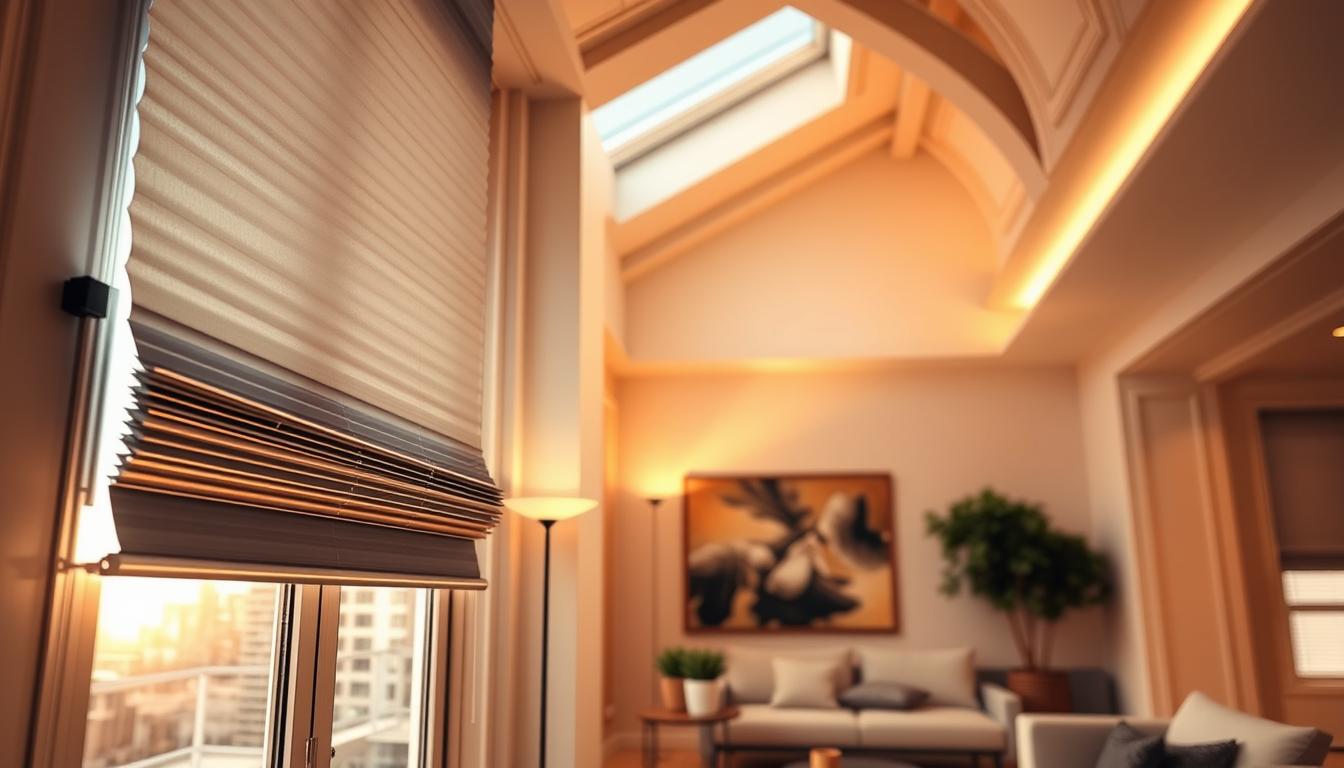
Automated window shades and motorized blinds make managing tall windows easier. They are powered by a motor and controlled by a remote. This remote control is important because it keeps children and pets safe from lift cords.
These smart blinds are also easy to use. You can control them with a handheld remote, a mobile app, or even your voice. This makes it simple to adjust the shades, no matter where they are.
Motorized window treatments are safe and convenient. They come with different power options, like battery packs or USB rechargeable motors. You can even connect them to Amazon Alexa or Google Assistant for voice control.
They protect your furniture and floors from UV damage. They also help you control the light in your home. Plus, they can make your home look occupied when you’re away.
Understanding Automated Window Shades
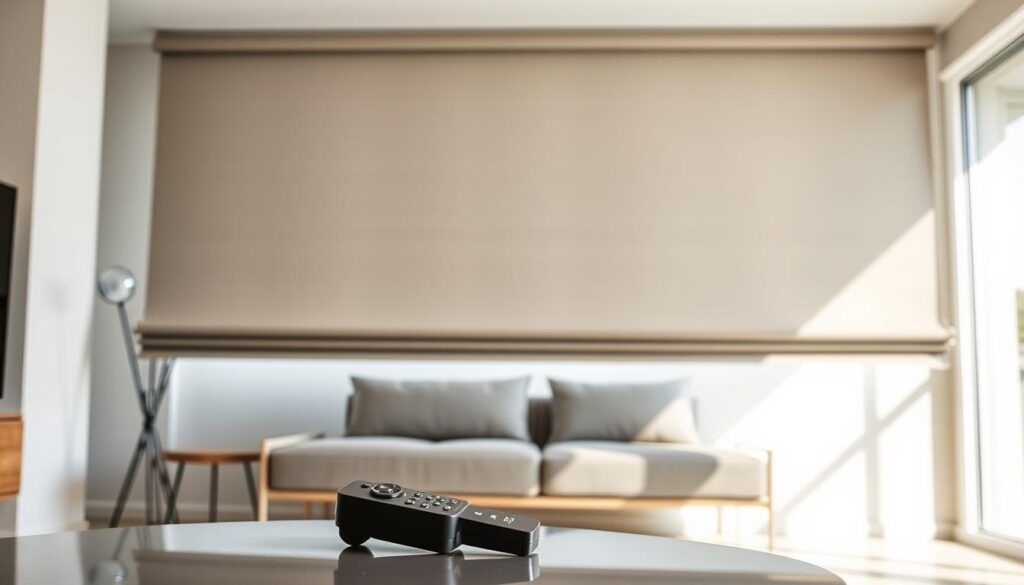
Automated window shades use a small electric motor. This motor raises, lowers, and tilts slats or fabric. The motor is inside the roller tube for roll-up shades or inside the headrail for horizontal styles.
This placement affects how they look and mount. You can control smart window shades in several ways. Handheld remotes use infrared or RF signals.
Many models also pair with smartphone apps over Bluetooth or Wi‑Fi. You need an optional hub for this. Voice control is possible with systems like Hunter Douglas PowerView or other smart platforms.
Power options vary to fit your space. You can choose from disposable or rechargeable battery packs. Some brands offer rechargeable battery wands or USB charging.
Plug-in DC adapters work where outlets are available. Mini solar panels are good for sunny spots. Builders can hard-wire them for new construction.
Device compatibility varies by manufacturer. Check product specifications from Levolor, Hunter Douglas PowerView, Graber, and Blinds.com. This ensures your automated blinds and apps will work together.
- Noise levels are low; expect a soft hum or whisper during operation.
- Reliability mirrors other window treatments; many systems run reliably for years.
- Warranties vary by brand; Blinds.com, for example, lists a three-year warranty on select motorized options.
When choosing automatic window coverings, consider motor placement, control method, and power delivery. These choices affect installation, daily use, and how well they fit into your smart home.
Enhanced Safety for Your Home
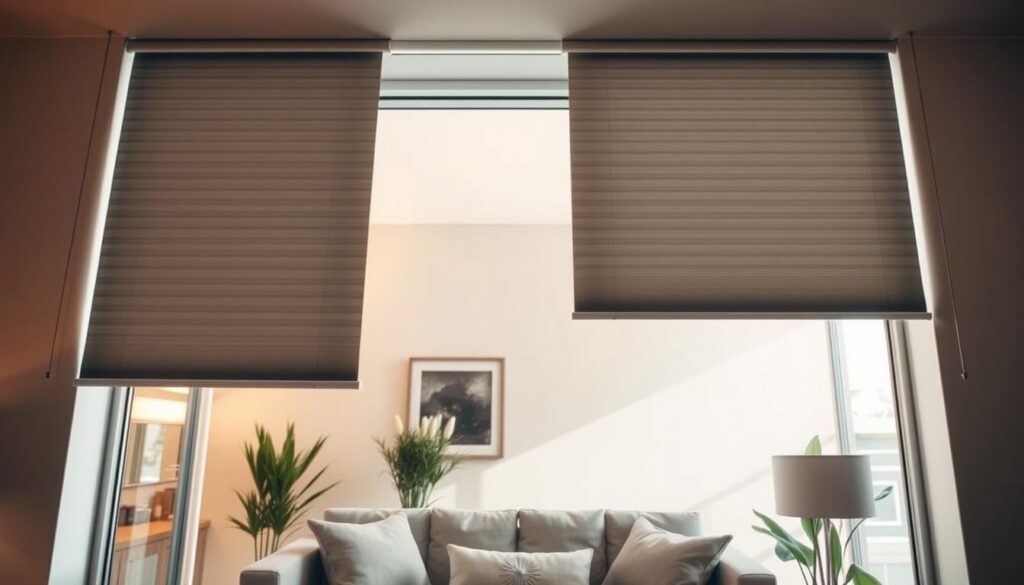
Motorized blinds are great for windows that are hard to reach. They remove the danger of cords, which can be a choking hazard for kids and pets. This makes your home safer for everyone.
Automatic window coverings mean no more climbing on chairs to adjust shades. This reduces the risk of falls and injuries when you need to reach high windows or skylights.
Automated blinds also boost your home’s security. You can set them to open and close at specific times. This makes it look like someone is home, which can scare off burglars.
With remote control, managing privacy is easier. You can adjust shades in bedrooms and bathrooms without getting up. This keeps your space private when you need it most.
Protecting your home from sun damage is also easier. Motorized blinds can block sunlight during the hottest times of the day. This helps keep your furniture and photos from fading.
- Child and pet safety: no cords, less risk.
- Fall prevention: no climbing to reach windows.
- Security: scheduled presence while away.
- Privacy: precise remote control for hard-to-reach areas.
- Sun protection: automated schedules shield valuables.
Convenience and Accessibility
Smart blinds can be controlled with just a tap, voice command, or remote. They’re perfect for raising or lowering high windows without needing a ladder. You can even set a scene like “Movie Time” to make your room dark and cozy.
Scheduling and routines make life easier. You can program smart window shades to open at sunrise and close at dusk. This way, your rooms stay comfortable without you having to do much.
Smart blinds are great for people with limited mobility or the elderly. They eliminate the need to stretch, bend, or use a stepstool. Wand motorization offers a simple pull-or-push option, powered by batteries for easy installation.
- Single-touch control for instant adjustments
- App-based precision for exact positioning
- Voice commands that work with popular smart assistants
Vacation mode and remote operation let you manage your home from anywhere. Use an app to control your shades and make it look like someone’s home. This protects your furniture from sun damage while you’re away.
You have many options, from battery-powered wand motorization to fully integrated motorized blinds. Choose what fits your lifestyle, mobility needs, and desire for convenience.
Energy Efficiency Benefits
Automated window shades can cut down on cooling and heating needs. They adjust to sun angles and indoor temperatures. Solar and roller shades block harsh sunlight in summer, saving on air conditioner use and protecting furniture from UV damage.
Cellular or honeycomb shades add insulation by trapping air. This reduces heat loss in winter and makes rooms more comfortable. Your furnace works less often, saving energy.
Program your automatic window coverings to follow the sun’s daily path. Close them during the hottest part of the day and open them on sunny winter days. This way, you enjoy passive solar heating without lifting a finger.
Linking them with smart thermostats creates a more efficient home. When shades work with Nest or Ecobee systems, your home uses even less energy. Heating, cooling, and shading work together for better energy use.
- Lower HVAC runtime for rooms with large glazing or west-facing windows.
- Sun-tracking schedules that adjust shades by time and light level.
- Remote control and sensors that prevent overheating when you’re away.
Over time, you’ll see the energy savings on your utility bills. For many, the savings make the cost of smart, motorized window treatments worth it.
Child and Pet Safety Considerations
Removing exposed cords is a key safety step. Motorized blinds and automated shades get rid of lift cords. These cords can be dangerous for kids and pets. By choosing cord-free designs, you reduce a big risk in bedrooms and play areas.
Make sure control devices are out of reach. Store remotes and lock app access on phones or tablets. This way, curious hands can’t change the blinds. Use parental controls and app permissions to limit who can adjust settings.
Think about wand motorization for a manual feel. Wand systems are battery-powered and cordless. They offer a simple way to control blinds without cords. Brands like Hunter Douglas suggest wand or motorized systems for safer use.
Always check for safety certifications before buying. Look for products that meet ASTM or CPSC standards. Ask dealers about certified installations. Professional installers ensure blinds are safely mounted and secure.
- Choose certified products and ask for documentation.
- Opt for professional measure-and-install services.
- Set up app restrictions and store remotes securely.
By picking the right products and following installation and control tips, smart blinds are safer for homes. Regular checks and a simple safety routine keep your family safe. You can enjoy the benefits of modern window coverings without worry.
Customization Options
There are many shade styles that work with motorization. You can choose from solar shades, roller shades, and more. Options include cellular (honeycomb) shades, pleated shades, and Roman shades.
Layered shades, sheer shades, woven-wood shades, and blinds with tilt motorization are also available. This lets you find the perfect match for your home.
Choose fabrics based on what you need. Solar fabrics block UV rays and let you see outside. Blackout fabrics are great for bedrooms and media rooms.
Cellular fabrics help keep your home warm in winter and cool in summer. They save on heating and cooling costs.
- Style and texture: brands like Hunter Douglas, Graber, Levolor, and Blinds.com offer a wide range of textures, colors, and profiles. They help you match your décor.
- Control options: pick from remote-only, app-enabled Bluetooth or Wi‑Fi, or hub-based systems like PowerView®. You can also choose full integration with Control4, Crestron, and Savant.
- Power choices: choose from battery, rechargeable, plug-in DC, mini solar panel, or hard-wired systems. They fit both retrofit and new construction needs.
Think about how automated blinds and motorized window treatments will work in your daily life. Decide if you want preset scenes, voice commands, or simple timers for light control.
Consider maintenance and access. Rechargeable motors save on battery waste. Hard-wired installations mean fewer maintenance visits. Solar options work well on sun-facing windows.
Plan aesthetics and performance together. Automated window shades can be either discreet or decorative. This depends on the headrail, fabric, and motor placement you choose.
Work with a certified installer or a trusted dealer. They can help you test samples in your home. This ensures your smart window shades look good and work well.
Installation and Maintenance
Installing motorized blinds is easy for standard windows. It takes two people for wider or heavier ones. You’ll need basic tools for most installations. But, big windows or tight spaces might need a pro for safety and smoothness.
Companies like Hunter Douglas, Graber, and Blinds.com have dealer networks and install services. Getting a certified installer helps avoid problems like misaligned tracks or wiring issues. This is key for tricky windows.
Most blinds come pre-programmed, so they work right away. You can set limits, create scenes, and schedule use with the remote or app. It’s easy to get started.
Battery life varies by motor type and use. Rechargeable motors last six months to a year. Disposable batteries depend on how much you use them. Automated blinds with plugs or wires need little upkeep.
- Keep headrails and motor access points free of dust and obstructions.
- Inspect fasteners and brackets periodically for tightness.
- Wipe fabrics or slats according to the manufacturer’s care instructions.
Fixing issues is simple: reset limits, replace or recharge batteries, and check connections. Check the warranty before buying. Some offer long-term coverage and quick support. Keep serial numbers and receipts handy for service requests.
Regular checks keep your blinds running smoothly. Good installation and care mean less hassle. Enjoy your automated blinds and shades without worry.
Smart Home Integration
You can connect smart blinds to voice assistants like Amazon Alexa and Google Assistant. This lets you control them with just your voice. For example, saying “close the shades” will make your motorized blinds move.
This is super helpful when windows are out of reach.
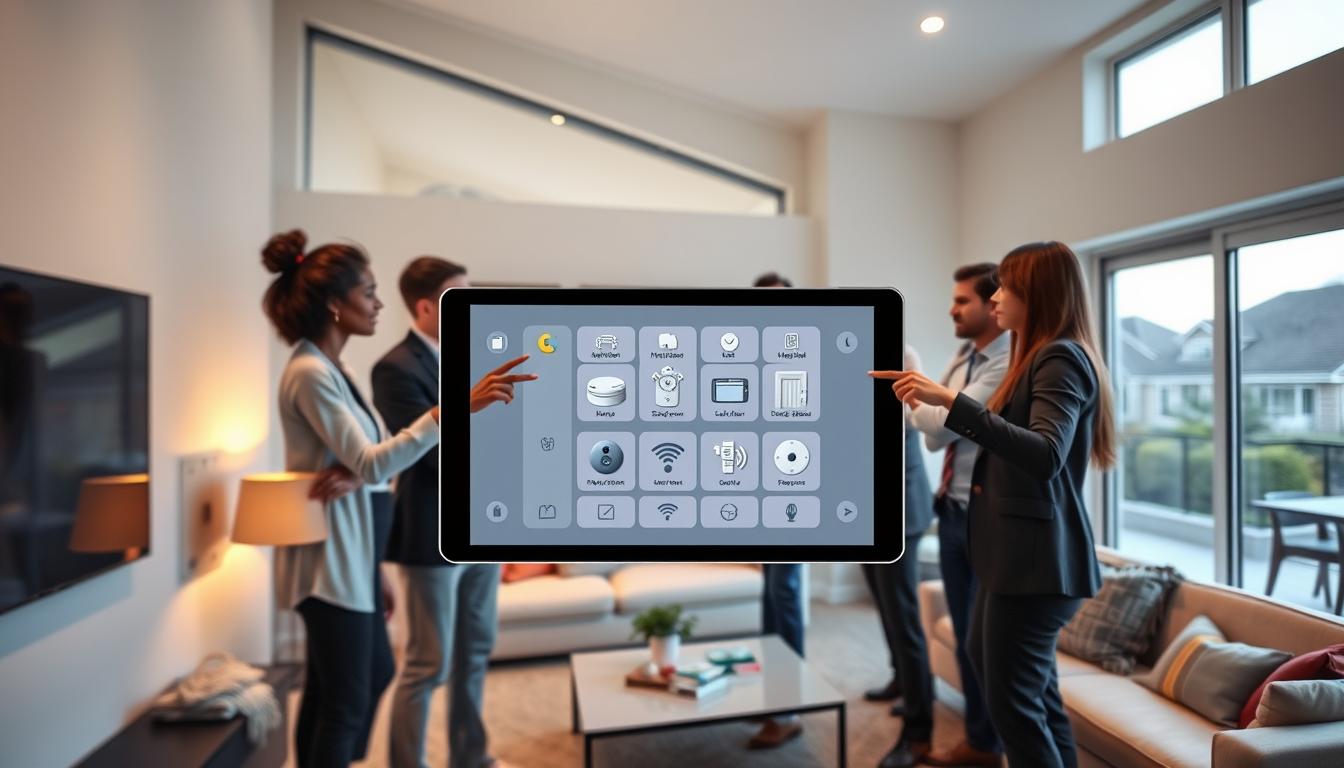
Many advanced smart window shades work with systems like Control4, Crestron, RTI, Savant, and Elan. This integration allows you to control shades, lighting, thermostats, and security together. It creates a seamless experience in your home.
Some motorized blinds need a special hub to connect to Wi‑Fi and cloud apps. Others use Bluetooth or their own RF remotes for control without needing the cloud.
- Create scenes like “Good Morning” or “Movie Time” to move several shades at once.
- Set schedules so automated window shades open with sunrise and close at dusk.
- Use app-based remote access to operate smart window shades from anywhere for added security.
When picking smart blinds, make sure they work with your current hub and voice platform. This avoids any issues and keeps your home automation running smoothly.
Cost Factors to Consider
When you look for motorized blinds, the price depends on a few things. The size of your windows, the type of shade, and the fabric all play a role. For example, a big window with blackout fabric will cost more than a small one with solar fabric.
The type of motor also affects the price and how much upkeep it needs. Battery and rechargeable motors are easier to install and save on labor costs. Hard-wired motors cost more to install but need less maintenance over time. Plug-in units fall in between these two options.
The way you control your blinds also impacts the cost. A simple remote or app for one room is cheaper than a smart-home hub. Adding features like scheduling and voice control increases the price and might require a pro.
- Shade styles: roller, cellular, Roman, and others carry different material and labor costs.
- Fabric choices: solar, blackout, and insulating options change both cost and energy performance.
- Motor choices: battery, rechargeable, plug-in, hard-wired each have trade-offs.
Whether you install the blinds yourself or hire someone affects the cost. DIY can save money upfront, but a pro ensures a perfect fit and warranty. Hard-wired setups or new wiring increase labor and materials costs.
Think about the long-term benefits when choosing. Insulating fabrics save energy, UV-blocking materials protect your furniture, and safety features are good for kids and pets. These benefits might make higher prices worth it for motorized window treatments.
Warranty and local service impact the long-term cost. Check the manufacturer’s terms and the dealer’s support before buying. Some brands offer warranties, like a three-year coverage on motors or parts, which can save you money and hassle.
Use a phased budgeting approach to manage costs. Start with rooms you use most or windows that are hard to reach, then add more. Compare battery versus hard-wired options based on how easy they are to install and how often you’ll need to change batteries.
To keep costs in check, ask for detailed quotes and compare brands like Hunter Douglas and Lutron. They offer different features and services. Weigh the initial cost against long-term savings, safety, and convenience to find the best motorized blinds for your home.
Popular Brands to Explore
When looking for motorized blinds, start with well-known brands. Hunter Douglas’ PowerView® Automation works with many fabrics. It also connects with Control4, Crestron, and Savant. You can choose between battery or hard-wired power and get professional installation for complex setups.
Graber is known for quiet, smooth blinds. They offer solar, roller, cellular, pleated, Roman, layered, and sheer shades. You can control them with an app, handheld remotes, or wand controls, depending on your needs.
Levolor has motorized blinds and shades in select lines. Some models work with apps, so check the specs for smartphone control. They offer a range of products to fit different budgets and styles.
Blinds.com has motorized shades in many types. They offer rechargeable and battery-powered motors, plus mini solar panels for some rollers. Their products often come with a three-year warranty for extra peace of mind.
For a whole-home setup, check out Control4, Crestron, and Savant-compatible motors. These integrators support large setups and custom programming. They can connect your blinds with lighting, HVAC, and voice assistants.
- Verify compatibility with your smart home hub and voice platform.
- Compare power options: battery, rechargeable, solar, or hard-wired.
- Check warranty terms and local dealer support before buying.
- Request an in-home demo to evaluate noise, speed, and look.
Use these brand highlights to find the right smart blinds and shades. Focus on real-world testing and dealer support to make the best choice for your home.
Conclusion: The Future of Window Treatments
When choosing for your home, automated window shades and smart blinds are key. They are safe for kids and pets, easy to reach, and control with a remote or app. These features make your life easier and safer every day.
These treatments also save energy by blocking heat or keeping warmth in. You’ll find more styles and ways to power them, like batteries or solar. Soon, they’ll work better with smart homes, thanks to Alexa and Google Home.
Think about which rooms need these upgrades most. Tall windows, skylights, and sunlit areas are great choices. Pick the right power and control for your space. For help, talk to experts like Hunter Douglas, Graber, or Blinds.com.
In summary, motorized window treatments offer safety, efficiency, and convenience. For a smarter, safer home, consider automated shades and blinds. They’re a smart choice for U.S. homes.