You use cameras, door sensors, and alarms to keep your place safe. But, most break-ins start with a weak spot: broken glass. This article explains how smart glass break sensors can add a new layer of security. They detect glass breaks and send alerts right away, helping to prevent loss and quicken response times.
Smart glass break sensors catch a break-in the moment glass breaks. They don’t wait for a door to open or motion. This early warning gives you and your monitoring team more time to react, making your home or business safer.
Think of security in layers. Glass break detection works with cameras, access control, and alarms to fill in gaps. Protection Plus and Post Alarm show how combining these layers is key to real-world security.
These sensors are great for many places. They’re perfect for family homes with sliding doors, retail stores, office floors, server rooms, and areas where inventory is kept. A window break alarm can be your first defense in these situations.
Today’s sensors use advanced tech like acoustic analysis and machine learning. They can tell real break-ins from just noise. Adding smart glass break sensors to your home security system makes it stronger and gives you more peace of mind.
Understanding Smart Glass Break Sensors
Smart glass break sensors detect the sound or vibration when glass is hit or breaks. They send alarms, push notifications, or automated responses. This way, you can quickly react if a window is damaged.
There are two main ways these sensors work. Acoustic sensors use microphones to catch the sound of impact and shattering. Shock and vibration sensors, on the other hand, use special elements to feel the vibrations.
Inside a sensor, you’ll find a transducer, an analog front-end, and a digital processor. The processor analyzes the signal. A communication interface sends alerts, and power comes from mains or batteries.
Signal processing is key to telling real breaks from noise. Systems use frequency and time-domain checks to spot breaks. They also use machine-learning to get better at detecting breaks.
- Acoustic glass break sensors can cover several windows in a room, reducing the number of devices you need.
- Vibration sensors protect a specific pane, giving focused coverage where you install them.
- Hybrid systems combine both approaches for redundancy and greater reliability when you need it most.
Knowing how these sensors work helps you pick the right one for your home. Each type has its own strengths and weaknesses. Choosing the right one for your space improves your protection.
Benefits of Installing Glass Break Sensors
These sensors alert you quickly when glass breaks. They detect the sound or vibration of breaking glass. This means your alarm goes off before an intruder can enter.
This early warning gives you more time to react. You can call for help, alert your neighbors, or notify a monitoring service tied to your security system.
Big glass areas are more vulnerable to smash-and-grab crimes. Glass break sensors protect large windows, sliding doors, and more. They cover wide areas without needing sensors on every edge.
They work even if windows are cracked or slightly open. This is a big plus over contact sensors that only work when windows are fully open.
Visible sensors and reliable alarms scare off burglars. They make your home or business look secure. This leads to fewer thefts, less damage, and lower losses.
These sensors fit many places. They’re good for homes, stores, server rooms, and more. One type can protect many risk areas in different settings.
- Modern sensors have less false alarms thanks to advanced tech.
- They work with cameras and access control for better responses.
- They’re compatible with big home security brands for professional monitoring.
Modern sensors are set up to avoid false alarms while catching real threats. This makes your alarms more reliable and saves money on unnecessary police calls.
Glass break sensors add to your security without changing your whole system. They work with other security tools like door contacts and cameras. This makes your security plan stronger without a big overhaul.
Choosing the Right Smart Glass Break Sensor
First, think about your property’s risk and layout. Look at windows on the ground floor, hidden panes, and rooms with valuable items near glass. Also, consider large glass areas. This will help you figure out how many sensors you need and where to put them.
Next, pick the right sensor type for each area. Acoustic sensors cover a whole room and are easy to install. Vibration or shock sensors are better for single panes and work well in noisy places. Choose the right type for each spot to ensure full protection.
Make sure the sensor works with your glass types before buying. Check if it supports tempered, laminated, wired, and double-glazed glass. Follow the manufacturer’s advice when mixing glass types to ensure it works well.
Then, think about how the sensor will connect to your system. Choose between wired or wireless based on your alarm panel and installation ease. Ensure it connects with your smart home technology, like Z-Wave, Zigbee, or Wi-Fi. Also, check if it works with professional monitoring services.
Look at the sensor’s sensitivity and how it handles false alarms. Features like adjustable sensitivity, test modes, and digital signal processing help. These options reduce false alarms from trucks, storms, or construction.
Consider the sensor’s power and maintenance needs. Wireless sensors use batteries and are designed to last long. Hardwired sensors need less maintenance but should have a backup power source. Choose based on how much upkeep you’re willing to do versus how reliable you need it to be.
- Choose a reputable brand for support: look for ones that offer updates, clear guides, and professional help.
- Balance your budget and future needs: focus on high-risk areas first if money is tight, but plan for more sensors later.
When comparing sensors, test them in your home if possible. A trial run helps you see how well they detect, handle false alarms, and integrate with your smart home technology.
How Smart Glass Break Sensors Improve Home Security
Start with good lighting and trimmed hedges at the curb. Then, add fences and CCTV cameras. Next, protect doors and windows. Glass break sensors detect sound or vibration early, before intruders get inside.
When a glass break sensor detects a strike, it sends an emergency alert. This alert can turn on lights, lock doors, start sirens, and send notifications. This quick response helps catch intruders and speeds up police arrival.
Linking a window break alarm with cameras makes verification quick. Systems from Honeywell, ADT, and Ring can connect glass break events to video. This helps police and insurers during investigations and speeds up claims.
These sensors are useful at night, in empty homes, and for retail stores after hours. A fast alarm notifies you or a service right away. This alert helps law enforcement arrive faster.
- Acoustic sensors cover multiple windows to reduce blind spots.
- Vibration or contact sensors secure isolated panes and skylights.
- Combined deployments deliver broad glass break detection across a property.
Integrated systems can automate lockdowns. Glass break events can start cameras, alarms, and lock doors. Companies like Protection Plus and Post Alarm focus on quick, coordinated responses for better safety.
When sensors work with video and logs, evidence collection gets better. Time-stamped audio triggers and clips offer clear proof for investigations. This data strengthens reports to police and supports insurance claims after an incident.
Smart glass break sensors are part of a bigger defense. Use them with lighting, cameras, locks, and an emergency alert system. Together, they create a strong defense and give you peace of mind.
Installation Tips for Glass Break Sensors
First, make a plan for covering all vulnerable windows and doors. Focus on ground-level and hidden glass near entry points. Make sure the sensor’s range covers all areas without gaps.
For acoustic sensors, place them on ceilings or high walls facing the glass. Keep them away from curtains or big furniture that might block sound. Also, avoid placing them near constant noise sources like speakers or HVAC units. Follow the manufacturer’s distance guidelines to avoid false alarms.
Vibration or shock sensors need to be securely attached to glass or the frame. Follow the product’s instructions for proper attachment. Place these sensors where vibrations are strongest, often near the center of the glass or at key structural points. This ensures a strong response without being too sensitive to everyday knocks.
- Use manufacturer test modes and simulators to verify coverage.
- Test from each protected window and adjust the sensor angle.
- Lower sensitivity if common household sounds trigger alerts.
Make sure wiring is secure if using, or confirm a strong wireless signal for battery-powered units. Use tamper-resistant mounts in areas that are public or high-risk. If you have a big basement or room, consider using signal boosters.
Connect sensors to your control panel, smart hub, or monitoring service during setup. Check that automation rules for cameras, lights, and alerts are set up correctly. Run a full system test to ensure everything works as planned from detection to notification.
Choose between hiring a pro or doing it yourself based on your site’s complexity. For complex commercial setups or professional monitoring, hiring a pro like ADT or Vivint is wise. For most homes, installing wireless glass break sensors yourself is easy and lets you focus on placement and testing.
Maintaining Your Smart Glass Break Sensors
Start by testing your glass break detection system regularly. Use test modes, a glass-break simulator, or tools from the vendor. This ensures your sensors are working right.
Regular maintenance is key. Check the sensitivity and calibration of your sensors. Adjust settings to avoid false alarms but keep real alerts clear.
Don’t forget about battery and power care. Replace batteries in wireless sensors before they run out. For wired sensors, check power supplies and backup batteries to keep protection going.
Cleaning and checking your sensors is important. Wipe vents gently and check mounts for security. Look for any damage that could affect detection.
- Log and review system diagnostics regularly.
- Watch for recurring faults, connectivity drops, or patterns of nuisance alarms.
- Use log data to guide placement changes or sensitivity tweaks.
Keep your sensors up to date with firmware updates. This improves their performance. If updates don’t work, contact the manufacturer for help.
Include glass break detectors in your security audits. Review your system yourself or hire a pro. Treat upkeep as part of your overall security plan.
By testing, maintaining, and inspecting your sensors, you ensure they’re ready when needed. This keeps your space safe and secure.
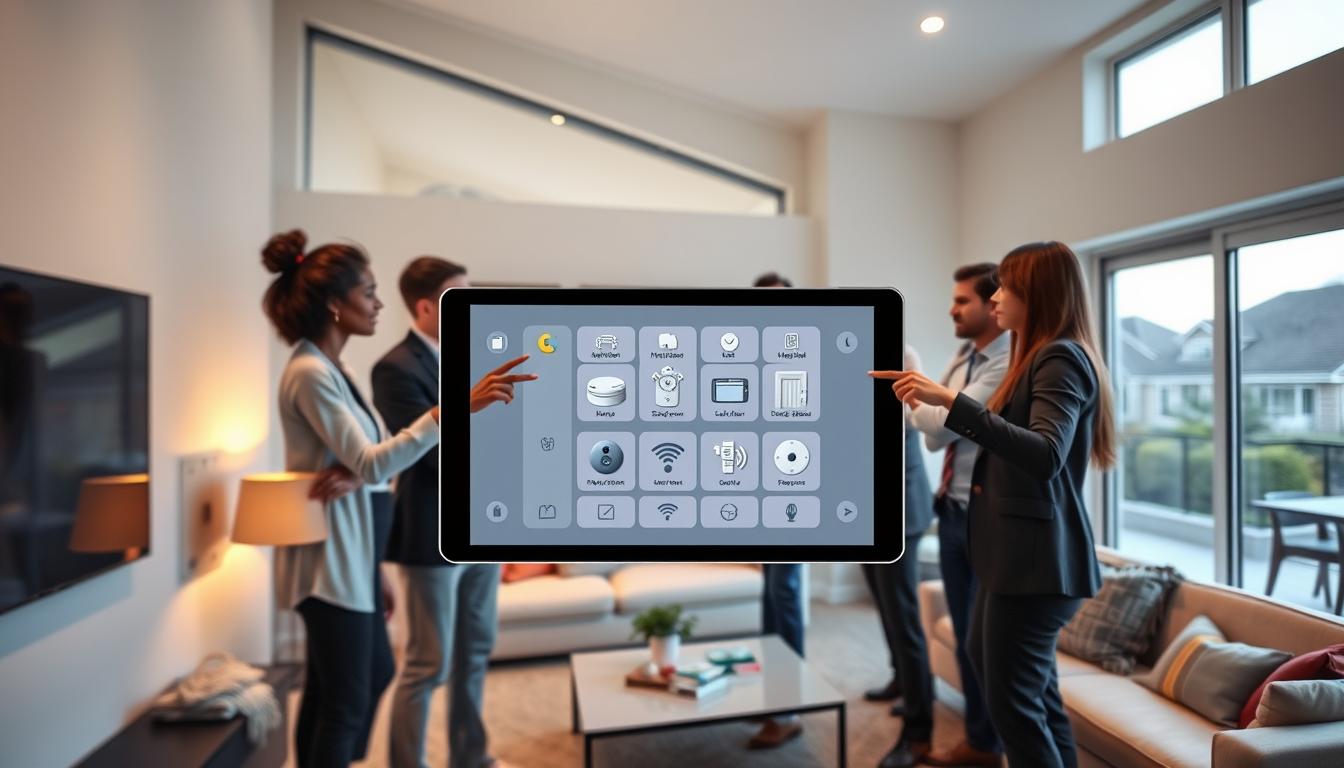
Integrating Smart Glass Break Sensors with Home Automation
Smart glass break sensors do more than just detect breaks. They can turn on lights, start recording cameras, lock doors, and send alerts. This keeps you informed and deters intruders.
Make sure your sensors work with your home automation hub. Check if they use Z-Wave, Zigbee, or Wi-Fi. Also, ensure your hub can handle automation rules and send notifications.
Create simple automation rules for reliable responses. For example, a rule can turn on lights and save camera clips to the cloud when a break is detected. Another rule can lock doors and sound a siren while sending alerts to your phone and a monitoring service.
Set up different actions for when you’re home versus when you’re away. Use loud alarms and full deterrence when you’re not home. Choose silent alerts and lights when you’re home to avoid panic and allow verification.
- Trigger lights and cameras on detection
- Auto-lock smart deadbolts
- Send silent or loud alerts to occupants
- Forward verified events to an emergency alert system or monitoring service
Use monitoring or live-video verification to reduce false alarms. A human verifier can check camera clips and decide if to call emergency responders.
Be ready for power outages and privacy threats. Use backups for power and network. Apply strong passwords and keep IoT devices secure. Keep firmware up to date to prevent tampering.
Test your automations often and adjust triggers as needed. Regular testing ensures your system works right when you need it most.
The Cost of Smart Glass Break Sensors
When you look for glass break protection, you’ll find different prices. Acoustic sensors cover more area, so you might need fewer. Vibration sensors are cheaper but you might need one for each window. A mix of both can increase the cost.
Choosing between professional installation and DIY affects the price. Companies like ADT or Vivint charge more but ensure better placement and less false alarms. DIY options from Ring or SimpliSafe are cheaper but require more effort and occasional fixes.
Monthly fees for monitoring add to the total cost. If you choose central station monitoring, you’ll pay for dispatch and supervision. These costs are part of the overall price of home security systems.
Wireless systems also have ongoing maintenance costs. Regularly replace batteries, update software, and replace sensors when needed. Choosing energy-efficient designs can lower these costs over time.
Consider the benefits against the costs. Monitored systems can lead to insurance discounts and quicker response to threats. This makes the investment in glass break sensors worthwhile for many.
- Estimate example: basic acoustic sensor systems for a typical U.S. detached home vary by brand and monitoring level.
- Budget strategy: prioritize high-risk windows first to manage hardware and installation costs.
- Compare: factor in wireless glass break sensor cost, monitoring fees, and possible insurance savings when judging home security system pricing.
Use these tips to plan a budget for smart glass break sensors. Choose the right mix of hardware, installation, and monitoring that meets your needs.
Case Studies: Success Stories of Smart Glass Break Sensors
Retail stores benefit from using acoustic detectors with video. A smash-and-grab incident overnight was caught by these sensors. They turned on lights and sirens. Hikvision cameras provided clear evidence to police, reducing losses and securing convictions.
In a home, acoustic sensors detected a broken patio door at night. They turned on lights and sent alerts to the homeowner and a monitoring service. This case shows how quick alerts can stop theft.
Industrial and office areas also see benefits from these sensors. Placed on windows facing service alleys, they detect attempts to break in. In an office with server rooms, they alerted security teams and locked down the area. This shows how these systems protect sensitive areas.
Many places have seen the value of these systems. By combining cameras, access control, alarms, and monitoring, they improve security. This reduces false alarms and speeds up responses in glass break cases.
- Correct sensor placement matters; coverage near vulnerable panes prevents blind spots.
- Hybrid sensor use gives redundancy; acoustic and vibration units catch different attack patterns.
- Regular testing keeps detection reliable and reduces nuisance triggers.
- Professional monitoring or live-video verification helps corroborate triggers and speeds valid responses.
These stories teach us how to use smart glass break sensors effectively. With the right setup, devices, and monitoring, we can improve security and support investigations. This approach keeps things simple and effective.
Future Trends in Security Technology
Smart home tech is changing fast. Smart glass break sensors are getting smarter, thanks to new algorithms and machine learning. They will learn to ignore harmless sounds, like wind or animals, and only alert you when it’s real.
IoT integration is getting better, too. Soon, glass break sensors will work with lights, heating, and more. This means you can control everything from one app. It also helps police get to you faster by sending them live video and info.
Batteries will last longer, and devices will use less energy. New sensors will use sound, vibration, and vision to catch everything. Cloud tech will help keep your system running smoothly, sending alerts when it needs a check-up.
This new tech makes your home or building safer. By using sensors, cameras, and access control together, you can cut down on false alarms. This makes your place more secure and easier to look after.