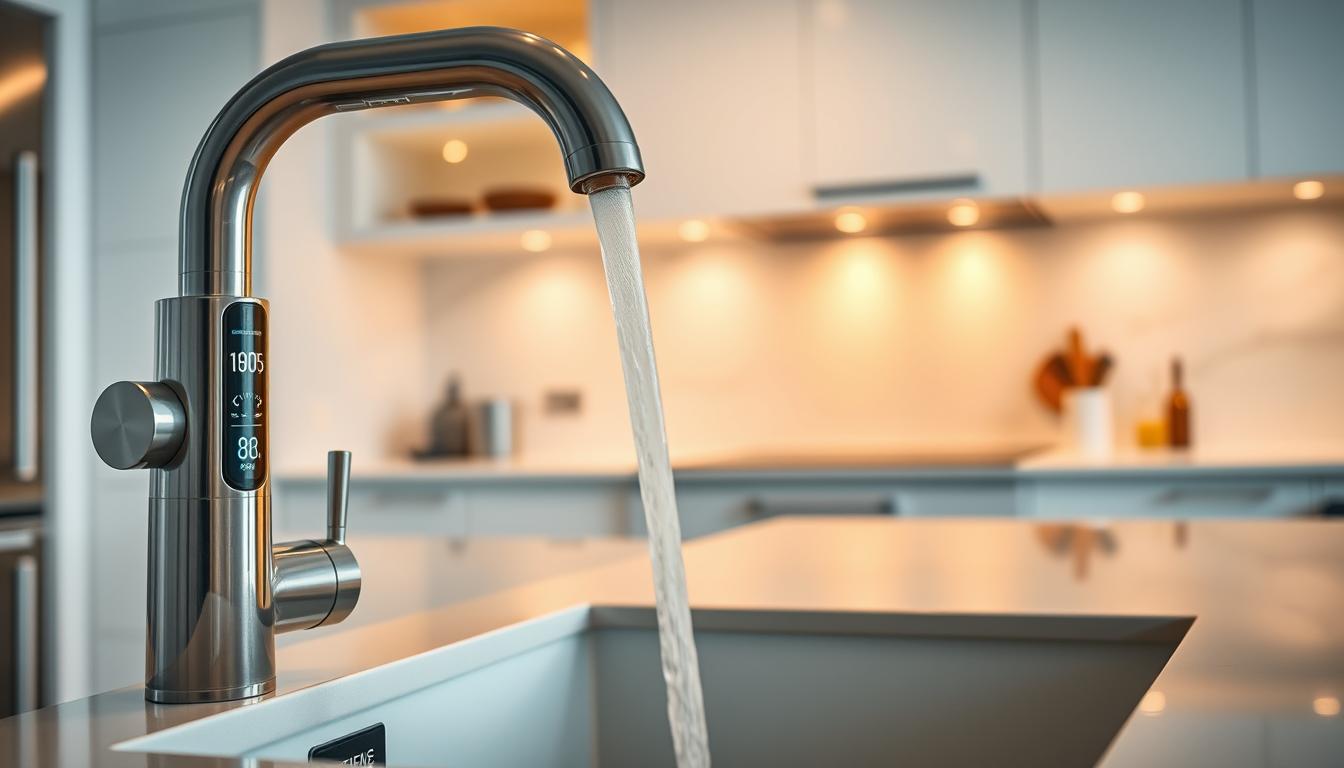
Scald injuries from tap water are a big risk in homes and public places in the U.S. Every year, about 112,000 people go to the emergency room for water scalds. Almost 7,000 of them need to stay in the hospital.
It’s important to know these risks to keep safe those who can’t move fast from hot water. This includes kids, older adults, and people with disabilities.
Burns can happen fast when water is too hot. At 120°F, it takes about five minutes to cause burns. But at 140°F, burns can happen in just six seconds.
Adults usually like their bath water between 100–104°F. Young kids should be kept in water around 100–100.4°F.
Many water heaters are set too high, and thermostats can be off by a lot. This makes the water temperature unpredictable. In places with many units or commercial buildings, water is sometimes kept hot to fight bacteria.
There are ways to prevent scalds. You can lower the water heater’s temperature, use special valves, or get smart faucets. These faucets control the water temperature right at the tap.
Temperature-controlled faucets are key for local scald protection. They make it easier to keep the water safe without always adjusting the heater. They work well with building controls to keep everyone safe.
What Are Anti-Scald Smart Faucets?
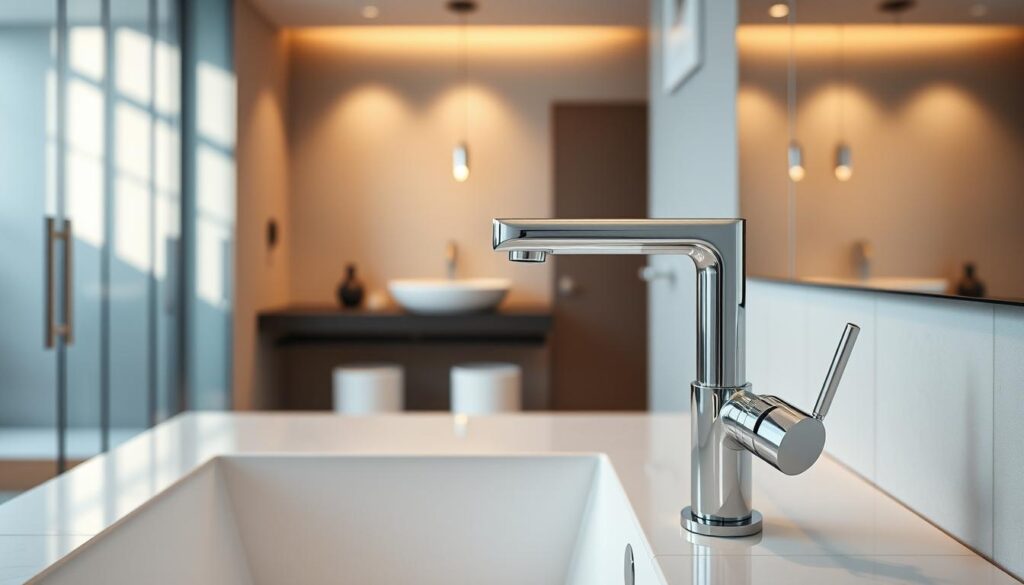
Anti-scald smart faucets are special faucets that stop hot water from getting too hot. They use sensors or electronics to control the water temperature. This makes them safe for use in bathrooms and kitchens.
These faucets have a special part inside that works like a thermostat. It’s all built into the faucet, so you don’t need extra parts under the sink. This makes them easy to install and maintain.
When choosing an anti-scald faucet, look for ASSE certifications. ASSE 1070 ensures the faucet won’t let water get hotter than 120°F. It also makes sure the water stops flowing quickly if the cold water fails.
There are many types of anti-scald faucets. You can find touchless faucets, sensor faucets, and even smart manual faucets. Brands like American Standard offer faucets that are both smart and reliable.
- Above-deck thermostatic limiter reduces below-deck clutter.
- Integrated electronics make smart technology faucets easy to spec and maintain.
- Touchless faucets help prevent cross-contamination while controlling water temperature.
- Temperature limit faucets protect children, seniors, and people with limited sensation.
Compared to separate thermostatic mixing valves, these faucets are simpler to use. They save time during installation and are easier to keep up with. If you want a safe and modern faucet, anti-scald smart faucets are a good choice.
How Do Anti-Scald Smart Faucets Work?
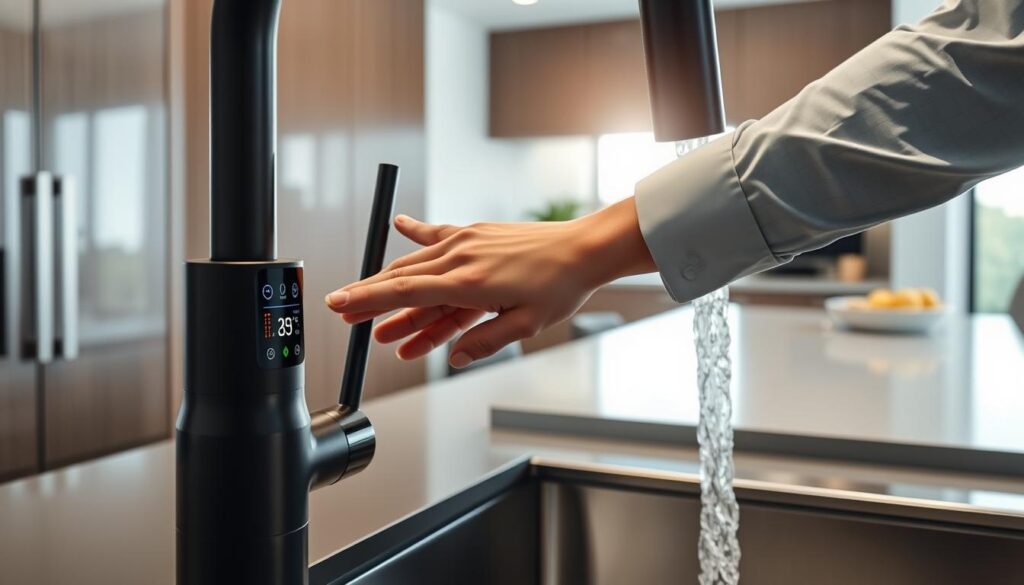
Anti-scald smart faucets keep your water safe by controlling the temperature right where you use it. They mix hot and cold water in a special chamber. This chamber has a sensor that adjusts the water temperature for you.
Mechanical faucets use a special wax that changes shape with temperature. When the water gets too hot, the wax expands and stops the hot water flow. When it cools down, the wax shrinks and lets the hot water flow again.
Electronic faucets use sensors and valves to control the water temperature. They check the water temperature and adjust it in real time. This makes the faucet work faster and can even show the temperature on a digital display.
- Thermostatic mixing valve action keeps the output stable when inlet pressures change.
- Temperature limit faucets shut off or curb hot supply near 110°F–120°F to prevent burns.
- Touchless faucets often house the battery, sensor and limiter inside the spout for seamless operation.
These faucets have safety features to prevent accidents. They have built-in check valves to stop water from flowing the wrong way. If the cold water pressure drops, the hot water supply shuts off quickly to keep you safe.
These faucets are important in homes and public places. They can be installed at the water heater to control the temperature for the whole building. They also work at the faucet itself, making sure the water is safe to use.
Benefits of Using Temperature-Controlled Faucets
Installing anti-scald smart faucets makes your home safer for everyone. Kids, seniors, and those with mobility issues are at higher risk for scalds. These faucets keep water at a safe temperature, giving you peace of mind.
For public and commercial places, following safety codes is key. Faucets that meet ASSE 1070 standards ensure water stays under 120°F. This helps your space meet regulations and reduces the risk of burn claims and workers’ compensation costs.
Using smart faucets makes installation and upkeep simpler. They come with thermostatic limiters that are easy to access. This means you can fix them quickly, saving time and money compared to hidden thermostatic mixing valves.
Smart bathroom fixtures, like touchless faucets, also boost hygiene. Hands-free sensors encourage hand washing. And, thermostatic control prevents sudden temperature changes that could cause spills or falls.
- Water and energy savings: Modern sensor-operated models reduce flow while keeping safe water temperature, lowering waste and utility bills.
- Durability: Above-deck access to electronics and limiter parts speeds repairs and keeps fixtures working longer.
- Health considerations: Many faucets comply with NSF 372 lead-free limits to cut lead exposure in wetted parts.
Expect better water temperature control without losing performance. Low-flow anti-scald smart faucets provide consistent warmth and steady pressure. This means users get comfort, safety, and efficiency all at once.
Choosing the Right Anti-Scald Faucet for Your Home
First, think about your household needs. If you have young kids, older adults, or someone with mobility issues, look for faucets with precise temperature control and quick shut-off. Consider the location of the faucet too. Bathrooms, kitchens, and laundry rooms have different needs.
Make sure to check for certifications before buying. Look for ASSE 1070, ASSE 1016, or ASSE 1062 compliance. Brands like American Standard provide detailed information on their products, like the NextGen Selectronic series. Choosing certified faucets ensures safety and legal compliance.
Consider the power and sensor options. Battery-powered faucets are great for easy installation. Hardwired AC is better for busy bathrooms, as it cuts down on battery changes. If you’re installing many faucets, choose an AC supply that can handle 10–15 units for easier maintenance.
Match the faucet’s flow rate to your needs. Low-flow faucets save water, with options as low as 0.5 gpm. Make sure they work well for tasks like rinsing dishes or filling pots, if you’re installing one in the kitchen.
- Prefer integrated above-deck components for easier service and quicker installation.
- Choose designs that let you access batteries and internals without removing insulation or plumbing wrap.
Consider the materials and health standards. Opt for lead-free fixtures or those certified to NSF/ANSI 372 to ensure safe drinking water. This choice protects your water quality over time.
For touchless faucets, check the sensor’s reliability. Infrared sensors should work well, even in sunlight or other IR sources. Look for features that prevent false triggers while responding quickly to your presence.
Look at the manufacturer’s support and warranty. Make sure they offer replacement parts and technical help. Good after-sales service means your faucet will last longer and cost less in the long run.
Balance the faucet’s features with your budget. Temperature limit and smart faucets vary in price. Choose based on safety, serviceability, and certifications that meet your needs and give you peace of mind.
Installation Process for Anti-Scald Faucets
Before starting, measure the hot water temperature with a thermometer. Check your water heater’s setpoint and look for ASSE 1017 central mixing valves. If your heater’s temperature is too high, you’ll need point-of-use protection.
Installing integrated models is usually easy and fits well with many smart bathroom fixtures.
- Shut off the water supply and remove the old faucet. Clean the area well.
- Put the new faucet in place, secure it, and connect the water lines.
- Connect the power: insert batteries or fit the AC power supply as the manufacturer says.
- Turn on the water, check for leaks, and test the temperature limiter as the guide instructs.
Above-deck installations are often quicker. Faucets with built-in temperature limiters don’t need thermostatic mixing valves under the sink. This makes them easier to install.
Some systems need a separate mixing valve. In commercial or complex homes, you might need an ASSE 1017 at the heater or ASSE 1070/1016 devices at certain fixtures. These are common in places with centralized heating or high-volume appliances.
Check local codes for public or commercial buildings. Local rules might require ASSE 1070 certification or limit delivery temperatures. Make sure you know the rules before installing anti-scald smart faucets.
Choose DIY or professional help based on the job. Simple home jobs are doable for a skilled DIYer. For bigger projects, multiunit buildings, or electric water-heater changes, get a licensed plumber. They can also help with adding mixing valves to prevent Legionella risks.
After installing, test the tap temperature with a thermometer or testing card. Make sure it’s not over 120°F (49°C) and that the limiter works right. Proper testing ensures your home is safe.
Maintaining Your Smart Faucet
Make a simple routine for your smart faucet. Check for leaks, sensor response, and battery life. Also, test the water temperature at each fixture.
Look at supply lines and mounting hardware for wear or corrosion. This helps prevent problems.
Have a plan for batteries and power. Replace batteries as the maker suggests to avoid downtime. For busy spots, think about AC power for many units to cut down on stops.
Clean the sensor windows and spouts carefully. This stops false signals and keeps things clean. Don’t use harsh cleaners that can harm seals or lenses. Clean aerators often to keep water flowing well.
- Test thermostatic limiters by running the hot setting briefly.
- Look for signs that the limiter fails to cut off at unsafe temperatures.
- Prefer faucets with above-deck access for easier troubleshooting.
Fix temperature issues step by step. First, check cold-water supply pressure and the condition of check valves. This stops crossflow. Then, check the water heater setpoint and test the limiter if water is too hot.
If you lose cold-pressure, ASSE 1070 devices should stop hot supply fast. If they don’t, don’t use the faucet until a pro checks it for crossflow or valve failure.
Know when to call a pro. If you suspect crossflow, internal cartridge failure, or need water heater changes, get a plumber. Heater changes can be risky and need a pro.
Choose products from trusted brands. They should offer replacement parts and clear warranties. Easy access to parts and service makes caring for your faucet easier.
Don’t forget to maintain touchless faucets too. Regular checks help them last longer and work safely for your family.
The Impact of Anti-Scald Faucets on Water Conservation
Installing anti-scald smart faucets can greatly reduce water waste. These faucets, which turn on with a touch or motion, help avoid the long, unnecessary water flow. This is because people often run the water while adjusting the temperature manually.
Many smart faucets come with sensors and low-flow aerators. These aerators can use less than 2.2 gallons per minute (gpm). Some even go as low as 0.5 gpm. This can lead to up to 80% less water use compared to older faucets in busy areas.
Using less hot water also means you use less energy to heat it. Anti-scald faucets allow you to control the water temperature right at the faucet. This lets you keep your water heater at a higher temperature. This is safer and helps prevent the growth of harmful bacteria.
These faucets can also save money over time. They use less water and energy, which lowers your bills. They are also easier and cheaper to install than other systems. This means you can start saving money sooner.
- Reduced run time from sensors means less wasted cold and hot water.
- Low-flow performance lowers monthly consumption and utility bills.
- Fixture-level water temperature control supports safety without sacrificing hygiene guidance from CDC and WHO.
Good hygiene doesn’t rely on hot water. It’s about how you wash your hands and for how long. Lowering the water temperature doesn’t make handwashing less effective. It also prevents skin damage that can harm hygiene.
Switching to a low-flow faucet can really cut down on your water and energy bills. You’ll see the biggest savings in places where water is used a lot, like offices and schools.
Real-Life Applications and Case Studies
Anti-scald smart faucets are used in family homes to protect young children. They lower water temperature to 120°F or less. It’s important to test the water temperature with a thermometer after installation.
In multiunit buildings, managers use smart faucets to keep water safe. They balance water heater temperatures with on-demand protection. This reduces the risk of scalding.
Commercial restrooms and workplaces use smart faucets that meet ASSE standards. For example, American Standard’s ASSE 1070 faucets are fast to install and clean. They also make maintenance easier.
Healthcare, schools, and hotels use these faucets to protect people. They help prevent burns and meet safety codes. Sensor-operated faucets encourage handwashing and reduce germs.
- Integrated fixtures often shorten installation time versus separate thermostatic mixing valves.
- Above-deck access means quicker repairs and fewer service calls.
- Low-flow integrated models can replace 2.2 gpm units to save water and reduce operating costs.
Studies show these faucets save water and lower maintenance costs. Facilities report fewer service interruptions and lower temperatures. Choosing certified technology brings safety and efficiency.
Important lessons include choosing ASSE-certified devices and testing water temperatures. It’s also key to coordinate heater and faucet settings for safety and prevention.
Future Trends in Faucet Technology
Smart technology faucets will soon be a common sight in homes. Anti-scald smart faucets will work closely with building systems. This means you can monitor temperature, battery life, and alerts remotely through the cloud.
This connected system helps you catch maintenance needs early. It ensures your safety without any hassle.
Look for faucets with better electronic temperature control soon. They will also have digital mixers and programmable limits. This lets you set safe temperatures for each fixture and adjust to pressure changes.
These improvements in scald prevention technology are key. They help keep your hot-water systems safe while reducing Legionella risk.
Sensors in faucets will become more reliable. They will work well even in bright or busy areas. Smart bathroom fixtures will also use less water and energy.
They will do this without sacrificing the feel of the water. Materials will shift towards lead-free metals and antimicrobial finishes. This is for better health protection.
Manufacturers are designing faucets to be easier to service. You’ll be able to replace parts quickly. Plumbing codes are also expected to change, requiring more scald protection.
These changes will make anti-scald smart faucets more reliable and efficient. They will be easier to manage over the next decade.