Clean indoor air is key for seniors because they spend a lot of time inside. Older adults face more risks from pollutants. This is due to age-related health issues and weakened immune systems.
They are also more likely to have conditions like COPD and asthma. These health problems make them more vulnerable to indoor air pollution.
Particulate matter like PM2.5 (
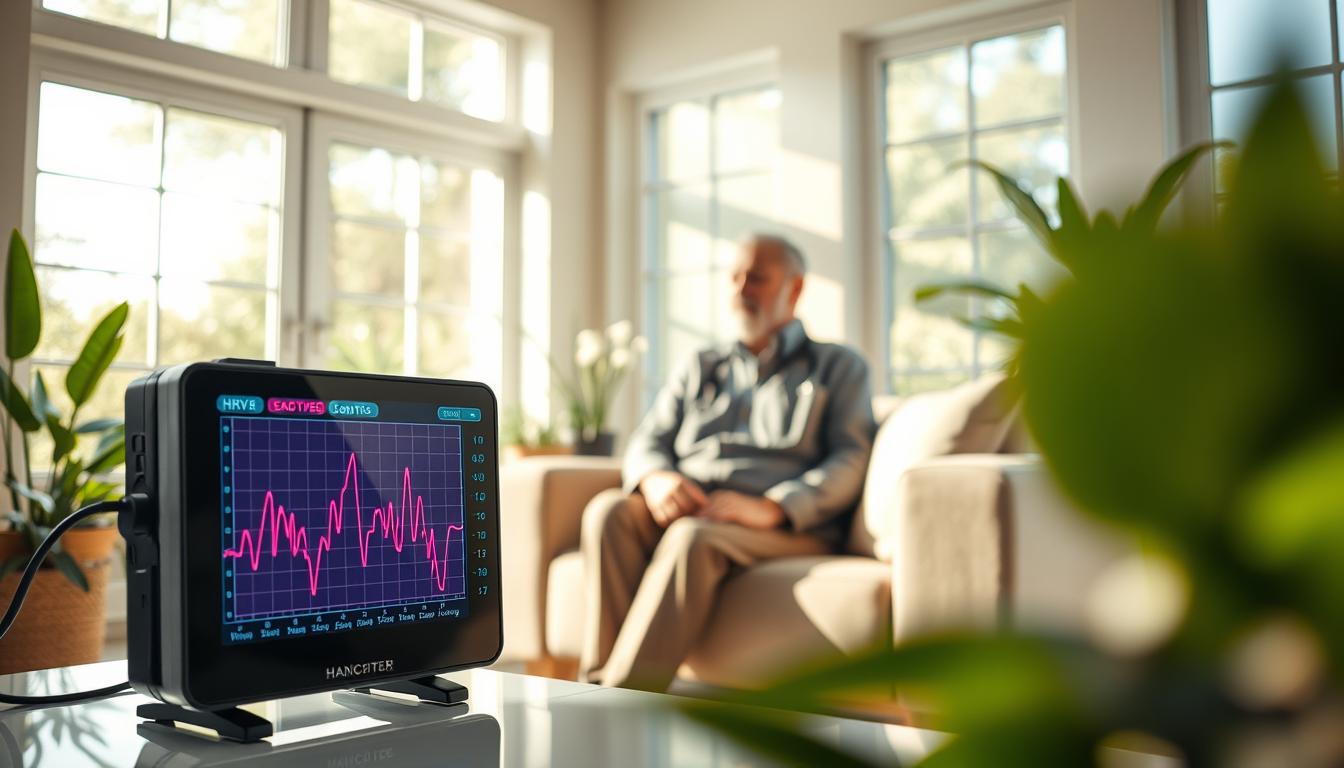
Air quality sensors help by constantly measuring the air. They track PM1.0, PM2.5, PM10, VOCs, CO2, temperature, and humidity. This way, you can quickly take steps to lower exposure to harmful pollutants.
Steps you can take include using HEPA air purifiers and upgrading HVAC filters. Improving ventilation and controlling humidity are also important. These actions can make living spaces more comfortable and reduce health risks.
Good indoor air quality also benefits staff health and productivity. It can lower sick days and costs. Plus, it builds trust with families by showing them the air quality and results.
Understanding Indoor Air Quality and Its Importance
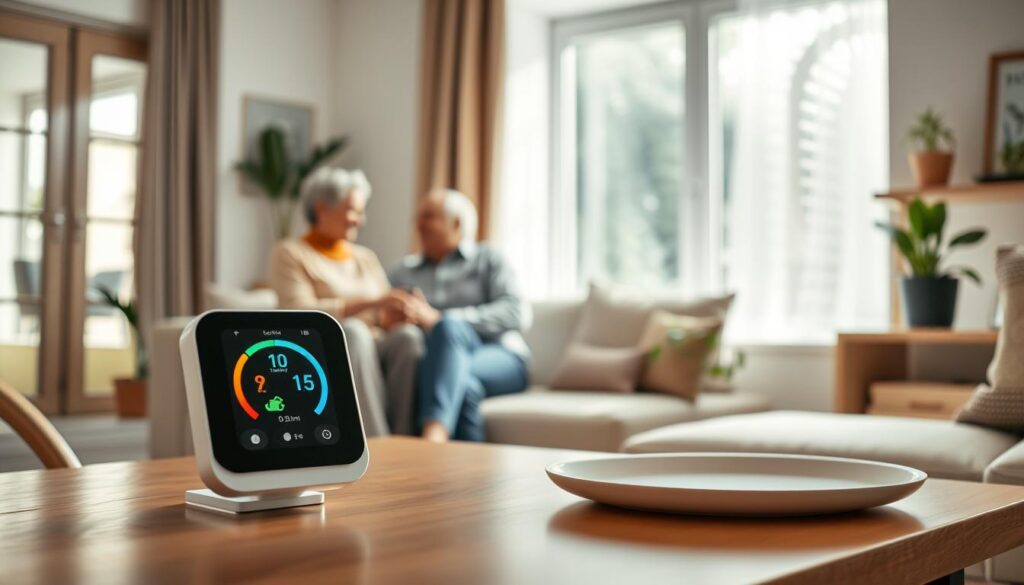
Knowing what indoor air quality means is key to keeping your home healthy. It’s about the mix of gases, particles, humidity, and temperature you breathe inside. Sensors track important things like tiny particles, chemicals, carbon dioxide, temperature, and humidity.
Many everyday activities can pollute your indoor air. Things like gas stoves, cleaning products, air fresheners, and even pets can release harmful substances. These can come from cooking, cleaning, or just living in your home.
Outdoor pollution also gets inside your home. This includes car exhaust, dust from construction, and even wildfire smoke. It’s important to monitor both the pollution inside and outside your home.
Being exposed to these pollutants can harm your health. Tiny particles can hurt your lungs and heart. Chemicals can irritate your eyes and throat and even affect your organs. Too much carbon dioxide can make you feel tired and less focused.
Measuring and setting standards is important. Modern sensors give you real-time air quality updates. Organizations like the World Health Organization and the U.S. Environmental Protection Agency provide guidelines to help you plan for the long term.
Turning complex data into simple actions makes monitoring useful. The air quality index helps you know when to take action. It tells you when to open windows, use an air purifier, or limit activities that pollute.
- What to watch: PM1.0 / PM2.5 / PM10, VOCs, CO2, temperature, humidity.
- Common indoor sources: cooking, cleaning, smoking, candles, off-gassing.
- Outdoor factors: traffic, construction, wildfires, industrial emissions.
- How sensors help: continuous air pollution monitoring and simple air quality index alerts.
How Air Quality Affects Seniors Specific
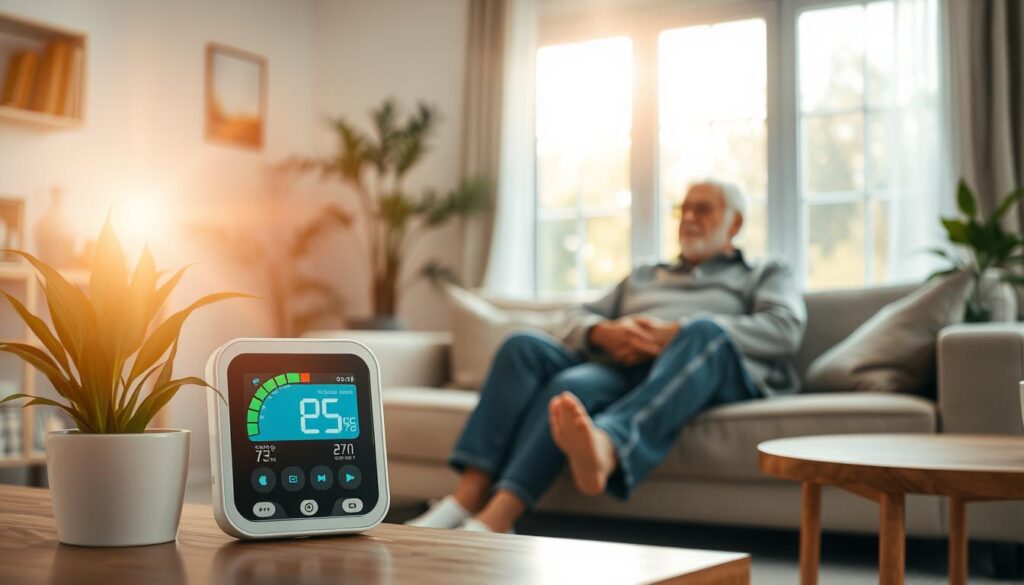
As you get older, your lungs and immune system change. It becomes harder for your body to filter out small particles. This makes you more vulnerable to indoor air pollution.
Small particles, like PM2.5 and volatile organic compounds, can cause breathing problems. You might cough more, have excess mucus, wheeze, or feel short of breath. These symptoms can lead to serious health issues like COPD or asthma.
Long-term exposure to fine particles can also harm your heart and blood pressure. It can stress your cardiovascular system and make existing health problems worse. This can lead to emergency visits to the hospital.
Poor indoor air quality can affect more than just your lungs and heart. High CO2 levels, volatile compounds, and microbes can disrupt sleep and lower mental clarity. Temperature and humidity extremes can also make you feel uncomfortable and stressed.
Living in shared rooms or high-occupancy areas can quickly increase CO2 and microbial levels. Outdoor events like wildfires or heavy traffic can also raise indoor PM2.5 levels quickly. Using air quality sensors and monitoring can help you spot these changes and take action.
- Physiological vulnerability: lower lung function and immune defense.
- Respiratory impacts: worsened COPD, asthma, infections and more hospital care.
- Cardiovascular links: higher risk of heart problems with long-term PM2.5 exposure.
- Secondary effects: sleep disruption, cognitive strain, discomfort from thermal stress.
- Exposure contexts: shared spaces and outdoor infiltration raise indoor pollutant levels.
Using air quality sensors and regular monitoring helps you track risks and protect your health. When you see real-time data, you can take action to improve indoor air quality.
Benefits of Air Quality Monitoring for Seniors
Air quality monitoring alerts you to spikes in harmful particles. This lets you take quick action to improve the air. This action reduces irritation and infection risks for seniors with weak lungs.
By constantly monitoring the air, you can prevent worsening of lung diseases. This is because you can avoid triggers that cause attacks. This way, you can avoid emergency visits and get better care.
Better air quality also means more comfort and sleep. Keeping humidity and temperature right, and pollutant levels low, helps breathing. It also improves sleep, thinking, and mood.
Using HEPA purifiers and improving air exchange rates lowers infection risk. Studies show that increasing air changes from 3 to 6 reduces airborne germs by over 40 percent. This is very helpful for group homes and assisted living.
- Operational gains: sensor data lets you tune HVAC use for energy efficiency and lower maintenance costs.
- Targeted fixes: portable purifiers such as the Alen 75i or 45i can be more cost-effective than overhauling whole systems.
- Family assurance: real-time air quality data and app alerts provide transparency and peace of mind for relatives and staff.
Air quality monitoring is key for daily comfort and long-term health. It gives you data to act on, control over your environment, and steps to protect seniors. It also keeps operations practical.
Types of Indoor Air Quality Sensors
There are many air quality sensors to pick from for a senior’s home. Particulate sensors track PM1.0, PM2.5, and PM10. PM2.5 is key for lung health because it goes deep into the lungs.
VOC sensors find volatile organic compounds from paints, cleaners, and air fresheners. High VOC levels can irritate the throat or eyes. They also increase health risks over time.
CO2 sensors show how well a room is ventilated and how many people are there. High CO2 levels can make you feel tired and less sharp. It’s a sign you need more fresh air.
Temperature and humidity sensors keep the air comfortable and prevent mold. Aim for 30–50% humidity to stop mold and help seniors breathe better.
- Particulate sensors — key for monitoring air pollution and daily air quality.
- VOC sensors — useful when using cleaners, painting, or getting new furniture.
- CO2 sensors — good for rooms where people spend a lot of time, like living rooms and bedrooms.
- Temperature/humidity sensors — basic tools to prevent mold and keep the air comfortable.
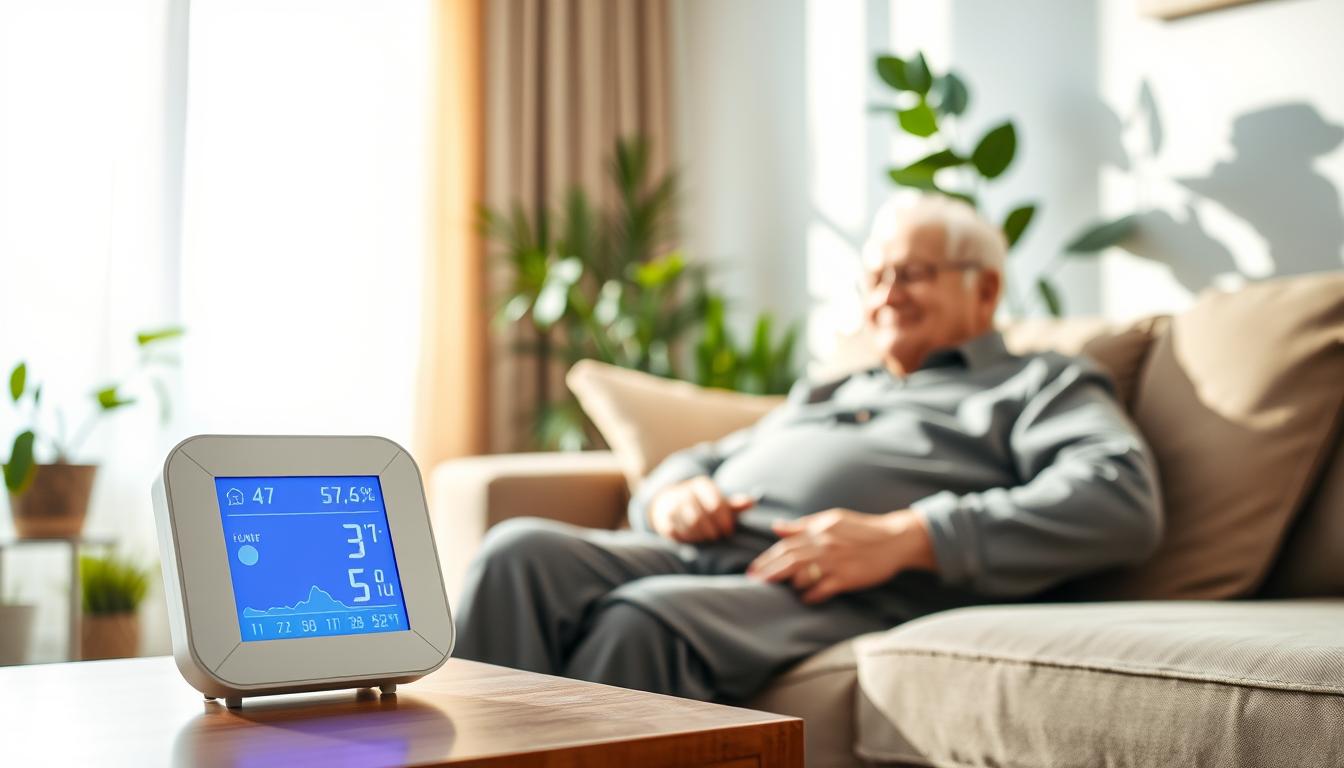
Multi-sensor devices offer many readings and send data to apps and cloud dashboards. For example, Zigbee-based sensors help with home care. Plug-and-play units like HibouAir give real-time data to family and caregivers.
Smart sensors send alerts, show trends, and work with HVAC systems or dehumidifiers. Basic monitors just show local readings but don’t automate. This makes it harder to act on air quality changes over time.
- Think about what air quality metrics are most important for the senior you care for.
- Go for a multi-sensor or smart sensor if you want to monitor air quality remotely and automate.
- Put sensors in common areas and bedrooms for the best air quality tracking.
The Role of Technology in Monitoring Air Quality
Modern air quality sensors let you track indoor risks easily. They connect to your home network via Zigbee or Wi‑Fi. This sends real-time data to apps and cloud dashboards, making monitoring continuous and visible on your phone or tablet.
These sensors alert you when air quality gets too bad. They send notifications for high levels of particulate matter, VOCs, CO2, or humidity. This helps you make quick decisions, like opening a window or running a purifier.
Many systems also automate responses. For example, smart purifiers can start up when air quality drops. This makes life easier for caregivers and keeps spaces safer.
Cloud dashboards offer historical data and logs for compliance and reporting. They help show that air quality monitoring is done regularly. This is important for care centers and families to meet regulations and clinical standards.
Choose systems with clear, simple designs. Look for color rings, easy pairing, and straightforward alerts. This way, staff and seniors can use them without needing technical skills. Good design makes air quality monitoring easy in daily care settings.
- Real-time alerts for immediate action
- Automation with purifiers, HVAC, and dehumidifiers
- Cloud dashboards for trends and compliance
- User-friendly displays for nontechnical users
By using reliable sensors, smart home tech, and easy apps, you create a system. It supports health, comfort, and ongoing air quality monitoring in homes and care facilities.
Setting Up Indoor Air Quality Sensors in Your Home
First, place air quality sensors in important areas like living rooms and bedrooms. Also, put them near kitchens or where cleaning supplies are stored. Make sure they’re not too close to drafts, vents, or anything that might block their view.
CO2 sensors should go in places where people gather, like dining areas. They help you know when it’s time to open a window. If your room is big or busy, use more than one sensor to get a better reading.
Choose air purifiers that fit the size of your room. For example, the Alen 75i works for up to 1,300 sq ft. Place them where air can flow well and use more than one in crowded areas.
Connect sensors to your home’s systems for alerts and control. Devices like Zigbee and Wi‑Fi can send messages or turn on fans or purifiers when needed. This makes it easy for everyone to keep the air clean.
Keep humidity and temperature right to help seniors breathe better. Use humidifiers or dehumidifiers and a good thermostat. Aim for 30–50% humidity and comfortable temperatures to avoid irritation and mold.
- Change HVAC filters every 1–3 months if you use them a lot.
- Clean sensors as the maker says to keep readings accurate.
- Get your ducts cleaned every year to stop contamination.
If sensors show high levels of PM2.5, VOC, or CO2, act fast. Open windows if the outside air is good, turn on HEPA purifiers, and stop using products that give off VOCs. Also, keep smoking and candles away.
Keep a log of maintenance to track changes and actions. Regular care means your sensors will keep giving you accurate data. This helps keep the air clean and supports the health of seniors.
Interpreting Data from Air Quality Sensors
Start by learning about common air quality levels. Watch PM2.5 levels closely, as they can be harmful even at low amounts. Also, be aware of VOC spikes, as they can cause immediate irritation. If CO2 levels go over 1,000 ppm, it’s time to improve ventilation.
Look at both immediate alerts and long-term trends. Real-time data helps you act fast when air quality suddenly worsens. You can turn on purifiers or open windows. Long-term data shows ongoing issues, like seasonal wildfires or HVAC problems.
Connect sensor readings to specific events to change your habits. Notice how readings spike during cooking, cleaning, or when there’s outdoor smoke. This helps you plan better and avoid repeated exposure.
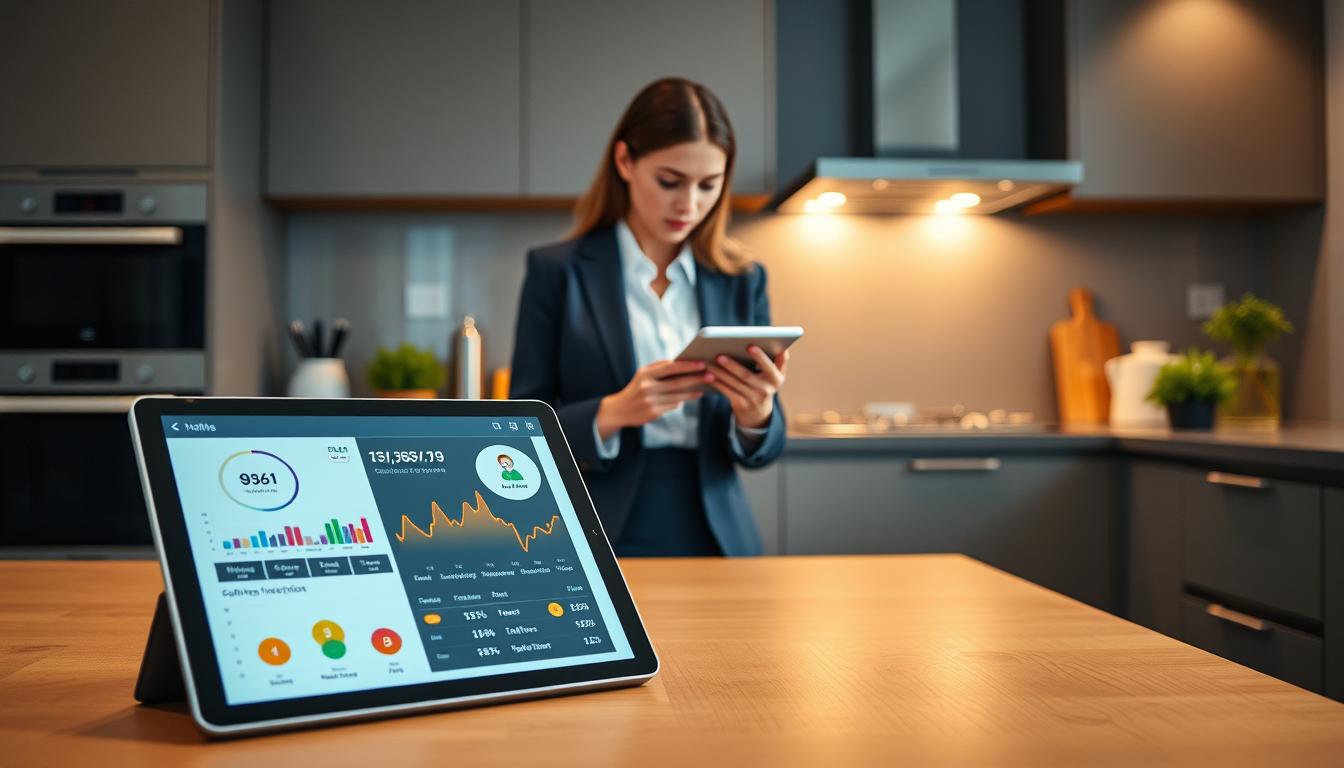
Use dashboards to make sense of the data. Cloud analytics and visual dashboards make it easier to understand and act on air quality data. You can compare different areas, find HVAC weaknesses, and discover ways to save energy.
- Read multi-parameter data: pair humidity and temperature with particulate readings to assess mold risk or dry-air irritation.
- Use VOC readings to spot off-gassing from new furniture, paint, or cleaning products.
- Track the air quality index over time to see if changes lower exposure.
Share results in a simple way. Use color-coded indicators and clear instructions for everyone. This ensures everyone knows what to do when air quality is bad.
Make regular checks a part of your routine. Save air quality reports to track patterns. Use these to plan maintenance, adjust cleaning schedules, or upgrade filters based on trends.
Additional Steps to Improve Indoor Air Quality
There are many ways to make your home safer for seniors with breathing problems. Start by putting HEPA air purifiers like the Alen BreatheSmart series in bedrooms and common areas. These purifiers catch fine particles down to 0.3 microns.
Upgrade your ventilation and HVAC filters to MERV-rated or HEPA-capable ones. Set a regular maintenance schedule. Replace filters on time and get professional duct cleaning at least once a year to avoid contamination.
Keep the humidity in your home between 30% and 50% with humidifiers or dehumidifiers. This helps prevent mold and eases dry-air irritation for sensitive lungs. Use air quality sensors to track humidity, along with particulate and VOC levels.
Control pollution sources inside your home. Use green cleaning products, low-VOC paints, and low-emission furnishings. Limit candles, incense, and strong fragrances. Do not allow smoking or vaping indoors.
- Position purifiers to increase effective air changes per hour (ACH); aim for 5–8 ACH in higher-risk spaces.
- Use kitchen exhaust fans when cooking and close windows during outdoor pollution or wildfire smoke events.
- Combine purifiers with ventilation and hygiene practices to reduce infection risk.
Make air quality monitoring a regular part of your routine. Use air quality sensors throughout living areas for continuous feedback. Document action plans, review data periodically, and adjust strategies as needed.
Remember the importance of air quality monitoring when planning upgrades or purchases. A coordinated approach that pairs sensors with targeted interventions will help you protect seniors’ breathing health and improve comfort in the home.
Encouraging Seniors to Engage with Air Quality Monitoring
Make air quality monitoring easy to understand with clear visuals and simple language. Use devices with color rings and short alerts. This way, you and your team can quickly see if the air is good or needs work.
Display real-time air quality data on a central screen. This helps everyone spot patterns without needing to know technical terms.
Give staff and residents a quick training on air quality sensors. Teach them how to respond to alerts, like opening windows or using a purifier. Also, show them how to maintain the systems to keep them working well.
Explain how monitoring air quality can make daily life better. It can help with breathing, sleep, and reduce coughing and allergies. Share how it prevents emergencies and tie sensor alerts to simple routines, like airing out after cooking.
Use technology to make monitoring easy. Connect sensors to smart devices for automatic control. Brands like HibouAir make it simple to set up. Share air quality reports with families to show you’re open and get help from vendors and maintenance teams as needed.