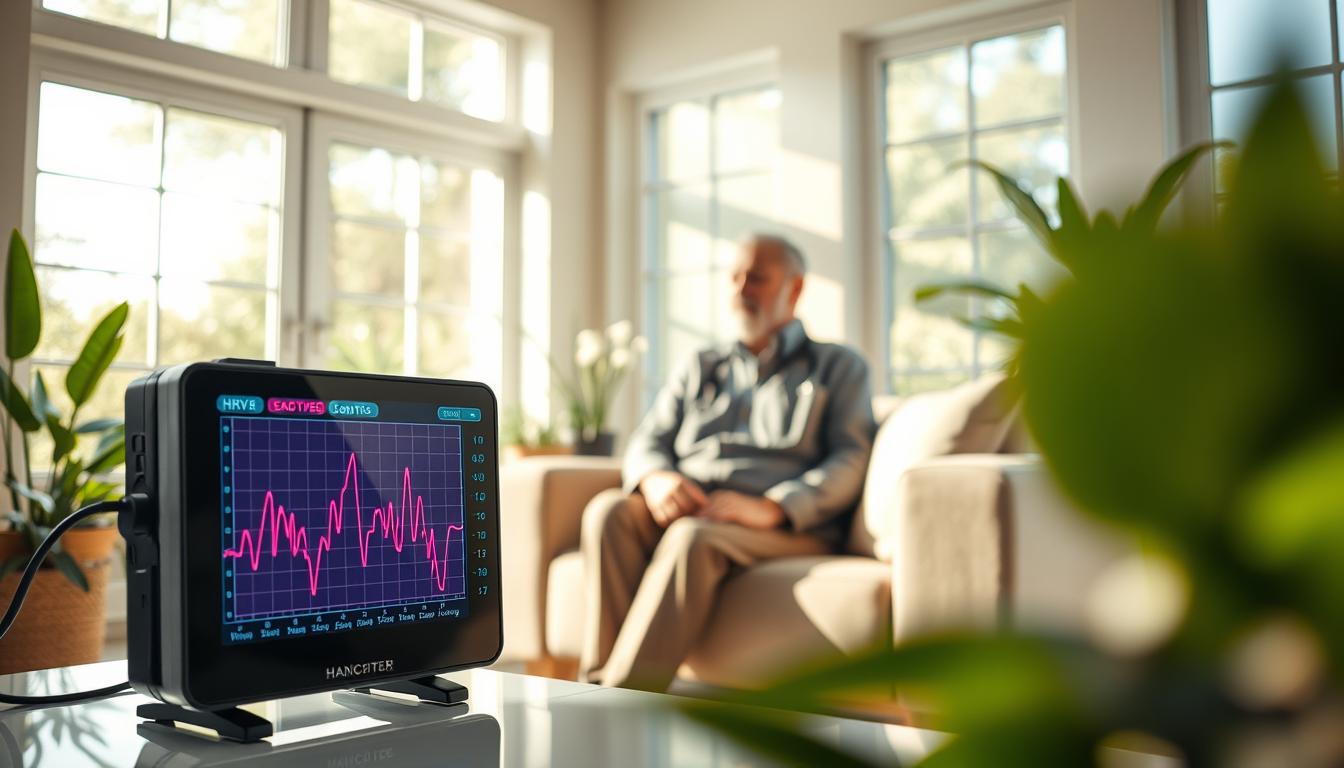
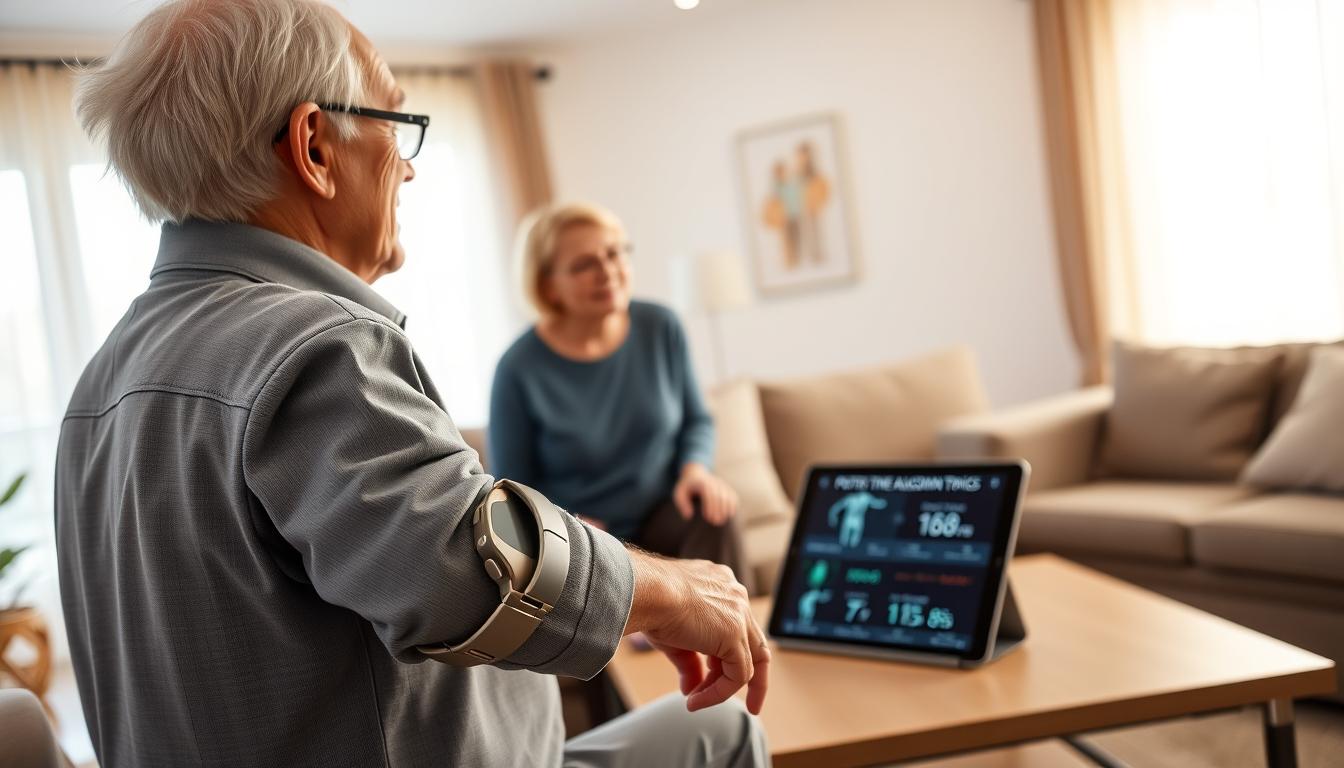
Good posture is key for balance, breathing, and feeling comfortable every day. Now, there are tech solutions to help spot posture issues early. You can even get help without going to a clinic.
This article explores both wearable and non-wearable systems. Wearables, like the Xiaomi Mi Band 3, track your wrist. Non-wearables use radar and computer vision to monitor how you sit and walk.
New tech in accelerometers and gyroscopes helps track posture in real time. For example, some systems use force sensors to check sitting posture. Others, like radar units, track walking speed without needing you to wear anything.
If you’re looking for ways to improve posture, there are options for remote help and long-term monitoring. It’s important for devices to be easy to use. This makes them more appealing to older adults and helps them stick with it.
Understanding the Importance of Posture Monitoring in Seniors
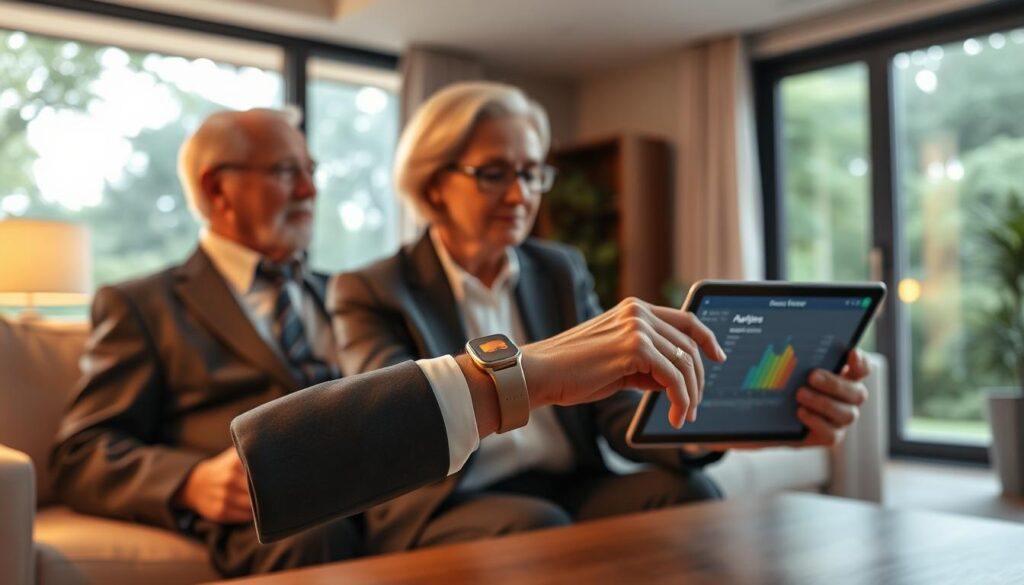
Your posture is key to more than just feeling comfortable. Bad posture can lead to chronic pain, spinal problems, and breathing issues. It also affects blood flow and can increase the risk of blood clots and spinal wear and tear.
By monitoring your posture, you can catch problems early. This way, you can take action before they become serious. Tools like ergonomic posture monitors or posture correction devices can alert you to harmful sitting or standing for long periods.
These technologies also track how well you move and balance. Changes in how you walk or stand can signal problems before you notice them. This lets you and your healthcare team act quickly.
Using posture improvement technology can help you stay in your own home longer. It also makes it easier for caregivers to help you. Remote monitoring lets physiotherapists provide specific exercises or training to improve balance and reduce the risk of falls.
- Detect musculoskeletal issues early with an ergonomic posture monitor.
- Track walking speed and gait to identify mobility decline.
- Use a posture correction device to guide rehabilitation and daily habits.
Posture monitoring tech is seen as a valuable tool in healthcare. It helps you and your doctors understand your abilities, guide your recovery, and spot small changes that might be missed by regular check-ups.
Types of Posture Monitoring Technology
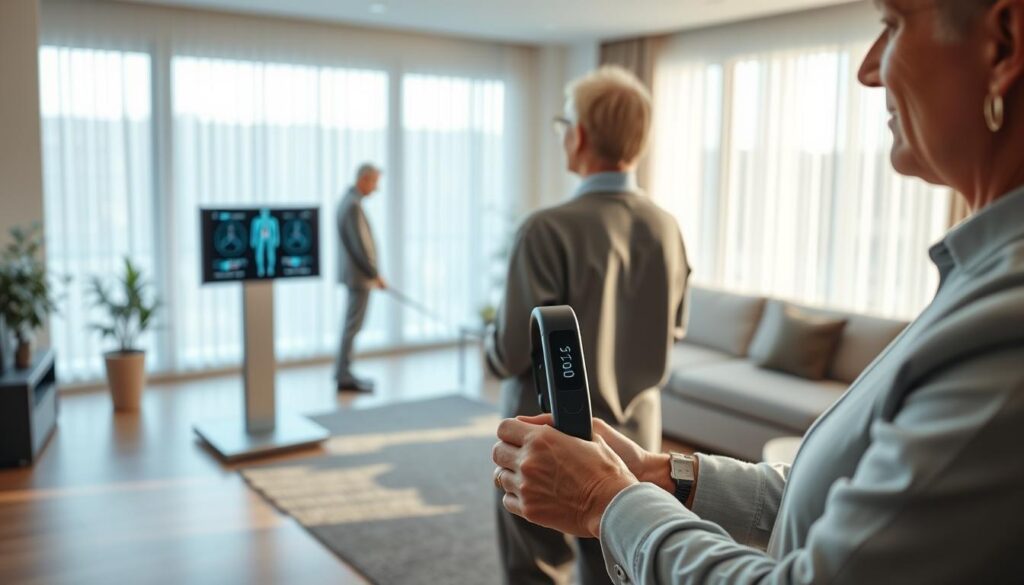
There are many types of posture monitoring tech, each for different needs. Some use smart chairs and mats with sensors. These can track your posture while sitting.
Wearable devices often use small sensors like the MPU6050. They can be worn on the wrist, chest, or back. Studies show that using more than one sensor improves tracking.
Some systems use cameras to monitor posture. They can spot slouching and other issues. But, they might raise privacy concerns.
Radar technology is also being used. It creates 3D images to track movement. This method is non-invasive and can be used at home or in clinics.
Some devices combine different technologies. They use small computers, sensors, and apps for feedback. This setup is good for those who want to track their posture on the go.
- Pressure/force-based: great for furniture-centered monitoring, limited to where the mat or chair is placed.
- IMU-based wearables: portable and accurate, depend on user adherence and comfort.
- Vision systems: powerful for classification, raise privacy and placement issues for home use.
- Radar/non-contact: passive and private, may be sensitive to room layout and furniture.
- Hybrid/IoT: flexible for real-time coaching, require network setup and maintenance.
Choose the right technology for your needs. For constant monitoring at home, consider non-wearable options. Clinics might prefer vision or radar systems. Wearable devices with apps are great for on-the-go tracking.
Wearable Tech Options for Seniors
There are many wearable options for seniors. Wrist-worn devices like the Xiaomi Mi Band series are popular. They are easy to wear and don’t get in the way.
Belts and lumbar bands track sitting and posture. They use sensors to detect changes and falls. This helps caregivers and doctors keep an eye on things.
When looking at a smart posture brace, think about comfort. A good brace fits under clothes and lets you move freely. Vibration alerts are nice, but they might be too much for some.
Setting up your device should be easy. Seniors like devices that last a long time and are simple to charge. Look for devices with one-button pairing and clear instructions.
Where the sensors are placed matters a lot. A device with sensors at key spine points is more accurate. Make sure it can send reports to therapists for remote help.
Before buying, check how the device alerts you. You want alerts that fit your daily life. Choose a device that’s easy to use, accurate, and doesn’t get in the way.
Non-Wearable Solutions for Posture Monitoring
You can pick non-wearable posture monitors that sit quietly in a room. They track posture without adding to your daily tasks. Smart chairs with sensors fit into your furniture and keep your seat comfy.
These systems are great for seniors who don’t want to wear devices. They act as an unobtrusive way to track posture.
A smart back support device like an FSR-based seat system offers detailed pressure mapping. It uses Force Sensing Resistors for sensitivity and durability. These are placed at key points on the seat and backrest.
Data is read by small computers like a Raspberry Pi 4. It captures common positions like sitting upright or slouching. This happens during long monitoring sessions.
Radar-based sensors are a privacy-preserving, passive option. They monitor gait, transfers, walking speed, and falls. A Chirp-style radar uses TI radar chips and thermal sensing to collect data at 10 Hz.
This setup shows near-perfect agreement with established walkways. It works as a posture tracking system without cameras or wearables.
Camera and computer-vision systems deliver high-resolution posture detection. They use convolutional neural networks. But, you should consider their accuracy and privacy concerns.
Some homes prefer passive chairs or radar over cameras. This is because cameras might raise privacy issues.
- Benefits: continuous, low-effort monitoring that respects comfort and consent.
- Trade-offs: installation needs, hardware costs, and possible processing demands.
- Use cases: living rooms, clinic waiting areas, long-term care lounges, and home offices.
When choosing an ergonomic posture monitor, look at sensor placement and data rates. Also, see if it flags events in real time. A smart back support device in seating plus a radar-based monitor for walking and transfers offers broad coverage with minimal intrusion.
To get reliable results, look for validated metrics. Also, check if the system’s preprocessing steps are transparent. These steps include outlier removal and normalization. They improve model performance in classifying posture states or detecting changes that matter for daily living.
Key Features to Look for in Posture Monitoring Tech
Look for a posture tracking system that shows reliable results. It should be validated against clinical gold standards. This means it’s tested with gait mats or lab motion capture and shows high accuracy.
The setup of sensors is important. Devices with multiple triaxial accelerometers and pressure-sensing FSR arrays are more accurate. They capture movement and weight shifts better than a single sensor. Make sure the device uses sensor fusion and proven preprocessing steps.
Comfort and ease of use are key for older adults. Choose a posture correction device that is light, fits well, and doesn’t have bulky straps or loud alerts. Studies show wrist-worn and low-profile options are more comfortable and easy to wear.
Privacy is a big concern in home settings. Non-wearable radar sensors are good because they don’t show identifiable images. Camera-based systems might raise privacy questions. Think about how much detail you need and how visible the system should be.
Consider where data is processed. On-device processing is fast and keeps data safe. Cloud processing allows for more advanced analysis and remote access. Check if the device uses validated classifiers and techniques like SMOTE for balanced training data.
Make sure the device works well with healthcare professionals. It should export reports, integrate with telehealth, or allow clinician review. Easy data sharing helps with coordinated care and adjusting therapy plans.
Think about practical things like battery life, charging, firmware updates, and cost. A device that needs frequent charging or is hard to maintain might not be used often.
Focus on solutions that are validated, comfortable, privacy-preserving, and work well with healthcare. These features will help you find a posture tracking system that offers lasting benefits for seniors.
The Role of AI in Posture Monitoring
AI is key in modern posture monitoring tech. It turns raw data into useful insights. Machine learning models classify posture and clean up noise. They also find important features like mean and variance to improve accuracy.
In a posture tracking system, preprocessing is important. Steps like normalization and removing outliers are used. Techniques like min-max scaling and 1.5×IQR filtering prepare inputs for algorithms. Algorithms like Random Forest and Gradient Boosting then make predictions.
Feature engineering is vital for model performance. Sensor-level statistics and correlation checks help. Oversampling methods like SMOTE fix class imbalance for better training.
AI supports predictive analytics in posture improvement technology. It can spot slow declines in gait or posture early. This allows for timely interventions and better care planning.
Your digital posture assistant can give real-time feedback. Algorithms compare current data to user baselines and trends. They then suggest alerts, exercises, or reports for clinicians.
- Real-time detection: identify sit-to-stand events, falls, or slouching.
- Personalization: adapt thresholds and cues to each user’s baseline.
- Privacy-aware sensing: point-cloud analysis can track motion without identifying individuals.
Expect the core analytics of a posture tracking system to combine sensor fusion, tuned models, and clear outputs. This setup makes posture improvement technology practical for everyday use.
How to Use Posture Monitoring Tech Effectively
First, pick a device that fits your living space. Wearable trackers are best for active people. For those who sit a lot, FSR-based chairs offer great feedback.
Radar sensors are perfect for monitoring while walking or moving. Make sure to match the tool to your daily activities before buying.
Follow the setup and calibration steps carefully. Place devices as recommended by the manufacturer. For example, motion sensors should be at the walkway end for gait checks.
Seat sensors should be on the backrest and cushion for accurate readings. Proper placement helps avoid false alerts and ensures reliable data.
Teach everyone who will use the tech how to use it. In-person training and a simple manual are key for seniors. Meeting twice in the first week helps.
Show how to charge, wear, and sync devices. Simple routines help avoid missed sessions and keep the device working well.
Set realistic alert thresholds to avoid alarm fatigue. Use gentle reminders for short slouches and stronger alerts for longer ones. Aim for consistency, not perfection.
Share data with clinicians. Send walking speed trends, posture classification counts, and alerts for prolonged slouching. Clinicians use this data to tailor rehabilitation plans.
Remember privacy and safety. Choose radar or nonvisual sensors for monitoring without cameras. Avoid devices that collect audio or identifiable images unless needed.
Plan sensor placement carefully to protect dignity and reduce intrusive data capture.
Check usability regularly. Ask about comfort and battery habits every few months. Adjust settings or try a different device if adherence drops.
Keep the posture monitoring tech as part of a broader care plan. Define roles for the senior, caregivers, and clinicians. Use data to guide home exercises and in-clinic therapy.
Clear roles improve adherence and make the device a practical part of daily care.
Overcoming Challenges with Posture Monitoring Tech
Choose devices that fit into your daily life to boost adoption. Opt for a smart posture brace or simple sensors that are light. If a system requires multiple devices, look for ones that start with one sensor and add more later.
Comfort is key. Vibration alerts might bother seniors. Opt for devices with gentle haptic cues, adjustable vibration, or app reminders for posture changes. These features help keep users comfortable and engaged.
Accuracy and how well it works for different people depend on the study size and where the sensors are placed. Small studies can show if something works, but bigger studies are better. Devices with more sensors usually work better for different body shapes than single sensors.
Usability issues include forgetting to wear devices and trouble sharing data. Choose systems with easy setup and simple data sharing. Family caregivers and healthcare professionals will use solutions faster if they are easy to share and understand.
Cost affects how accessible a solution is. Expensive devices like advanced cameras or pressure walkways might not be for home use. Look for affordable options like FSR arrays, radar devices, or a smart posture brace that’s well-tested and priced right.
Privacy is important if cameras are used. Choose non-identifying sensors like radar or pressure mats. Make sure the posture monitoring tech you pick respects privacy without losing accuracy.
- Start with a single, validated device to reduce burden.
- Test alert types before wide deployment to ensure comfort.
- Verify clinical validation and sample sizes behind claims.
- Prioritize systems that simplify data sharing for caregivers.
By thinking ahead and picking proven, comfortable, and private tech, you can make sure posture improvement technology is used well and often.
Keeping Your Data Secure: Privacy Concerns
Before using posture monitoring tech at home, look for privacy features. Find out if sensors keep data on the device or send it to the cloud. Data stored on the device is safer, but cloud services can be secure too if vendors follow strict rules.
Ask about how data is made anonymous and kept to a minimum. Some devices change raw data into something that can’t identify you. Make sure audio recording is turned off and that data is collected with study IDs.
Check if the device has the right approvals. Look for FCC or ISED approvals for indoor use. Medical device filings are important if the device does more than just track activity.
Make sure older adults and caregivers understand what data is collected. They should get clear consent forms. These forms should explain what data is collected, how long it’s kept, and who can see it. Good training and clear instructions help build trust.
Ask about encryption, user login, and how clinicians access data. Find out if personal health info is kept and for how long. Also, ask about third-party access. You should get audit logs and controls for who can do what.
Look into who funded studies and if the company has a conflict of interest. Choose solutions with independent research. This builds trust in the ergonomic posture monitor or tools.
Before using posture monitoring tech at home, ask for clear data policies. Demand privacy features, data retention limits, and easy ways to delete data or revoke consent.
- Confirm storage location: on-device vs cloud.
- Check anonymization and disabled audio capture.
- Verify regulatory approvals and independent validation.
- Ensure clear consent and easy data deletion.
The Future of Posture Monitoring Solutions
Posture monitoring tech will soon be more private and easy to use. New sensors will track your movements at home without needing to wear anything. They are reliable in studies and work well with systems for sitting and standing.
There will also be affordable, non-wearable options. Chairs with sensors and better AI will make tracking your posture easy and accurate. This will help seniors in care settings without disrupting their daily lives.
Wearable devices will get better for older adults. They will be comfortable and easy to use, with clear feedback. AI will learn your posture and walking habits, giving you personalized tips and connecting with health services.
These systems will work together with health records and dashboards. This will help with remote care and preventing falls. Studies will show how these tools help over time. Soon, you’ll see devices that combine the best of both worlds, using AI for personalized advice to keep seniors active and independent.