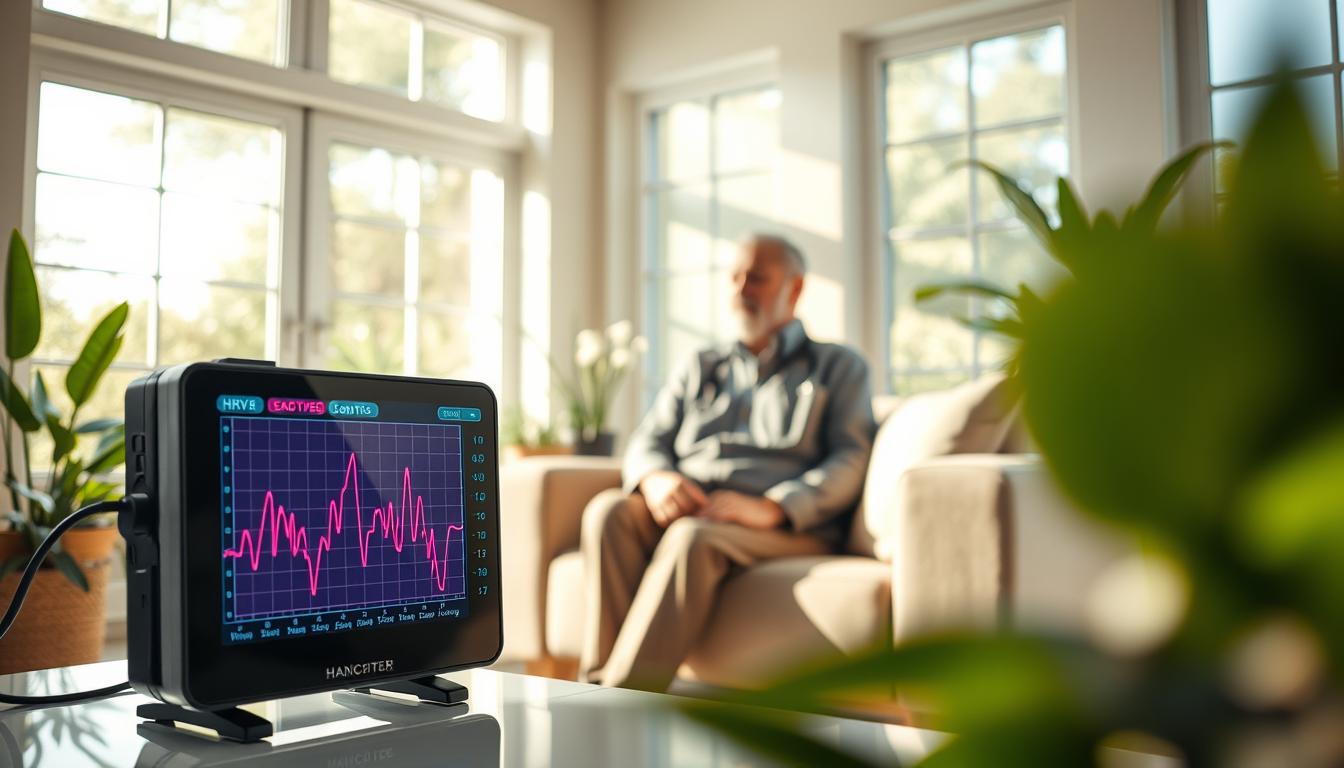
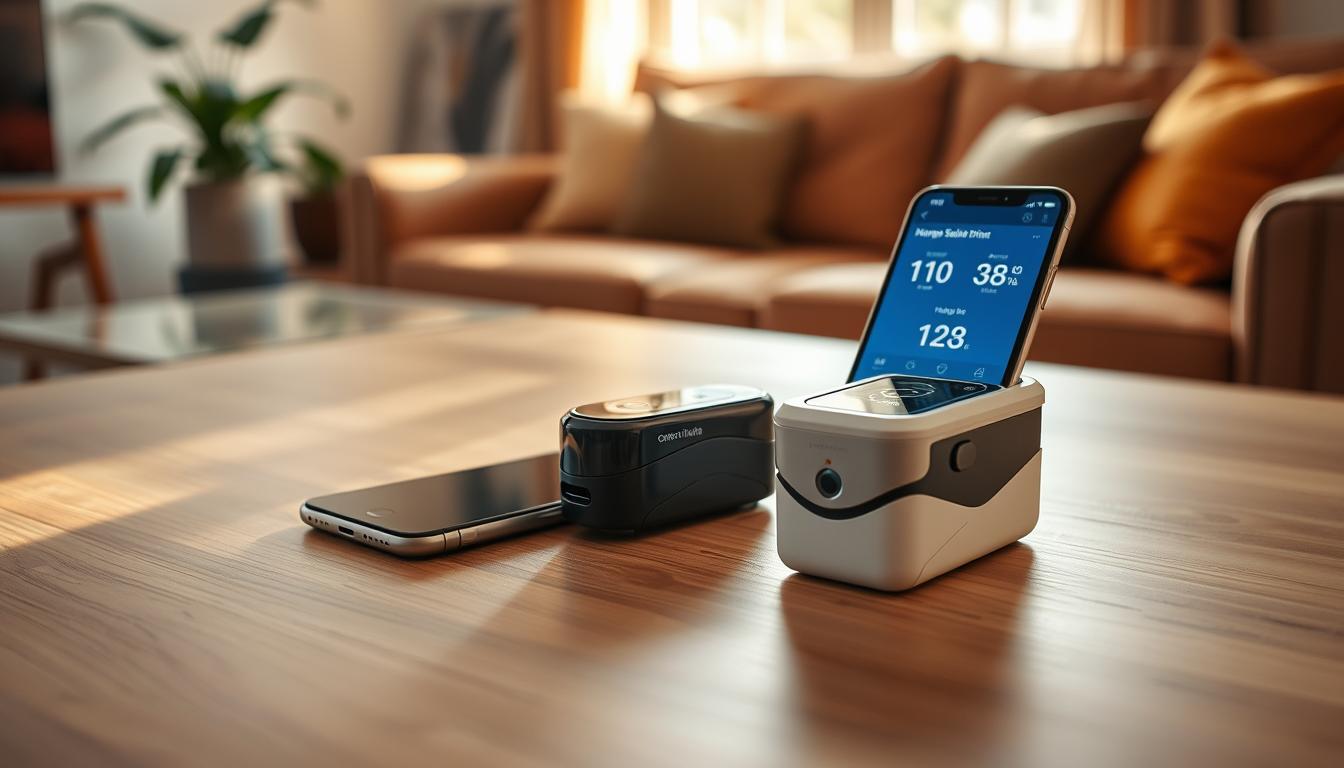
Using a home pulse oximeter is a quick and easy way to check your oxygen levels and heart rate. These small devices fit in a drawer and run on batteries. They’re great for checking your health after surgery, during asthma attacks, or at high altitudes.
In hospitals, pulse oximeters are a key tool in operating rooms and recovery areas. They measure how much oxygen is in your blood by shining light through it. Home versions work the same way but are smaller and more portable.
But remember, home pulse oximeters have their limits. They only show oxygen levels in your blood, not how well you’re breathing. Things like anemia or certain medicines can also affect the readings. Always talk to a doctor if your readings are low or if you’re feeling unwell.
Understanding Pulse Oximetry and Its Importance
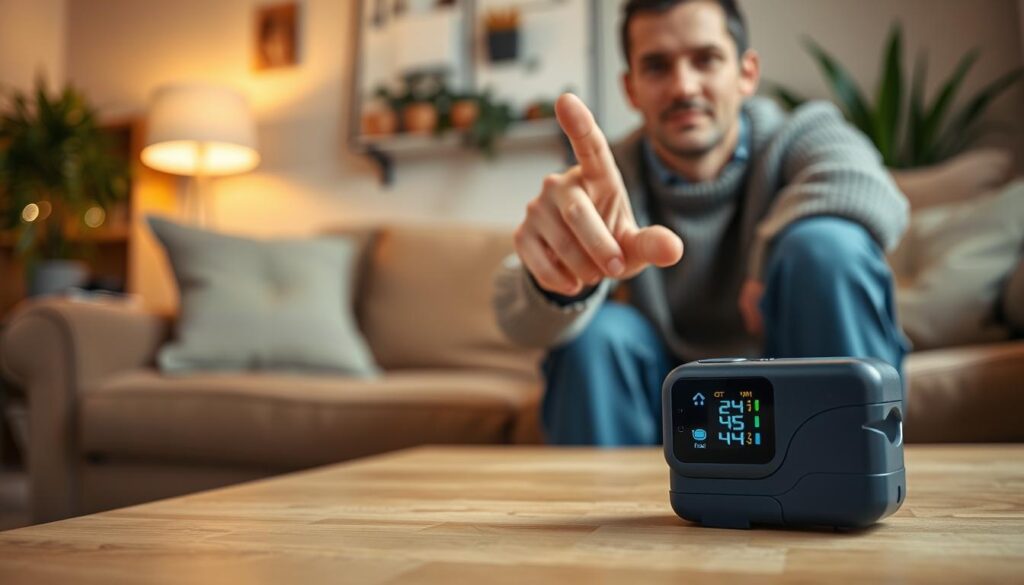
Pulse oximetry measures the oxygen in your blood. It uses light to check how much oxygen is in your blood. This method is quick and doesn’t hurt.
At sea level, your blood oxygen should be between 95 and 100 percent. If it’s lower, you might need urgent care. Knowing these numbers is key when using pulse oximetry at home.
Doctors use pulse oximetry in hospitals a lot. At home, it helps people with breathing problems or after COVID-19. It’s useful for tracking oxygen levels, even when you’re traveling or sick.
But, pulse oximetry only shows oxygen levels. It doesn’t check breathing or other important health signs. Always watch for other symptoms too.
Using oximeters in hospitals has saved lives. You can use them safely at home too. Make sure to pick good equipment and follow the instructions. If you notice any issues, talk to your doctor.
How Home Pulse Oximeters Work
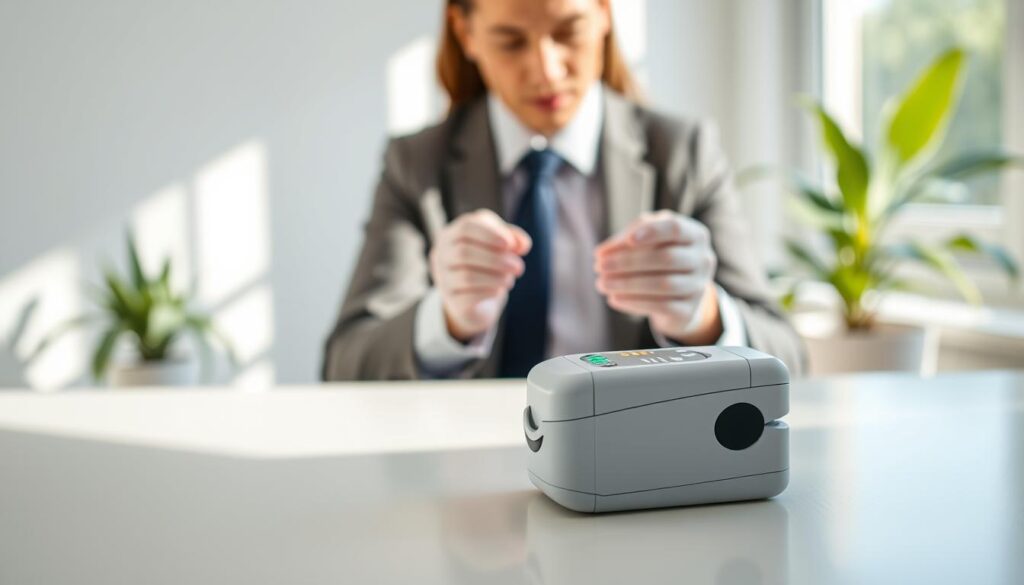
Your fingertip pulse oximeter for home use works by shining red and infrared light through your tissue. LEDs light up about 30 times per second. A photodiode catches the light that passes through.
The device then figures out how much oxygen is in your blood. It does this by looking at the light that changes with each heartbeat. This lets it estimate your SpO2 level.
Most home oximeters use transmissive sensors. These sensors have LEDs and detectors in a clip for your finger or ear. Reflectance sensors, which are less common, can be used on your forehead or chest.
The meter’s processor looks at the light changes to figure out your SpO2. It uses special algorithms to do this. You’ll see your SpO2 level on a small screen almost instantly.
Many oximeters also show a small waveform with each heartbeat. This is called a plethysmograph. You can also check the perfusion index to see how good the reading is. A low PI might mean the reading isn’t very good.
Some advanced oximeters can do more than just measure SpO2. They can detect other things like carboxyhemoglobin and methemoglobin. Some even guess your respiratory rate or total hemoglobin by looking at the pulse wave.
- Typical form factors: fingertip clips, ear wraps, adhesive probes, and multi-use clips.
- Consumer features: Bluetooth, alarms, and data logging for telehealth.
- When choosing, look for clear pleth on the display and a stable perfusion index.
Knowing how these devices work helps you choose and use them better. Make sure to place the oximeter right, hold it steady, and keep your fingers warm. This will help you get more accurate readings from your home health monitoring device.
Benefits of Using a Pulse Oximeter at Home
Using a pulse oximeter at home gives you early warnings. It’s great for those with COPD, asthma, heart failure, or lung disease. Regular checks can spot drops in SpO2 before symptoms get worse. This lets you and your doctor adjust treatment or oxygen needs sooner.
Monitoring oxygen levels at home helps with recovery after surgery or anesthesia. A home pulse oximeter tracks oxygenation and pulse rate. Models with alarms alert you to drops, so you can seek care if needed.
Home devices also show sleep and breathing problems. They reveal nocturnal desaturation patterns. Continuous or ear oximetry can show overnight trends that may suggest sleep apnea or other disorders.
Fitness, altitude, and wellness users can track oxygen saturation levels at home. Athletes, hikers, and pilots can see how exercise or elevation affects their SpO2. This helps them make choices based on real data.
Telehealth gets better with home pulse oximeters. Bluetooth-enabled oximeters let you send spot checks or continuous data to clinicians. This supports follow-up care and medication adjustments without extra visits.
- Chronic disease management: detect declines early and guide oxygen titration with clinical advice.
- Postoperative monitoring: track recovery and get alerts for concerning drops.
- Sleep screening: identify overnight desaturation that may signal sleep apnea.
- Fitness and altitude: monitor performance and safety during exertion or travel.
- Remote care: share data with providers for better follow-up.
When reading home pulse oximeter reviews, look for accuracy, alarm functions, and data-sharing options. Clear trend data helps you track oxygen saturation levels at home. This gives you peace of mind and lets you participate in your respiratory care with confidence.
Choosing the Right Home Pulse Oximeter
When looking for a home pulse oximeter, first check if it’s FDA-cleared or Class II medical-grade. These are accurate and report SpO2 within ±2–3% and pulse rate within ±2–3 bpm. This is important for precise readings.
Make sure the display is clear and easy to read. Look for devices with OLED or LCD screens that show SpO2, pulse rate, and more. A bright screen is great for checking at night or in dim light.
Find an oximeter with customizable alarms. These alerts can tell you if SpO2 or pulse rate is too low. This is helpful for those with lung disease or sleep issues.
Consider how the oximeter works with poor circulation or tremors. Some models are better for these situations. Check the manufacturer’s claims and clinical tests before buying.
Think about if you want to share data remotely. A Bluetooth or cloud-enabled oximeter is good for telehealth visits. Make sure the app works well and protects your data.
Choose a pulse oximeter that fits your needs. For kids or small hands, look for pediatric options. For travel or overnight use, a lightweight model is best.
Don’t just look at the price. Cheaper models might not be as accurate. Spend more for better quality if you need it for health monitoring.
Go for well-known brands with good warranties and support. They usually have reliable products and offer help when needed.
- Prioritize accuracy and regulatory clearance.
- Choose readable displays and useful metrics.
- Pick motion-tolerant options for poor perfusion.
- Consider connectivity for telehealth sharing.
- Select the right fit for children or small fingers.
By following these tips, you can find a reliable pulse oximeter for home use. Always use it as directed and talk to your doctor if you have any concerns.
Understanding the Readings from Your Oximeter
Your pulse oximeter shows two main numbers: SpO2 and pulse rate. For healthy adults at sea level, SpO2 usually falls between 95–100%. Pulse rate should be between 60–100 bpm. Readings below 90% often signal hypoxemia and may require medical attention.
Pay attention to the perfusion index (PI) and plethysmograph trace when available. A low PI can make readings unreliable. A steady pleth waveform usually means the sensor is placed well and motion is minimal. Irregular waves suggest poor contact, motion, or low blood flow.
Spot checks matter, but trends produce clearer insight. Take 2–3 stable readings and record them so you can track changes over time. Use this approach when monitoring oxygen levels at home during exertion, sleep, or symptom flare-ups.
Sometimes readings and symptoms do not match. If your SpO2 is low but you feel fine, or if you feel short of breath with a normal reading, seek clinical correlation. Device error, anemia, dyshemoglobinemia, or calibration limits can cause mismatch.
- Accuracy falls at low saturations. Most oximeters become less reliable below 70–80%.
- Certain conditions like carbon monoxide or methemoglobinemia can produce misleading SpO2 values.
- Multi-wavelength devices such as Masimo pulse CO-oximeters detect some dyshemoglobins, but lab confirmation is often needed.
Skin tone can affect readings. Studies show some devices may overestimate SpO2 in darker skin tones by about 1–3% at lower saturations. Choose FDA-cleared devices and consider ear oximetry when accuracy is critical.
To track oxygen saturation levels at home effectively, document readings, note the context (rest, activity, sleep), and average multiple stable values. This practice gives clinicians better data than isolated spot checks.
Remember that pulse oximetry for home use is a monitoring tool, not a definitive diagnostic test. Use the numbers to inform care, stay alert to symptoms, and consult your healthcare provider when readings or symptoms cause concern.
How to Use a Pulse Oximeter Correctly
Before you start, get ready. Sit quietly for about five minutes to calm your breathing and blood flow. Make sure to remove any nail polish or artificial nails from the finger you’ll use.
Choose the right spot for the sensor. Use your index or middle finger for a fingertip pulse oximeter. If your blood flow is low, try an earlobe sensor, pediatric sensors for kids, or adhesive probes for ongoing checks.
- Warm up the finger if it’s cold. Rub or soak it in warm water at 37–40°C for 30–60 seconds to boost blood flow.
- Put the device on snugly so it can read the pulse waveform right. Stay calm and quiet while it records.
- Avoid bright lights near the sensor, as they can mess up the readings.
Check if the signal is good before you trust the reading. Look for a steady pulse or pleth waveform and enough blood flow. Take two to three readings and average them for a reliable value.
Always follow the maker’s guide for your home health device. Look at warm-up steps, battery life, cleaning tips, and how often to use it to keep your readings accurate.
- Keep a log or use an app to record SpO2, pulse rate, time, activity level, and symptoms.
- Share your data with your doctor, if your SpO2 falls below what’s normal for you.
- Use the oximeter as part of a bigger care plan, not the only way to make decisions.
Using a fingertip pulse oximeter for home checks the right way lets you track oxygen levels with confidence. See the oximeter as a tool for monitoring, and use its data along with your doctor’s advice when needed.
Common Misconceptions About Pulse Oximetry
You might think everything is okay if your SpO2 looks normal. But SpO2 only shows oxygen levels in hemoglobin. It doesn’t check breathing or carbon dioxide levels. Even with normal SpO2, severe anemia or poor oxygen delivery can hide issues. Always use pulse oximetry at home as part of a bigger picture, not the only tool.
Some believe all home oximeters work like hospital ones. But that’s not right. Each model and brand has its own accuracy. FDA-approved devices from Masimo or Nonin are more reliable, with errors of ±2–3%. Cheap ones can be off by ±5–10%. Look at home pulse oximeter reviews to find good ones.
Many think oximeters can spot too much oxygen. But they can’t. They can’t tell you about hyperoxia or the exact oxygen pressure in your blood. For that, you need an arterial blood gas test.
Nail polish and skin color can mess with readings, but it’s not always a total problem. Dark polish can make numbers look too low. Some devices work better with darker skin than others. If you get weird numbers, try a different finger or use an ear sensor. Check reviews for tips on dealing with skin and polish issues.
Smartphone apps that claim to measure SpO2 like doctors often use just one light source. They lack the dual-wavelength sensors needed for accurate medical use. For reliable home monitoring, choose devices made for pulse oximetry, with dual-wavelength sensors and FDA clearance if possible.
- Use readings with symptoms and clinical advice.
- Pick validated brands after checking home pulse oximeter reviews.
- Recheck odd values with another device or a clinician.
When to Consult a Doctor
When you’re checking oxygen levels at home, watch for symptoms and readings together. If your SpO2 is under 90% and you’re feeling short of breath, have chest pain, or feel confused, seek help. Also, if you notice blue lips, faint, or breathe very fast, call your doctor right away.
People with lung or heart problems might have lower oxygen levels. Always follow your doctor’s advice on what’s normal for you. This way, you can track oxygen saturation levels at home effectively.
A sudden drop in oxygen levels or a steady decrease is a red flag. For instance, if your reading drops from 96% to 88% or keeps going down, call your healthcare provider. Even if one reading is okay, a trend of falling values is a warning sign.
If your oximeter shows numbers that don’t match how you feel, check your technique. Try using a different finger, warming your hands, or using ear oximetry. If the readings don’t match your symptoms, reach out to your doctor. They might need to do a blood test to check your oxygen levels.
In a real emergency, call 911 or rush to the nearest emergency room. This includes severe breathing problems, oxygen levels below what your doctor said, losing consciousness, or seeing blue skin that means you’re not getting enough oxygen.
Regular Maintenance for Your Device
Keep your home health monitoring device clean to prevent infection and to protect sensors. Wipe reusable clips and sensors with alcohol wipes after each use when the device is shared. Use disposable probe covers or single-use adhesive probes when appropriate.
Follow the manufacturer’s cleaning instructions to avoid damaging LEDs or photodetectors. Damaged parts can give false readings and reduce the lifespan of a portable pulse oximeter.
- Inspect cables, clips, and housing for cracks or discoloration.
- Check that LEDs and photodetectors sit firmly and look clear.
- Replace worn or loose parts instead of trying to fix them.
Manage batteries and power carefully. Replace or recharge batteries as recommended. Low battery levels can produce erroneous results or cause the best home pulse oximeter to fail during critical monitoring.
Most consumer pulse oximeters do not allow user calibration. Rely on manufacturer quality control and choose FDA-cleared units when clinical accuracy is important. Consider periodic validation against a clinic measurement if you depend on readings for care decisions.
Store your device in a dry place at room temperature. Avoid direct sunlight and extreme heat or cold. These conditions can harm sensors and reduce accuracy for a portable pulse oximeter.
For Bluetooth-enabled units, install official firmware and app updates from the manufacturer. Updates can improve algorithms and fix connectivity or security issues that affect a home health monitoring device.
Create a simple maintenance schedule. Clean after shared use, check batteries weekly, inspect for wear monthly, and apply software updates when available. A short checklist keeps your best home pulse oximeter reliable and ready when you need it.
Integrating Pulse Oximetry into Your Health Routine
Start by creating a simple plan for using pulse oximetry at home. Decide when to take readings, like in the morning, before and after exercise, and during symptoms. Choose one finger or site for all readings to keep things consistent.
Keep a record of your activity and any symptoms along with your SpO2 and pulse rate. Writing down a few notes can help your doctor understand your health better and avoid unnecessary worries.
- Set a routine time for readings.
- Record pre/post-exertion values when you exercise.
- Note medications or symptoms that may affect results.
Use tools to track changes over time. You can use apps, spreadsheets, or a paper log. Bluetooth-enabled devices can automatically send data to apps or your doctor’s portal. Just make sure to check how your data is kept safe and who can see it.
When you share your readings with your doctor, include trend charts and activity details. This helps your doctor set specific goals and plans for your care based on your health.
If you have a chronic lung or heart condition, think about setting up alarms. Talk to your doctor about what limits to set for alarms. This way, you can quickly respond to any serious changes in your health.
Use the device during workouts and rehab to keep an eye on your safety. If your SpO2 falls below what your doctor says is safe, stop and follow their advice. This helps you exercise safely without risking low oxygen levels.
Teach your family and caregivers how to use the oximeter right. Show them how to read the pleth waveforms, spot false readings, and handle alarms. Good training means fewer mistakes and quicker action when needed.
Before buying a pulse oximeter, read reviews to find one that fits your needs. Look for reliable sensors, easy-to-read displays, and good app connections.
With regular use and clear communication, you can monitor your oxygen levels at home. This helps support your doctor’s decisions and keeps you safe every day.
The Future of Home Pulse Oximetry
Pulse oximetry at home will get better and more connected. New portable pulse oximeters will have multi-wavelength sensors and CO-oximetry. These features will help spot carboxyhemoglobin and methemoglobin and reduce false readings.
Signal processing and algorithms are getting better too. They will cut down on motion artifacts and work better at low perfusion. This means older adults and those being monitored at home will get more accurate readings.
More Bluetooth and cloud-enabled oximeters will connect with telehealth platforms. This lets doctors review data after discharge or during chronic care management.
Wearables and smartwatches are getting closer to clinical-grade accuracy with SpO2 features. But, many are not yet accurate enough. Expect better sensors and studies to close this gap.
Research is also working to make pulse oximetry fair for all skin tones. This is important for diverse populations.
Regulatory demands for validated devices will grow. This means more FDA clearance, clinical studies, and features like alarms and pediatric modes. It’s important to choose validated, clinically tested devices. Learn their limits and how they fit into your care plan.