You want to keep yourself or a loved one safe when going outside. This article shows how UV index monitoring helps seniors stay safe. It combines smart tools with sun safety tips.
The UV index is a simple scale that shows the strength of sunburn-causing ultraviolet radiation. Knowing the UV index forecast helps plan outings to avoid peak exposure. Older skin is thinner and takes longer to repair, so UV index data is key to prevent sunburn, skin aging, and skin cancer.
There are many ways to track UV levels. Smartphone apps give UV index information for your location. Wearables like SunFriend Personal UV Monitor and Netatmo’s June bracelet track UV levels on the go. Early products like the Oregon Scientific Portable UV Monitor show the market’s growth, and research is developing new monitoring tools.
Experts say devices are useful but don’t replace basic sun safety. Dermatologists warn that many monitors lack rigorous validation. Dr. Rivers, a dermatologist, suggests using device alerts with established guidelines.
This section introduces the article’s main topics. You’ll learn about choosing the right device, reading UV index data, and protecting skin outdoors. It also covers daily routines, community resources, tips for caregivers, and future tech like the transparent UVA sensor.
Understanding the Importance of UV Index Monitoring
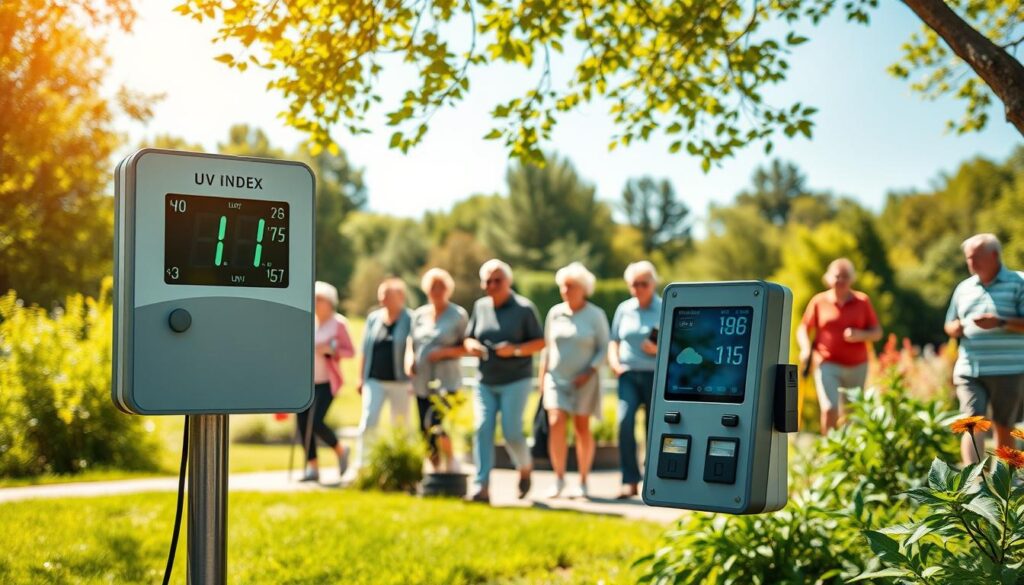
The UV index measures how strong ultraviolet radiation is. It shows the risk of harm from not wearing sunscreen. It helps you know when to stay in the shade, wear protective clothes, or apply sunscreen.
Ultraviolet radiation includes UVA and UVB. UVA goes deeper and causes wrinkles and skin cancer. UVB causes sunburn and DNA damage. UVC is blocked by the atmosphere and is not a big worry for outdoor activities.
Seniors are at higher risk from UV rays. Over time, UV rays make skin lose elasticity and deepen wrinkles. This increases the risk of skin cancers and weakens the skin’s immune system.
Studies show UVA and UVB can damage DNA. UVA causes deep damage and links to premature aging. UVB causes burns and also harms DNA, raising cancer risk.
Using UV index data helps protect your skin. It lets you plan when to go outside, reapply sunscreen, and wear protective clothes. This is important when the UV index is high.
It’s okay to get some sunlight for vitamin D. But, use UV index data to protect yourself during peak hours. This helps you make safe choices every day.
The Role of Technology in UV Monitoring

Modern tools help keep senior skin safe. Smartphone apps use GPS, Wi‑Fi, and weather feeds to forecast UV index. They offer personalized advice based on skin type and sunscreen.
Apps like SunIQ and iTanSmart estimate safe exposure time. They consider SPF, location, and UV index.
Wearable devices measure UV exposure directly. SunFriend and Netatmo’s June bracelet track your sun dose. They alert you when exposure gets risky.
Research is improving these devices. At Kyung Hee University, Professor Kang Sung‑jun’s team created a new sensor. It matches expert equipment on clear and cloudy days.
Be careful with many apps and wearables. Dermatologists say they should not replace sun safety habits. Use them to enhance your protection.
- Smartphone apps: deliver UV index monitoring, UV index forecast, and tailored alerts for your location.
- Wearables: enable continuous UV index tracking at the skin level and provide immediate UV index alert notifications.
- Emerging sensors: transparent UVA detectors can expand monitoring into watches, clothing, glasses, and fitness bands for ubiquitous coverage.
As technology becomes part of our daily lives, you have more ways to avoid too much sun. Use apps and wearables to check readings and get alerts that fit your schedule.
Choosing the Right UV Monitoring Device
When choosing a UV monitoring device, start by setting clear priorities. Look for accuracy, ease of use, and battery life. Also, consider wearability and price. Make sure it adjusts settings for your skin type or SPF.
Bluetooth and smartphone integration are great for alerts on the go. This makes tracking UV index easier and more convenient.
Scientific validation is key when comparing products. Choose devices with independent test results for reliable UV index data. If you enjoy outdoor activities, look for water resistance and durability.
- Smartphone apps: They’re affordable and easy to try. Apps like SunSmart and iTanSmart send reminders to reapply sunscreen and stay hydrated. They’re good for general awareness but don’t use direct sensors.
- Consumer wearables: Devices like SunFriend and the Netatmo June bracelet track your UV exposure. They offer precise tracking but are pricier and may need newer phones.
- Emerging transparent sensors: Researchers are working on see-through photodiodes for UV detection. These are precise and lightweight but are not yet widely available.
When shopping, consider the pros and cons. Apps are convenient and affordable. Wearables provide direct readings and stored data. New sensors could change the market soon.
Always follow dermatologist advice when using these devices. Treat alerts as reminders, not a replacement for sun safety. Use shade, protective clothing, and sunscreen with SPF 30+ and reapply often.
- Look for simple interfaces and clear displays or alerts.
- Check for reliable customer support and warranty terms.
- Choose devices validated by independent testing.
- Ensure the device has suitable battery life and water resistance.
Seniors should prefer devices with clear UV monitoring and simple controls. Choose options that fit your daily routine for easier tracking.
How to Interpret UV Index Readings
The UV index has a simple scale to show sun danger. Low (0–2) means you need little protection. Moderate (3–5) calls for sunscreen and a hat.
High (6–7) means you should seek shade at midday. Very high (8–10) and extreme (11+) require maximum protection. You might need to move activities indoors.
Use these ranges to plan your day. At 0–2, short walks are fine but wear sunscreen for long time outdoors. At 3–5, apply broad-spectrum SPF 30+ and wear sunglasses.
At 6–7, reapply sunscreen often and wear sun-protective clothing. At 8+ or 11+, avoid direct sun during peak hours. Try to reschedule outings if possible.
Many apps and wearables turn UV index information into personal guidance. They estimate a safe exposure time based on your skin type and the SPF you use. Devices from Netatmo and SunFriend let you enter skin-type details to get tailored alerts.
Some gadgets push notifications when your accumulated exposure nears a threshold. Research prototypes and some consumer devices warn you at preset percentages of a burn threshold. Alerts may remind you to reapply sunscreen or drink water when exposure mounts.
Remember that UV index levels shown in a forecast are not the whole story. Local UV index data can differ because of altitude, cloud cover, surface reflection, and what you are wearing. Devices that measure local UVA and UVB provide more accurate personal exposure than a general UV index forecast.
When you check UV index information, look for both the number and any personalized metrics. Use the number to set broad actions. Rely on personal metrics to fine-tune timing, sunscreen frequency, and when to seek shade.
When to Check UV Index Levels
Before you head out, check the UV index levels. A quick app check or forecast can guide your sun protection. This might mean wearing a hat, applying sunscreen, or staying in the shade.
Recheck the UV index if you’ll be outside for a while. Apps and devices offer hourly updates and alerts. They’re great for walks, gardening, or yard work.
- Peak danger falls between 10 a.m. and 4 p.m.; plan errands for early morning or late afternoon when possible.
- Reflective surfaces like water, snow, and sand boost exposure; check levels before beach trips or skiing.
- Higher elevation increases UV intensity; review the UV index forecast when traveling to mountains.
Use situational triggers to check more often. If you exercise outdoors, attend social events, or wait for a medical appointment outside, refresh the forecast. A sudden change from cloudy to clear sky can raise UV quickly.
Rely on apps for an hour-by-hour UV index forecast and push alerts. When a UV index alert arrives, move activities to lower-UV times or indoor spots. Seniors should consult the forecast when planning outings and shift schedules when readings are high.
Keep your device settings tuned to local alerts. Regular checking, plus smart use of UV index monitoring tools, helps you reduce sun risk without staying indoors all day.
Tips for Protecting Your Skin Outdoors
Always use a broad-spectrum sunscreen with SPF 30 or higher. Apply it to all exposed skin and reapply every two hours. This is key, even if you have a UV index tracker.
Wear clothes that protect you from the sun. Choose long-sleeve shirts, wide-brimmed hats, and sunglasses that block UV rays. Use umbrellas when sitting outside for a long time.
- Plan outdoor activities for early morning or late afternoon when UV index levels are lower.
- Seek shade during peak sun hours and take regular shade breaks when the UV index rises.
Make UV index monitoring a part of your daily routine. Use apps and wearables to track UV levels and get alerts. These alerts can remind you to reapply sunscreen or go inside.
Be careful with medications and health conditions that make your skin more sensitive to the sun. Talk to your doctor or pharmacist about any risks. Adjust your plans based on UV index levels.
Do regular skin checks at home. If you notice new spots, sores, or changes in moles, see a dermatologist right away. Prevention, like using sunscreen and wearing protective clothing, helps too.
Have a ready kit with sunscreen, a hat, sunglasses, and an umbrella. Use your UV index alerts to know when to use each item and how often to reapply.
The Benefits of UV Monitoring for Seniors
UV monitoring gives you real-time info on UV levels. This helps prevent sunburn, photoaging, and skin damage. You can plan activities like walks and gardening without worrying about the sun too much.
Personalized alerts remind you to reapply sunscreen and seek shade. Wearables and apps send these reminders, keeping you safe all day.
- Behavior change: increased sun awareness encourages hats, long sleeves, and scheduling activities outside peak times.
- Technology advantages: transparent sensors and wearables measure transmitted UVA and your accumulated sun dose for more precise readings than general forecasts.
- Quality of life: you keep active and social while managing exposure with practical UV index information.
Doctors say using UV monitoring with sunscreen and protective clothes is key. It helps prevent early aging and lowers skin cancer risk.
Make small changes to track UV levels and enjoy the sun safely. These simple steps can make a big difference in your health.
How to Incorporate UV Monitoring into Daily Life
Begin your day by checking a UV index app. It’s a simple part of your morning routine. You can add a widget to your home screen or ask a smart assistant for today’s forecast. This quick check helps you choose the right hat, sunscreen, or find shade before going outside.
Wear UV monitoring technology. Use a UV sensor and connect it to your phone for alerts. This device tracks your exposure and alerts you when UV levels get too high.
- Set reminders for sunscreen reapplication and water breaks.
- Use app timers to track outdoor sessions during peak hours.
- Sync UV index tracking with your calendar for walks, appointments, and chores.
Involve your family and caregivers in UV monitoring. Have them install the same UV index app and enable shared alerts. This way, everyone gets important updates. Wearable alerts can also remind caregivers to reapply sunscreen or move a senior into shade.
Choose devices that are easy to use. Look for clear alerts and long battery life. Make sure Bluetooth pairing works well. Always carry extra sunscreen and a hat when UV levels are high.
- Link UV index tracking with medication and exercise schedules to avoid peak sun times.
- Use reminders for reapplication, hydration, and short shade breaks.
- Review weekly exposure reports from your UV index app to spot trends and adjust routines.
Keep your routines simple and consistent. A quick morning check, wearing a wearable on outings, and shared UV index alerts with caregivers make protection easy. These steps help you stay safe without adding stress to your day.
Community Resources for UV Awareness
You can find reliable UV index information from national resources. The National Weather Service and the Environmental Protection Agency offer forecasts and educational materials. These are trustworthy sources.
Local health departments and senior centers often have sun-safety programs. They provide guides, workshops, and talks on UV index data and safety tips for older adults.
- Ask your local health department about outreach programs that use EPA or National Weather Service UV index forecasts.
- Check community senior centers for scheduled sessions on sunscreen use, protective clothing, and interpreting UV index information.
- Look for dermatology clinics, such as Chicago Skin Clinic, for tailored advice on UV trackers and sunscreen suited to mature skin.
Community efforts can make a big difference. Encourage parks and senior centers to post daily UV index forecasts. Also, add shaded seating near walking paths.
Attend community health fairs for free skin checks or sun-safety counseling. Dermatologists and trained staff can teach you about UV index data and safety tips.
- Use reputable UV index apps that pull official forecast data.
- Cross-check app readings with the National Weather Service or EPA when planning outdoor time.
- Ask event organizers to include UV index information on flyers and schedules for outdoor activities.
Support local efforts for shaded public spaces and sun-protective policies. Your voice helps create safer outdoor environments. These are backed by clear UV index information and community action.
When you share UV index data, forecast details, and safety tips, you help others make safer choices under the sun.
Educating Family and Caregivers on UV Safety
It’s important to share clear UV index info with caregivers. Explain the UV index scale and its meaning for shade, clothes, and sunscreen. This info is key for protecting seniors outdoors.
Teach the difference between UVA and UVB. UVA causes deep skin damage and photoaging. UVB leads to sunburn and immediate injury. This helps caregivers pick the right sunscreen and clothes.
- Show how to set up UV index monitoring apps and wearables on a smartphone.
- Verify phone pairing and test UV index alert settings together.
- Practice responding to alerts: apply sunscreen, place a hat, or move into shade.
Make sunscreen and hats easy to find. Remind caregivers to reapply sunscreen every two hours. Also, after swimming or sweating a lot. Tell them to watch for device alerts and act fast when the app sends a UV index alert.
Plan outdoor activities based on the UV forecast. Teach caregivers to check the UV index in the morning. Choose low-UV times for walks or errands. Offer indoor options when UV levels are high.
Check if any medications make the skin more sensitive to the sun. Ask the doctor about extra sun protection. Suggest keeping a list of these medicines in the senior’s medical file.
- Attend dermatology visits with the senior to learn about skin changes.
- Report new spots, growths, or nonhealing sores to a clinician promptly.
- Set routine skin checks and document findings for follow up.
Use UV safety tips in daily coaching. Help family members practice applying sunscreen and checking wearable alerts. Small, repeatable actions build habit and reduce risk over time.
The Future of UV Monitoring Technology
New research is changing how we track sun exposure. A team at Kyung Hee University created a UVA sensor that’s clear. It uses special materials and sends data to your phone.
This sensor can be added to wearables without blocking light. So, smartwatches and clothes can measure UVA better than old devices. This means you get more accurate data for making smart choices.
Soon, devices will send you alerts based on your UV exposure. They’ll warn you when you’re getting too much sun. This helps prevent skin damage and other health issues.
First tests showed the sensor works as well as professional tools. But, it needs more testing and approval before it hits the market. The exact timing will depend on these steps.
Future devices will connect with health apps and offer more insights. They’ll use your UV data and local forecasts to give you better advice. This could include warnings about certain medications and sun damage.
- Improved personal exposure tracking through transparent sensors.
- Automated warnings tied to accumulated UV index data.
- Health-platform sync for medication and photosensitivity alerts.
- Algorithms that blend sensor output with UV index forecast information.
As tech advances, managing outdoor risks will get easier. With better UV tracking and smart alerts, protecting yourself will become simpler and more effective.
Conclusion: Taking Charge of Skin Health
UV index monitoring helps you protect your skin and enjoy the outdoors. Use apps, wearables, or sensors to check UV data before going out. Plan your activities during lower-UV times with the help of technology.
Begin with simple steps: check the UV forecast, choose a good app or device, and set UV alerts. Always reapply sunscreen and wear protective clothing, hats, and sunglasses.
Involve your family and healthcare team in your routine. Set up shared alerts and track skin changes. Use technology and classic sun protection together. This combo protects against sun damage and skin cancer.
Use UV data to make smart choices for outdoor fun. Stay vigilant and use the right tools to protect your skin every day.