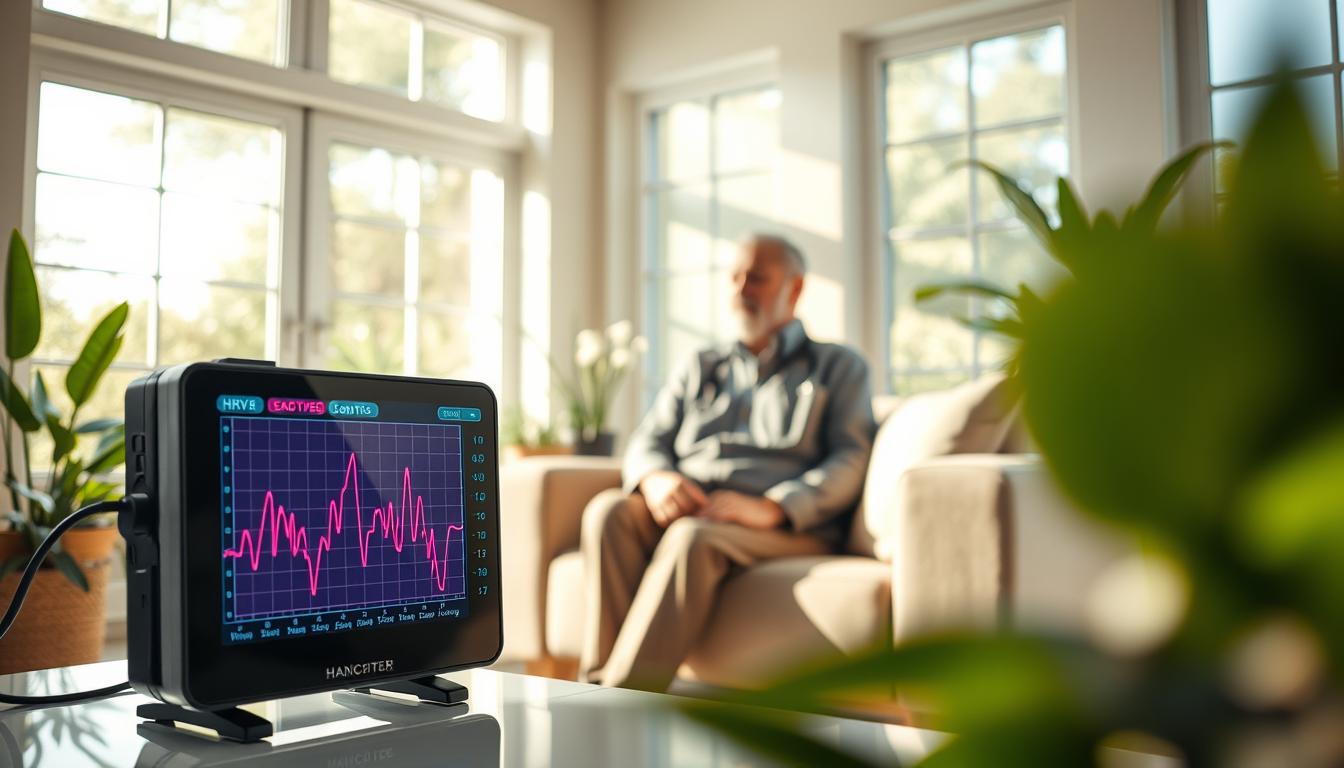
Heart rate variability (HRV) offers a clear, noninvasive way to see how stress impacts older adults. It measures the tiny changes in heartbeats and shows balance in the autonomic nervous system. Metrics like SDNN and LF/HF ratio help spot changes linked to anxiety, depression, and sleep issues.
Research at Xijing Hospital linked anxiety, depression, and sleep problems in the elderly to lower HRV. They used 24-hour ECG recordings and scales like HAMA and PSQI. The study found specific HRV changes for each condition, showing how HRV can detect declining autonomic function early.
HCA Healthcare Colleton Hospital notes that HRV provides insight beyond blood pressure. It shows how stress affects autonomic regulation and guides care. For example, Sahha analyzed data from Apple Watch and Garmin to create Readiness and Mental Wellbeing Scores.
By combining HRV monitoring with stress and mental health tracking, you can track seniors’ emotional and sleep health. Regular HRV trends from wearables offer objective data for early intervention and personalized stress plans.
Understanding Stress Monitoring Tools
Choosing the right stress monitoring tools can greatly improve senior care. Clinical teams use validated questionnaires like the Hamilton Anxiety Scale and the Pittsburgh Sleep Quality Index. They also use 24-hour ECG-derived HRV for objective data.
Hospitals teach that HRV gives a deeper look into health than just vital signs. When you combine HRV with psychometric scores, you see patterns that single measures miss. This helps detect anxiety or sleep problems early.
Health-technology firms like Sahha use wearables to gather HRV, sleep, and activity data. They turn this data into simple scores like readiness and mental wellbeing. This approach is used in many modern stress measurement devices.
When looking at options, find platforms that use validated questionnaires, HRV, and trend analytics. These hybrid systems are better for older adults than single metrics.
- Validated questionnaires paired with HRV provide a fuller view of mental health.
- Continuous data helps spot gradual changes that single checks miss.
- User-friendly reports make anxiety tracking tools practical for caregivers and seniors.
Choose digital stress management tools that focus on clear trend displays and easy data collection. Also, make sure they allow exporting results for clinicians. This makes the technology useful for daily care and clinical assessment.
Heart Rate Variability: An Overview
Heart rate variability (HRV) helps you understand your autonomic balance better. It uses metrics like SDNN, SDANN, RMSSD, and pNN50 to show total variability and the balance between sympathetic and parasympathetic systems. Frequency-domain measures like LF, HF, and the LF/HF ratio give insights into mixed signals and balance.
HRV is seen as a stress biomarker by health experts. It’s used alongside blood pressure and resting heart rate. Remember, different metrics like SDNN and RMSSD show different things. They relate to anxiety, sleep, and mood in different ways.
Studies show that higher HRV is linked to better brain function in older adults. Mind-body training can improve HRV. This can lead to better cognitive performance over time.
Wearables can track HRV trends if used regularly and under the same conditions. Look for patterns, not single readings. Compare them at the same time of day and with similar activities.
- Know the metric: SDNN vs RMSSD vs LF/HF matters for interpretation.
- Use trend analysis: short-term swings mean less than long-term direction.
- Combine measures: pair HRV with sleep, mood and blood pressure for context.
Benefits of Monitoring Senior Stress Levels
Tracking heart rate variability gives you an early warning system. Studies from Xijing Hospital found that HRV often drops with anxiety, depression, and sleep disorders in older adults. This makes HRV monitoring very useful when seniors can’t report their feelings well.
Doctors use HRV as proof of stress. Hospitals say that clear changes in HRV can lead to quick actions to lower stress and heart risks. This helps you and your healthcare team make smarter choices.
Wearables like Sahha show how tracking can catch problems early. They link HRV changes to sleep and activity, helping you find ways to boost mood and thinking. Real-life examples show how these changes can lead to big improvements.
For you, this means catching mental health issues early and seeing how treatments work. Mental health trackers help you see if therapy, medication, or sleep changes are helping. Caregivers use this data to plan better care and talk about it with you.
- Detect problems sooner with Benefits of HRV monitoring.
- Use emotional well-being trackers to relate physiology to habits.
- Choose stress relief gadgets to support breathing, sleep, and relaxation.
- Rely on mental health tracking devices for clear, shareable data for clinicians.
These tools are not a replacement for medical advice. You and your doctor can use them to create personalized plans, track progress, and improve care for seniors at risk from chronic stress.
How to Measure Heart Rate Variability
You can measure HRV with tools for doctors or devices for everyone. Doctors use a 24-hour ECG to get precise results. This tool removes noise and calculates important numbers.
Before testing, avoid alcohol, strong tea, coffee, and hard exercise. This helps get better results. Short recordings of five minutes show how well your heart is working.
Long-term monitoring over 24 hours shows daily and sleep changes. It’s key for seniors. Cleaning the data to remove errors is very important.
Wearables from Apple, Garmin, WHOOP, and Oura let you track HRV at home. They help see trends. But, be careful with single readings.
- Use 24-hour ECG and validated analysis for clinical accuracy.
- Pick reputable stress measurement devices for home monitoring.
- Take nightly resting HRV at the same time for consistent trends.
- Confirm your device reports specific metrics like RMSSD if that is your focus.
Combining HRV with sleep and activity data gives more insight. Platforms that combine signals can show readiness and mental wellbeing. Keep your routine simple for consistent data.
Daily use of wearables and occasional 24-hour ECG is a good mix. It balances ease and accuracy. This way, you can spot trends without forgetting the limits of measurements.
Key Factors Influencing HRV
Looking at just one HRV number isn’t enough. Sleep quality and emotional state play big roles. Poor sleep and anxiety can lower heart rate variability.
Research shows HRV changes with mood and sleep, not just health. It’s not just about being healthy.
Medications can also affect HRV. Drugs like sedatives and antidepressants can reduce heart rate variability. Check HRV readings before and after taking certain medications.
Physical health is important too. Illnesses and heart problems can lower HRV. But, regular exercise can increase it.
Things like brain health and lifestyle choices can change HRV. Cognitive decline and depression can lower it. But, improving sleep and exercising can help.
Choosing the right device and method matters. Different wearables and settings can give different results. Keep your methods the same to track changes accurately.
- Assess sleep, mood, and medications when interpreting HRV.
- Account for comorbidities like heart disease and diabetes.
- Standardize device type, placement, and recording time.
- Combine HRV with data from stress management devices and anxiety tracking tools for fuller context.
By controlling for these factors and using consistent methods, you improve the clinical value of HRV for seniors. This makes data from stress measurement devices more useful for caregivers and clinicians.
The Role of Wearable Technology
Wearable devices let you track your heart rate variability (HRV) all day. Unlike a 24-hour ECG, they give you data in your daily life. This helps spot changes that might not show up in short visits to the doctor.
Doctors are starting to see the value in HRV. Mental health tracking devices help them see patterns between visits. This information helps them talk about sleep, activity, medication, and mood without needing tests.
Companies like Sahha and big names like Apple Watch, Garmin, WHOOP, and Oura offer these tools. They combine HRV with sleep and activity data. This gives you scores on Readiness and Mental Wellbeing that show trends over time.
When looking for a device, choose one with validated HRV metrics. Make sure it works well with analytic platforms. Use wearable data with sleep logs, activity records, and simple questionnaires for better insights.
- Use stress tracking wearables for trend detection, not diagnosis.
- Choose mental health tracking devices that export raw HRV or sync with third-party analytics.
- Combine wearable data with clinical tests for precise diagnosis.
Keep in mind, consumer wearables are convenient but not as precise as medical-grade ECGs. Yet, stress tracking wearables and digital tools can give you timely, useful signals. They help improve daily care and long-term monitoring.
Data Privacy and Security Considerations
HRV and other biometric recordings are very sensitive. Studies need signed consent for ECG monitoring. This shows why consent and secure handling are key for data privacy and mental health tracking.
Hospitals follow HIPAA and their own rules for storing data. Before sharing a senior’s data, ask vendors if they meet these standards. Make sure they offer strong encryption for data in transit and at rest.
Health-tech platforms like Sahha collect HRV, sleep, and activity data. Check their privacy policy to see how your info is used. You should also know if you can export or delete your data. This helps protect emotional well-being trackers and digital stress management tools.
- Verify HIPAA compliance or equivalent safeguards when applicable.
- Choose platforms that let you control who sees HRV and behavioral metrics.
- Prefer vendors with multi-factor authentication and clear breach procedures.
For caregiver-managed accounts, set local data controls and limit sharing. Make sure the senior knows who can access their records and why. Clear consent and an opt-in model reduce risk to emotional well-being trackers security.
If you plan to use third-party analytics, confirm they don’t use identifiable data for marketing. Demand the ability to remove personal identifiers and to receive a copy of raw or summarized data. These steps strengthen digital stress management tools privacy and mental health tracking devices security.
When choosing devices, favor brands with clear data use statements and audits. Keep device firmware up to date. Regular reviews of vendor practices help maintain data privacy wearable health for the seniors you support.
Analyzing HRV Data for Actionable Insights
You can turn raw HRV numbers into clear signals by mapping specific metrics to likely conditions. Use SDNN to gauge overall variability, RMSSD and PNN50 to check vagal tone, and LF/HF to monitor sympathovagal balance. The Xijing Hospital study linked low SDNN and SDANN with anxiety, reduced RMSSD/PNN50/HF with depression, and low PNN50/SDANN with sleep disorders. This mapping helps you prioritize follow-up or interventions.
Each reading is a single data point. Look for sustained shifts over days or weeks. Stress monitoring tools analysis works best when you combine absolute values with trends. A single low value rarely requires action, while a steady decline across SDNN and RMSSD suggests growing autonomic strain.
Correlate HRV trends with lifestyle and clinical data. Cross-reference sleep scores, activity, medication changes, and mood questionnaires. Platforms like Whoop, Garmin, and Sahha combine HRV with sleep and activity and generate composite Readiness or Mental Wellbeing scores. These insights let you see whether a change in habit or an intervention moved the needle.
- Track baseline and weekly averages, not hourly spikes.
- Flag sustained drops in SDNN or RMSSD for clinical review.
- Use LF/HF shifts to explore sympathetic activation or recovery.
Use emotional well-being trackers analytics to visualize patterns for you or a clinician. Many tools offer trend charts and alerts that make it easier to spot correlations with life events or treatments. These analytics help you test interventions, such as breathing training or sleep hygiene, and measure progress objectively.
When anxiety tracking tools show decreased vagal markers alongside poor sleep, consider targeted steps. Adjust activity, refine sleep routines, or consult your provider about medication or therapy. Clinical studies and device reports suggest that mind-body training and consistent lifestyle changes can lift HRV metrics by double-digit percentages, giving you measurable feedback on what works.
Adopt a simple workflow: collect reliable daily HRV, review weekly trends, annotate life events, and use combined stress monitoring tools analysis and clinical input to guide decisions. This approach turns biometric signals into practical next steps without overreacting to normal variability.
Stress Management Techniques for Seniors
Improving heart rate variability is easier with senior-friendly techniques. Start with slow diaphragmatic breathing. Ten minutes of guided breathing can lower stress and show immediate results with stress relief gadgets.
Try progressive muscle relaxation to reduce tension. Tense each muscle group for a few seconds, then release. This method works well with wearable biofeedback and stress management devices that show HRV changes in real time.
Gentle movement like tai chi or chair yoga raises HRV. These practices blend well with mindfulness technology that offers guided sessions and shows progress.
Prioritize sleep hygiene to protect PNN50 and SDANN metrics. Keep a consistent bedtime, limit screens before sleep, and address sleep disorders with a clinician. Digital stress management tools can track sleep patterns and link them to HRV changes.
- Use guided mindfulness sessions via apps or devices for daily practice.
- Combine cognitive behavioral techniques to address anxiety and depression.
- Adopt structured breathing and movement programs delivered by digital platforms.
Wearable-enabled programs that mix breathing, gentle activity, and meditation produced measurable HRV gains in clinical research. You can use stress management devices to follow structured programs and record responses over weeks.
Choose reliable brands and simple interfaces for seniors. Biofeedback devices, guided-breathing wearables, and dedicated apps act as stress relief gadgets you can use at home. Track small improvements to stay motivated.
Set realistic goals and monitor HRV trends. Digital stress management tools give graphs and alerts so you can see which techniques work best for your sleep, mood, and autonomic balance.
Keep routines short and consistent. Five to twenty minutes daily of mindful practice or light movement often yields steady gains. Use mindfulness technology to maintain clarity and structure in practice sessions.
Discuss persistent anxiety, depression, or sleep issues with your healthcare provider. Combining clinical care with stress relief gadgets and stress management devices offers the best chance to improve HRV and daily well-being.
Future of Stress Monitoring Tools
Heart rate variability is seen as a key indicator for diagnosing emotional and sleep issues in older adults. More studies will help set clear standards for using HRV in care for seniors. This is important because older adults with cognitive issues often can’t answer surveys well.
Healthcare is starting to see HRV as a useful tool alongside traditional stress and heart health measures. This shift will make digital stress tools more than just gadgets. They will become tools that doctors and caregivers use for planning care ahead of time.
Companies are now linking wearables to long-term data and scores that mix HRV, sleep, and activity. This move is towards mental health tools that give clear signs of risk for the mind and emotions.
Thanks to machine learning, we’ll soon have models that forecast mental or cognitive decline based on HRV patterns. Devices will also work better with health records, making it simpler to share data with doctors and care teams.
- Expect emotional well-being trackers to become more user-friendly and clinically validated.
- Prioritize platforms with transparent algorithms and published medical validation when you adopt new tools.
- Look for systems that support remote monitoring programs tailored to seniors and caregivers.
When picking tools, look for ones backed by solid science that are easy to use. This way, you can use the data to help with timely, focused care without making daily routines harder.
As these technologies become more common, they will change how we watch over and care for older adults. The future of stress monitoring tools is about making solutions that are both clinical and easy to use. They will help keep seniors safe and comfortable, supported by caregivers and doctors.
Conclusion: Taking Control of Your Stress Levels
Heart rate variability (HRV) is a useful tool for tracking stress in older adults. Studies link HRV to anxiety, depression, and sleep issues. This makes HRV a valuable addition to traditional health markers.
HRV helps in assessing and tracking the effects of interventions on mood and sleep. The Xijing Hospital’s research and clinical guidelines support its use.
For reliable stress tracking, choose proven tools and wearables. Devices like Apple Watch and Garmin provide continuous HRV data. These tools, along with analytics platforms like Sahha, offer a complete view of emotional health.
Interventions like paced breathing and mindfulness can improve HRV. Sleep hygiene and gentle exercise also show positive effects. When selecting stress management devices, look for clinical validation and strong data privacy.
By using validated tools and combining HRV with other metrics, you help seniors manage their mental health. This approach turns monitoring into meaningful care for long-term emotional well-being.