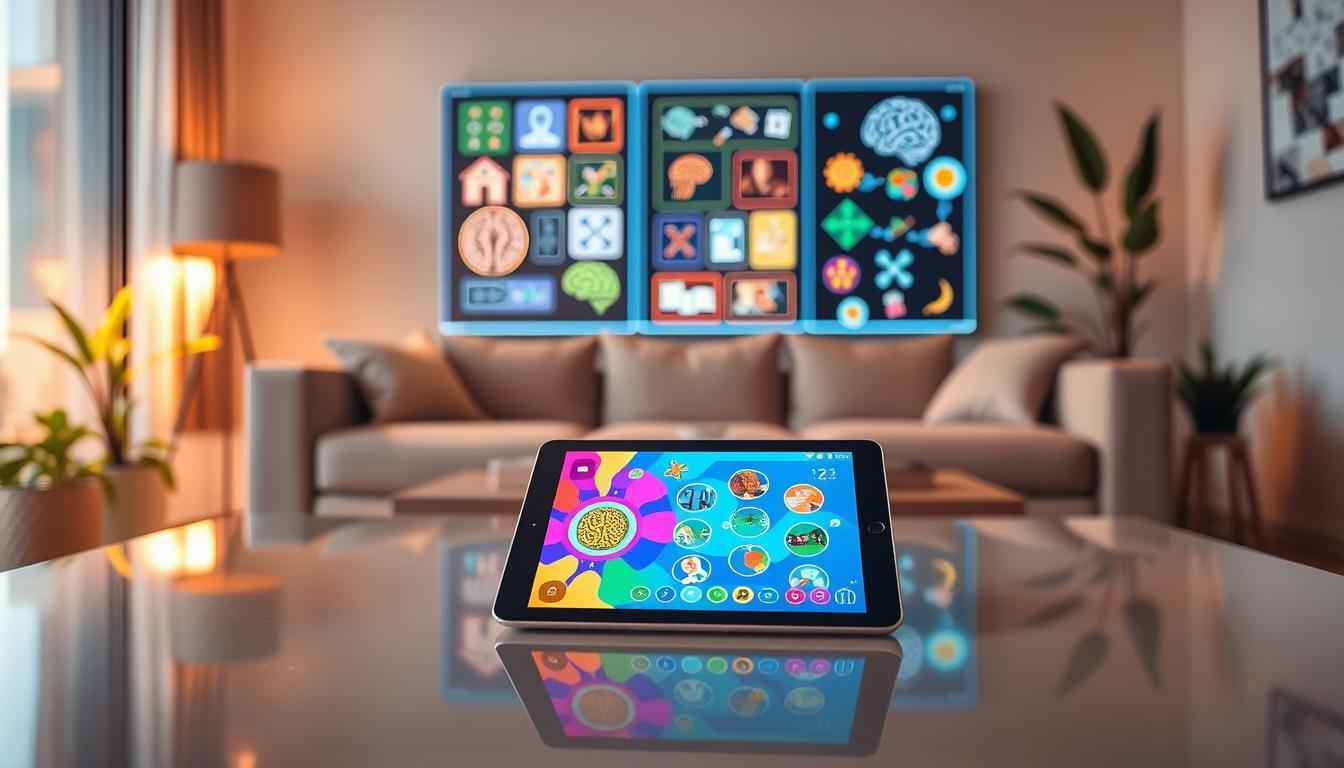
Games and apps in your home can keep your mind sharp. Try Sudoku, Wordle, and crosswords for a challenge. Apps like Lumosity, Elevate, Peak, Happy Neuron, and Braingle work on focus and memory.
Research shows these games can improve your skills. For example, Lumosity users who played 15 minutes a day for three weeks got better at attention and speed. These games and apps are easy to fit into your daily routine.
Mobile games and services like Apple Arcade make brain games popular. Apps like Peak, Good Sudoku, and Blackbox are great for your brain. They track your progress and adjust the difficulty to keep you engaged.
Experts say it’s good to mix things up. Try Scrabble, jigsaw puzzles, or a Rubik’s Cube. Adding creative hobbies and changing your routine exercises different parts of your brain. This combination can help slow down age-related decline and improve focus.
Understanding Cognitive Stimulation Technology

Cognitive stimulation tech makes Sudoku and crosswords fun and interactive. These activities improve short-term memory, attention, planning, and speed. They fit easily into your daily life.
Apps like Lumosity and Happy Neuron offer these tasks online and on mobile devices. They create personalized plans, track your progress, and show your improvement over time.
Neuroscientists and game designers work together to make brain tests into fun games. Companies like Peak and Lumosity focus on research and adapt to your skill level. They use trainers to keep the challenges right for you.
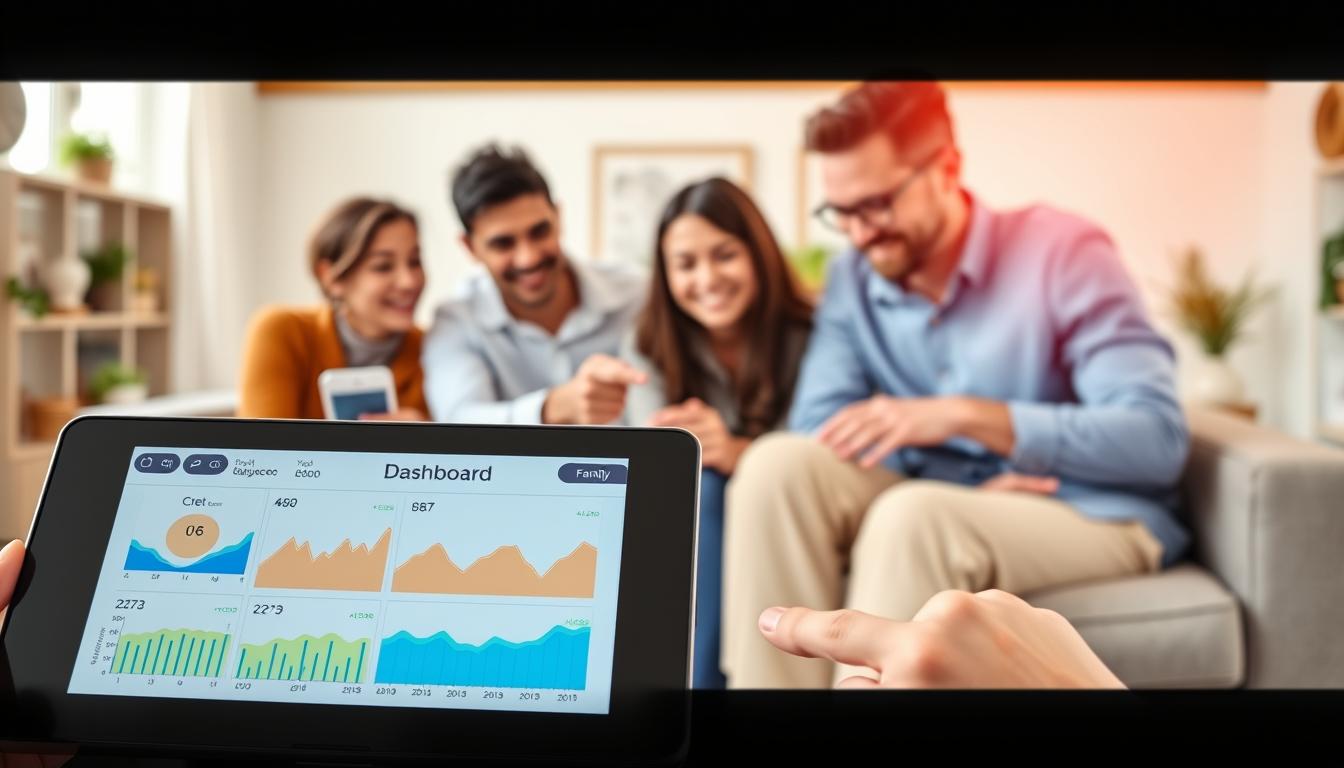
These apps give you analytics and simple charts to track your progress. You’ll see which skills you’re getting better at and where you need more work. This helps you choose the best tools for your goals.
Experts say just repeating tasks isn’t enough. Good programs increase difficulty and mix things up to keep you engaged. Use cognitive tech as part of a bigger plan for brain health, not just on its own.
Popular Categories of Cognitive Stimulation Apps
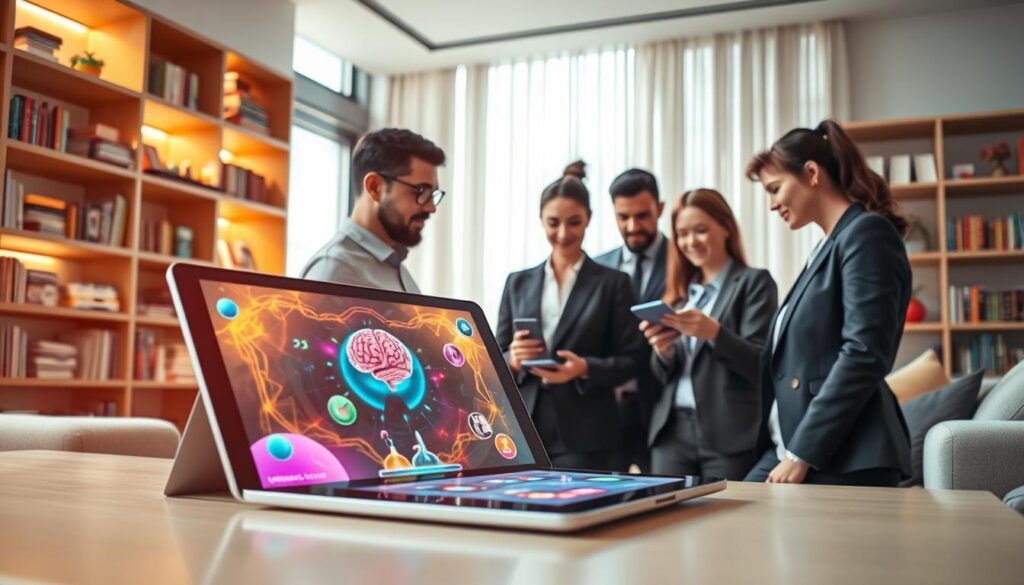
There are many types of apps to boost your brain at home. Apps like Good Sudoku challenge your memory and speed. They get harder as you get better.
Word games are another great choice. Apps like Wordle and crosswords help with words and memory. Using these apps can really improve your vocabulary.
Puzzle-adventure games like Monument Valley also exist. They mix solving puzzles with beautiful visuals. These games improve your focus and problem-solving skills.
Some apps combine puzzles with relaxation. They offer guided breathing or meditation with brain games. This mix can help you stay focused and calm.
- Puzzle and logic games: Sudoku, jigsaw apps, mechanical puzzles
- Word and vocabulary builders: crosswords, Wordle-type apps, Scrabble GO
- Comprehensive brain trainers: Lumosity, Elevate, Peak, Impulse
- Relaxation and mindfulness hybrids that include cognitive drills
- Board and tabletop conversions: digital Scrabble, chess, Rummikub-style apps
Experts say to mix different types of apps for better results. Switching between solving puzzles and creative tasks boosts your brain in many ways. Regular use of these apps can lead to lasting improvements.
Top Smart Home Devices for Cognitive Stimulation
Look for devices that are easy to use every day. Tablets and smart displays are great because they run many brain-training apps. They have big screens for puzzles and are easy to carry around.
Smart speakers and displays, like Amazon Echo Show and Google Nest Hub, offer voice games and guided sessions. They’re perfect for social prompts and talking exercises. Tactile interfaces work well with apps for puzzles like Rubik’s Cube.
- Tablets and large-screen phones: best for visual puzzles and detailed interfaces.
- Smart displays and speakers: ideal for voice games, trivia, and guided mindfulness.
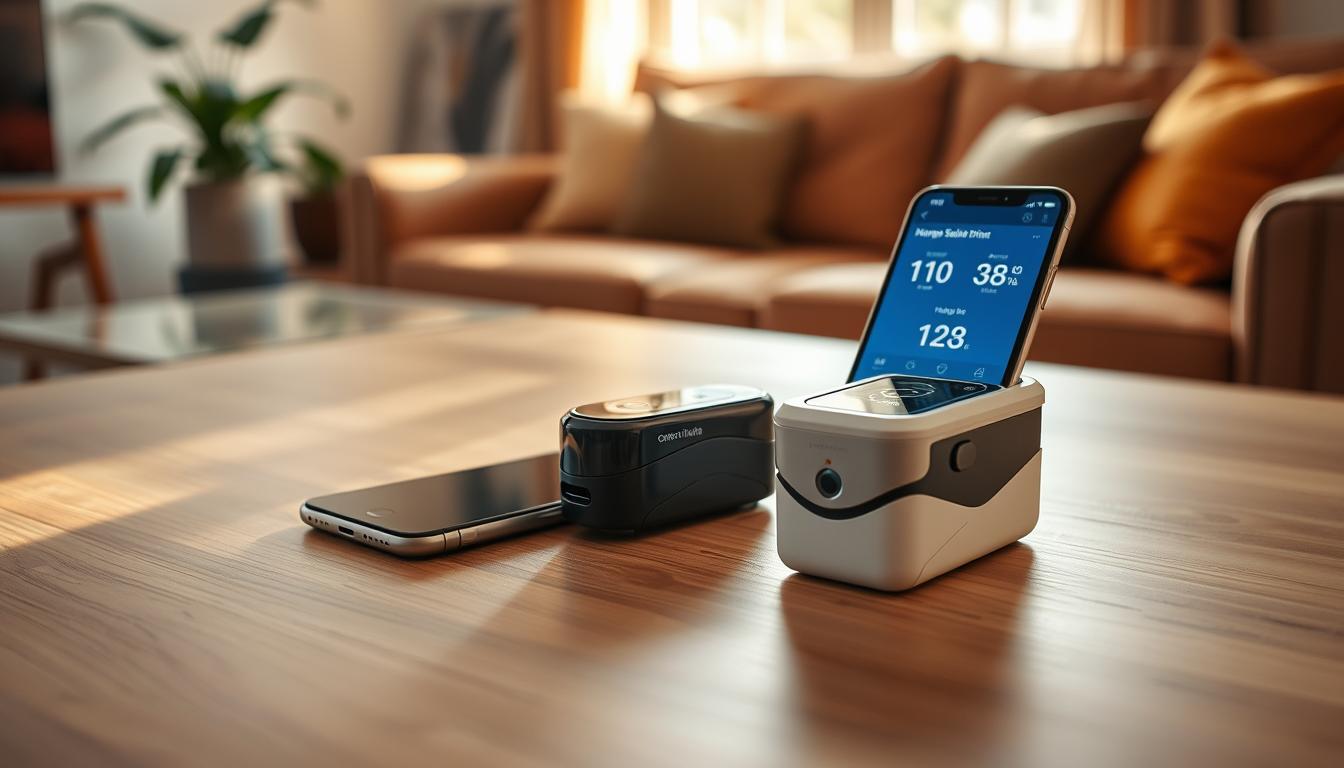
- Wearables and simple touchscreen devices: help nudge you toward daily practice.
Choose hardware that’s easy to use and comfortable. If apps like Lumosity, Elevate, Peak, or Good Sudoku work well on your device, you’ll use it more. Mobile-first platforms and Apple Arcade offer top puzzle games.
See smart gadgets as part of your brain health plan. The right devices can help you form good habits. Use them with brain health technology and cognitive tools to create a routine that suits your life.
Leading Apps for Cognitive Maintenance
When looking for apps to keep your mind sharp, you have many great options. Lumosity offers over 25 games and a free version. It also has subscription plans. Studies show using it daily can improve your focus and speed.
Elevate has 30+ games that adjust to your skill level. It works on both iOS and Android. Peak adds more with over 40 games made with neuroscientists. It even has a “personal trainer” to track your progress.
Some apps focus on specific skills. Good Sudoku helps with logic and persistence. Blackbox tests your creative thinking with unique puzzles. Monument Valley challenges your spatial awareness through creative levels.
For language and memory, try Vocabulary Builder for GRE and SAT prep. Scrabble GO boosts your vocabulary and attention. Impulse focuses on memory and problem-solving. GEIST combines meditation with memory games for calm focus.
Happy Neuron offers exercises in memory, attention, language, and more. Braingle and Queendom have huge libraries of puzzles and tests. You can choose what suits your needs best.
Choose apps that match your goals, like vocabulary or memory. Look for ones that get harder as you improve and give clear feedback. This way, your brain training stays effective and fun.
How Games Can Improve Memory and Focus
Playing structured puzzles can boost your short-term memory and focus. Games like Sudoku require planning and following consequences. Crosswords improve verbal memory and general knowledge, helping you remember better.
Mobile games and strategy games like chess or Monument Valley challenge you to think ahead. They enhance problem-solving, abstraction, and divided attention. Studies show regular play at Lumosity and with neuroscientists can improve attention and speed.
Mental agility software adjusts to your skill level, keeping challenges engaging. This prevents your brain from getting too comfortable. Real-time adjustments in brain training technology help you keep improving in planning and decision-making.
- Play varied tasks to target different skills: memory, speed, and reasoning.
- Choose apps or games with adaptive levels to prevent plateaus.
- Mix short sessions across the day to reinforce learning and focus.
Experts say combining games with exercise, social activities, and sleep boosts benefits. Learning a new language or instrument with brain training technology builds cognitive reserve. This supports lasting improvement.
When using mental agility software, track your progress. Look at accuracy and reaction time to see how you’re doing. Small, consistent steps in gameplay can lead to big improvements over time.
Using Social Interaction as a Cognitive Boost
Make playtime a mental challenge by picking apps and games with social features. Apps like Peak with leaderboards, Scrabble GO multiplayer, and online chess offer real competition. This competition boosts motivation and sharpens memory, attention, and problem-solving skills naturally.
Group play combines mental tasks with social bonding. Platforms like Braingle and multiplayer modes on mobile games encourage conversation and strategy. Card sets and discussion prompts improve emotional recall and memory in a fun way.
Smart displays and smart speakers are great for hosting trivia nights, guided talks, or puzzles. They blend brain health technology with social activities, making it simple to plan regular sessions. These sessions stimulate various cognitive areas.
Experts say it’s key to mix solo training with social activities. Social interaction can lower Alzheimer’s risk and improve memory and reasoning. By combining cognitive tools with real-time interaction, you enhance skills and build connections.
- Play competitive games for speed and working memory.
- Join communities to practice language and problem solving.
- Schedule group puzzle sessions on a smart display or speaker.
Adding social play to your routine makes cognitive tech more than just a workout. It becomes a fun activity that keeps your mind sharp and strengthens relationships.
Creating a Daily Routine with Cognitive Games
You can create a daily routine that includes cognitive training and healthy habits. Try to do short sessions of 10–20 minutes. This keeps you consistent without feeling too much.
Choose specific times for your sessions. Try doing them during breakfast, a commute break, lunch, or before bed. Apps like Elevate and Peak can help with reminders and schedules.
- Use mental agility software to guide daily exercises and track progress.
- Rotate game types: puzzles one day, memory drills the next, strategy and creative tasks after that.
- Increase difficulty gradually to avoid autopilot and keep gains steady.
Adding physical activity to your routine is a good idea. A quick walk or stretch before playing can help your focus and memory.
Make your routine more fun by adding social elements. Play with a friend, join a challenge, or talk about puzzles with others. This makes sticking to your routine easier and more enjoyable.
- Set a clear goal: time of day, minutes per session, and a weekly target.
- Use app reminders and device notifications to create prompts you will follow.
- Track results with simple charts or in-app progress reports to see improvements.
Be flexible with your routine. If you can’t do a full session, try a short 5–10 minute one. Small, consistent efforts with cognitive tech can make a big difference over time.
By mixing mental agility software, cognitive training, and daily habits, you create a lasting routine. This helps keep your focus, memory, and mental strength sharp over time.
The Role of Virtual Reality in Cognitive Stimulation
Virtual reality can make real-world tasks like memory and planning tests. Systems like Oculus and HTC Vive let you explore and solve challenges in a virtual world. This is more engaging than watching on a flat screen.
Therapists and developers mix game design with neurorehabilitation. This creates training that targets specific skills. Puzzle games and navigation tasks improve spatial thinking and memory. You get tasks that match your level and keep your brain active.
Think of VR as part of a toolkit with wearable devices and apps. Mixing headset use with smart home routines helps you practice regularly. You get tasks that are like everyday life, helping you apply what you learn.
When you want therapy, choose programs that have research backing them. Good VR experiences use tasks that feel real, have clear goals, and adjust to your progress. This makes brain health tech effective for specific goals.
Remember, VR should be part of a balanced routine. It should not replace sleep, exercise, or social time. Make sure you have the right hardware and take breaks to avoid getting tired. Always use content that has been proven to work and talk to experts for personalized plans.
- What to look for: validated exercises, adjustable difficulty, and clear outcome metrics.
- How to integrate: short daily sessions, paired with real-life tasks and social interaction.
- What to avoid: long sessions without breaks or unproven apps that promise quick fixes.
Measuring Progress in Cognitive Function
You can track changes in simple ways that fit your daily life. Apps like Lumosity, Peak, Elevate, and Happy Neuron track your scores. They show how you’re improving over time.
Look for apps with adaptive features. Good Sudoku and Vocabulary Builder log your progress in specific areas. Apps like GEIST even add stress or mindfulness to track cognitive shifts.
Take short, regular tests instead of long ones. Weekly tests help you see small improvements in focus and memory. Save your first scores to see how far you’ve come.
Use app data alongside clinical tests for clear results. Neuropsychological tests are the best for measuring changes. If you’re worried, talk to a doctor before making any decisions.
- Track attention, reaction time, and memory accuracy over weeks.
- Use adaptive difficulty inside brain training technology to keep challenges appropriate.
- Record lifestyle factors like sleep and stress that affect results.
Be realistic about what brain training can show. Apps help with motivation and daily tasks, but be careful with big claims. For lasting improvement, mix digital practice with professional advice when needed.
Recommendations for Sustainable Cognitive Lifestyle
Creating a lasting routine is easy when you mix brain games with physical activity, mindfulness, and sleep. Start with short daily sessions of Sudoku, crosswords, and apps like Lumosity or Elevate. This keeps things fun and varied, making it easier to stick with it.
Look for tools and solutions that adjust to your skill level and track your progress. Apps like Peak, Good Sudoku, Monument Valley, Scrabble GO, and GEIST are great for their engaging designs. Try using smart home speakers for voice-based challenges or group sessions with family to boost motivation.
Experts say to mix things up and gradually increase the challenge to fight off age-related decline. Try different games, learn a new skill, or get friends involved to keep you on track. If you notice big changes in your thinking, get a professional check-up. Focus on building steady, enjoyable habits for long-term brain health.