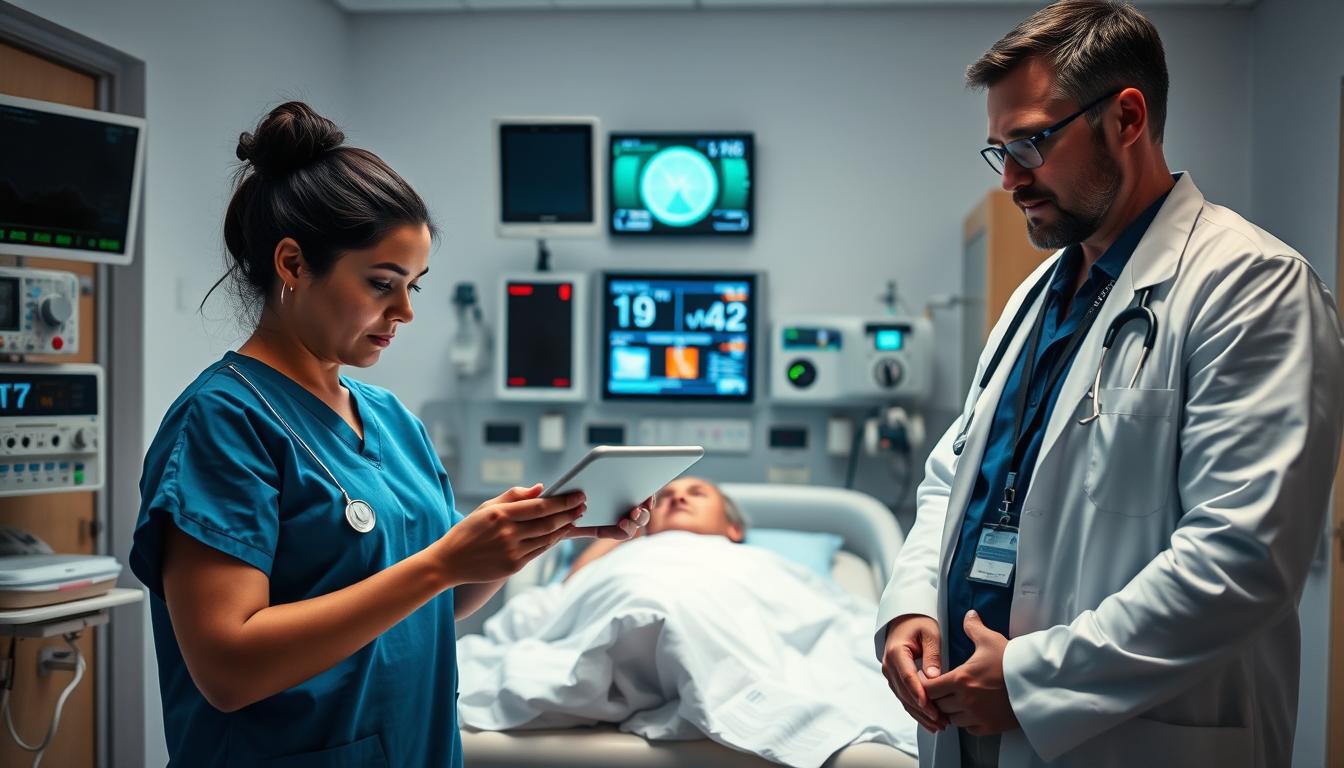
When a patient falls, every minute is critical. In the United States, hospitals face about 700,000 to 1 million falls yearly. This leads to 250,000 injuries and up to 11,000 deaths. Clear communication after a fall is key to quick action and less harm.
Technology now helps fill gaps due to nurse shortages and busy wards. Fall detection systems, like camera-based AI and wearable devices, send alerts quickly. These tools help staff respond faster and work together better.
But, these tools have their limits. False alarms and how well devices are accepted can affect their performance. No system is 100% accurate. Yet, combining technology with human oversight and continuous monitoring can greatly improve care for high-risk patients.
Understanding Fall Recovery Communication
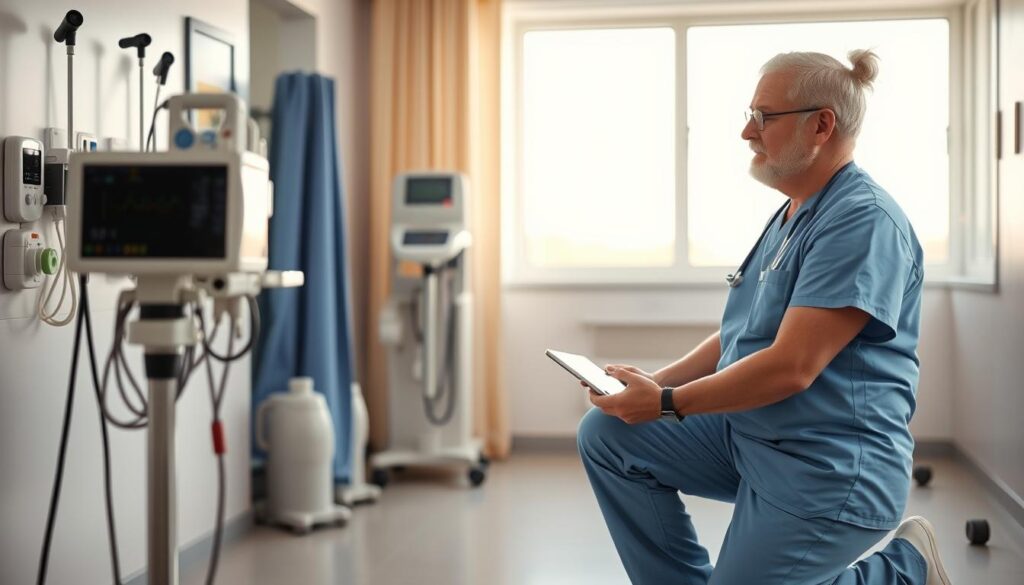
When a fall occurs, clear and quick communication is key. Systems that use AI, wearables, and sensors send alerts fast. This helps staff respond quickly, reducing injury and complications.
Care teams need to communicate well to manage risks and support recovery. Tools like risk assessments and patient education materials help. They ensure everyone is on the same page, improving fall prevention.
For older adults and caregivers, having a backup plan is important. A manual help button and automatic detection offer extra security. Medical alarm services can call for help, improving communication in emergencies.
Technology should fit the needs of both staff and patients. It should work with electronic health records and staff rounds. Matching devices to patient abilities ensures timely care and better recovery.
- Set clear protocols for who responds and how to document events.
- Train staff on device use and verbal handoffs during shift changes.
- Include caregivers in post-fall updates so follow-up plans are consistent.
Regularly check how well your communication systems are working. Look at response times, false alarms, and patient outcomes. Use this data to improve training, device placement, and patient instructions for better results.
Types of Falls in Medical Settings
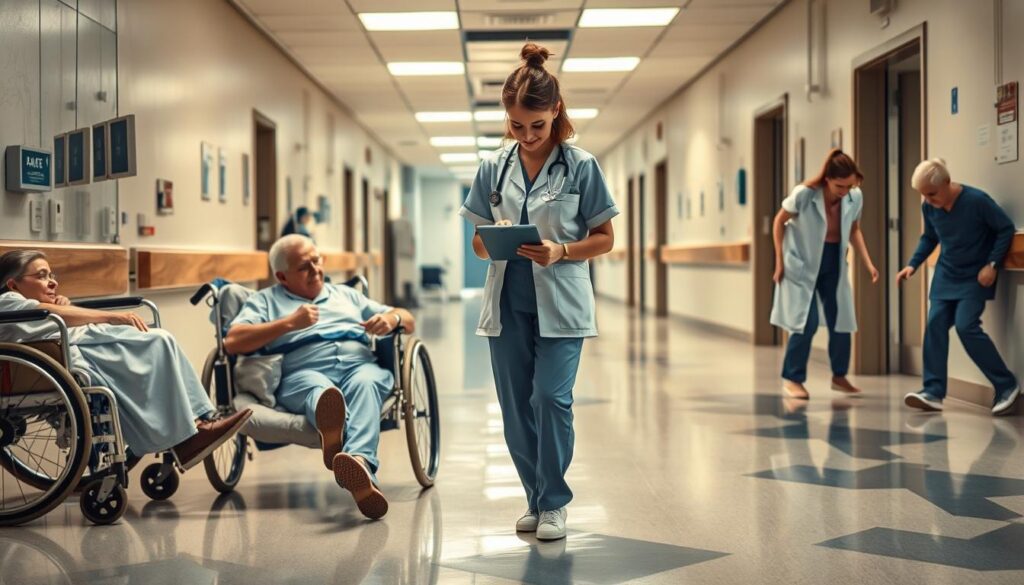
In hospitals and care facilities, you’ll see many types of falls. Rapid, high-impact falls happen quickly and are easy to spot. Slow slumps or crumples take longer and might be missed by some detectors.
Knowing about these falls helps you pick the right devices. Camera-based systems work great in open areas. Pressure sensors are good for bedridden patients. Wearable devices catch sudden changes. Radio frequency sensors detect movement without invading privacy.
- Environmental falls: trips or slips from unfamiliar flooring, clutter, or poor lighting.
- Medical-event falls: sudden loss of consciousness, stroke, or arrhythmia leading to collapse.
- Mobility-related falls: loss of balance during transfers, toileting, or walking with aids.
- Slow falls: gradual slumps from seated positions or when strength fades.
Some patients are at higher risk for certain falls. Older adults, those with cognitive issues, and those on certain meds are more likely. Mobility issues, post-surgery weakness, and chronic conditions like Parkinson’s or arthritis also play a part.
When planning fall prevention, match the strategy to the fall type and patient. Use education, design changes, medication checks, and exercise. Choose the right detection devices based on the fall and patient situation.
Your communication about fall management must fit the technology you choose. Make sure staff knows how to respond quickly and document incidents well. Pick devices that send clear alerts and fit into your clinical workflow.
The Role of Technology in Recovery Communication
Technology now supports real-time monitoring and rapid alerting. It also offers continuous observation and clinical decision support. Devices like camera-based AI, wearables from Fitbit and Apple, pressure mats, and RF sensors give staff faster notification.
Faster alerts help reduce injury severity and improve outcomes in fall recovery communication.
You can use simple communication tools for fall recovery like wristbands, bed posters, door stickers, alarms, and pagers. These tools standardize risk information. They make handoffs clearer between nursing shifts and therapy teams.
Standardized messages reduce confusion and speed appropriate responses.
Consumer-facing options provide a direct link to monitoring centers or emergency contacts. Medical alert services and connected wearables let you reach family, monitoring services, or EMS quickly. Design choices such as battery life, ease of use, and where a device sits on the body affect how reliably that link works.
Multifactorial interventions combine prevention, detection, and communication. When you pair continuous sensors with clear protocols, staff response times fall and coordination improves. Evidence on clinical effectiveness is common; you should seek data on feasibility, acceptability, and cost-effectiveness for your setting.
- Real-time data: helps clinical teams make faster decisions.
- Standardized signals: improve team handoffs and documentation.
- Consumer alarms: create immediate human triage and reassurance.
Adopting these tools supports better communication in rehabilitation. They link monitoring, alerts, and clear messaging. You can expect better coordination across disciplines and stronger links to family and emergency services when communication tools for fall recovery are chosen to fit your workflow.
Mobile Applications Enhancing Communication
Mobile apps can connect alerts from wearables and sensors to nursing stations and staff. They send details like when and where incidents happened. This helps your team act fast and keep records for care plans.
These apps send notifications and logs to keep everyone informed. They make sure everyone knows what’s happening, no matter the shift. This way, care can move smoothly from one team to another.
Many apps serve as a central hub for teams. They link with health records and schedules. This helps in creating a better plan for care.
- Real-time alerts that include location and context.
- Secure messaging to coordinate nursing, therapy, and physicians.
- Integration with EHRs to keep care plans aligned.
Apps for caregivers and families let them stay updated. They offer features like location tracking and voice calls. This reduces false alarms and keeps devices working when needed.
When picking mobile solutions, look for features like logs and easy reporting. These help teams see how well they’re doing. They also show where they can get better.
Using the right apps can turn alerts into action. This speeds up responses, improves communication, and boosts patient safety.
Telehealth Solutions for Post-Fall Follow-Up
Telehealth is great for quick medical checks when staff is short. A video visit lets doctors check wounds, pain, mental status, and basic movement. This is done without waiting for a face-to-face exam.
Telehealth and remote telesitting help decide who needs hands-on care first. This speeds up decision-making. It also helps in documenting the visit and the next steps for the care team.
Telehealth brings different experts together in one visit. Nurses, physical therapists, and pharmacists can join remotely. They can tailor interventions and adjust medications as part of a coordinated plan.
When a medical alarm goes off at home or in assisted living, remote centers can quickly contact you. A telemedicine check-in can figure out if you need EMS, self-care advice, a home visit, or a rehab appointment.
Scheduling follow-ups via telehealth keeps care going smoothly. Linking these visits to fall-risk communication ensures information flows well. This promotes recovery through communication.
Use telehealth as part of a multi-faceted approach to speed up treatment. Quick remote contact can cut down on delays. It also improves follow-up rates and supports safer transitions after a fall.
Wearable Technology for Real-Time Monitoring
Wearable fall detection devices are key for quick responses to falls. Smartwatches, pendants, and necklaces use special sensors to detect sudden changes in position. If a fall is detected, they send alerts to staff or caregivers right away.
These devices offer constant monitoring, even when patients move around. This helps keep them safe when they’re out of sight. They can also send alerts to emergency services if the wearer can’t respond.
Studies show that wearable sensors are common in hospitals and care homes. They work best as part of a bigger system. Expect research to look at how they fit into daily routines and improve care.
The accuracy of these devices can vary. Placing sensors higher on the body helps them detect falls better. But, they can sometimes send false alarms. You need to consider battery life and whether they’re right for your setting.
- Consumer wearables offer built-in fall alerts but may lack linked professional monitoring.
- Medical-grade wearables connect to monitoring centers and tend to have longer battery life.
- Integration with electronic health records and staff workflows improves fall recovery communication.
When picking tools for fall recovery, look for devices that are accurate and easy to use. Training staff and testing device placement can help reduce false alarms. This makes it faster to get help when needed.
Wearables are promising for real-time monitoring. But, their success depends on careful planning and evaluation. Regular checks on their usefulness and acceptance are key to keeping them effective in patient care.
Training Healthcare Providers on Communication Tools
Training should be short and to the point. It should cover how devices work, managing false alarms, where to place them, and how to respond. Hands-on practice helps staff learn to understand alerts, decide what to do first, and keep records.
Make sure training fits into staff’s daily routines. Teach how to use device alerts in team risk talks. This way, technology helps with things like making the environment safer and checking medications.
It’s key to have clear rules for how to handle alerts. Train staff to check on callers, call for help if needed, and tell families. This helps cut down on worries from false alarms.
- Practice real-life scenarios and common mistakes with devices.
- Practice talking to families and caregivers to improve communication.
- Look at templates for documenting to improve communication in rehab.
Check how well staff likes the training and how often they use it. Use this feedback to make the training better. This keeps it useful and doesn’t add too much work.
Keep training up to date as devices change. Include tips on fixing problems, battery life, and how to place devices. This keeps trust with patients and caregivers.
Patient Engagement Strategies Post-Fall
Start by teaching how devices work. Explain wearables, help buttons, and medical alarms in simple terms. Show when to press the help button and how automatic fall detection works. This reduces fear and helps in promoting recovery through communication.
Offer short, tailored education sessions. Use simple handouts, wristbands, and bed posters to highlight risks. These tools make it easier for patients and staff to communicate effectively. They also help you stay involved in planning your care.
Use motivational approaches for exercise and mobility programs. Break goals into small tasks. Track progress with charts or apps so you can see gains. This method links daily actions to fall prevention strategies and keeps you engaged.
Make device maintenance part of teaching. Remind patients to charge wearables and replace alarm batteries. Explain false alarms and describe who will be notified. This transparency builds trust and increases adherence to monitoring tools.
- Include patients in rounds and discharge talks so their questions shape the plan.
- Set clear expectations about monitoring limits and privacy to reduce worry.
- Create follow-up check-ins by phone or telehealth to reinforce instructions.
Use simple lists and brief demonstrations during teaching. Give chances for hands-on practice and repeated reminders. This approach strengthens effective communication after a fall and supports ongoing fall prevention strategies.
Challenges in Fall Recovery Communication
Using sensors and algorithms has its limits. Devices vary in accuracy, leading to false alarms that waste time. Some systems miss slow or low falls, affecting trust in these tools.
Staff shortages make it hard to watch patients in person. Facilities turn to remote monitoring and telehealth. But, integrating these with current workflows is tough for staff.
There’s a lack of solid evidence for making decisions. Few studies test devices and methods. This makes it hard to know what works best for fall recovery.
Patients might not use devices because of their limitations. Smartwatches need charging and can fail. Chest alarms are better at detecting falls but are expensive and have mixed coverage.
- Operational strain: monitoring centers must keep high response quality.
- Privacy and consent: patients and families may resist continuous monitoring.
- Maintenance needs: software updates and device replacement require resources.
- Training demand: staff need repeated, consistent instruction on new tools.
To tackle these issues, evaluate devices based on real-world performance and cost. Pilot programs can help by measuring how well tools work. Clear protocols that use both human judgment and automated alerts can improve communication and teamwork in fall recovery.
The Future of Fall Recovery Communication
The future of fall recovery communication will be smarter and work across different settings. You can expect better AI in camera systems and improved sensor fusion in wearables and mats. This will make detection more accurate and reduce false alarms.
These advancements will help doctors and nurses respond faster when a patient needs help. This is key for improving care in rehabilitation.
Telemonitoring, telesitting, and EHR links will make it easier for teams to work together. By using these tools, you can save money and improve care. It’s important to focus on design and evaluation to ensure these benefits are real.
Research will be key to guide policy and show how effective these solutions are. This will help prove they are worth the cost and effort.
Scaling these solutions will depend on how easy they are to use and how affordable they are. People will choose devices that are reliable and have long battery life. By following these trends, you can help patients stay independent and recover better.