Smart kitchen tech is changing how we eat. Devices and apps let you log meals and track calories easily. They also give you a detailed look at nutrients without guessing.
More people are using tools to monitor their diet. By combining data from a smart fridge, scale, and wearable, you can see how hydration, sleep, and stress affect your appetite. This gives you a better understanding of your nutritional intake.
Women in tech are already using apps and gadgets to track their diet. Tools like SnapCalorie and popular apps show that tracking your diet is easy for everyone.
In this article, you’ll learn how to monitor your diet with smart kitchen tech. We’ll explore the available tools, their benefits and limits, and how to start tracking your diet with confidence.
Understanding Nutritional Intake Monitoring
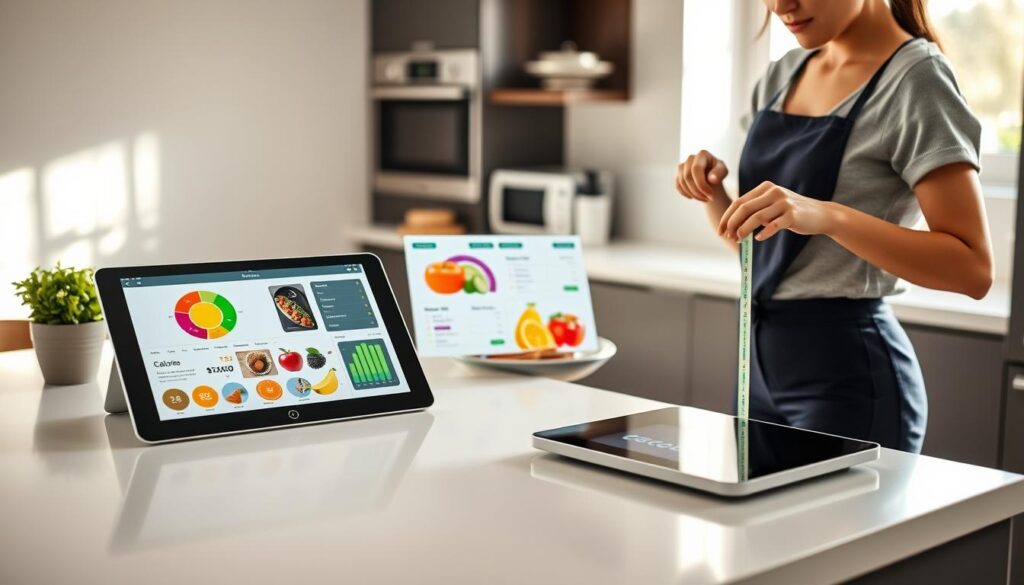
Monitoring your nutritional intake means keeping track of what you eat and drink. You count calories and the amounts of carbs, protein, and fat. You also track vitamins and minerals. Adding health metrics like sleep and activity gives a complete view of how food impacts your body.
Nutrition tracking apps help you log meals and analyze your intake. They show if you’re getting too much or too little of certain nutrients. This information helps you adjust your habits to reach your goals. When these apps connect with devices like Fitbit or Apple, they provide a broader view of your health.
People use technology to tailor their diets to their needs. Paying attention to how you feel is key to knowing if your diet is working. Soon, you’ll be able to monitor your glucose levels in real-time, giving you instant feedback on your food choices.
Smart kitchen tools offer detailed data on ingredients, portion sizes, and cooking methods. This data makes your nutrition log more accurate and reduces the need for manual tracking. You’ll have a clear record of your daily food intake to review.
Regular monitoring is vital for managing weight, controlling conditions like diabetes and heart disease, and improving athletic performance. It also helps prevent nutrient deficiencies. Keeping a daily food journal helps you stick to your diet and make adjustments based on real data.
- Record meals and beverages consistently to maintain an accurate nutrition log.
- Use dietary intake tracking tools that integrate with wearables for context.
- Note how you feel after meals to pair numbers with real-world feedback.
The Role of Smart Kitchen Devices
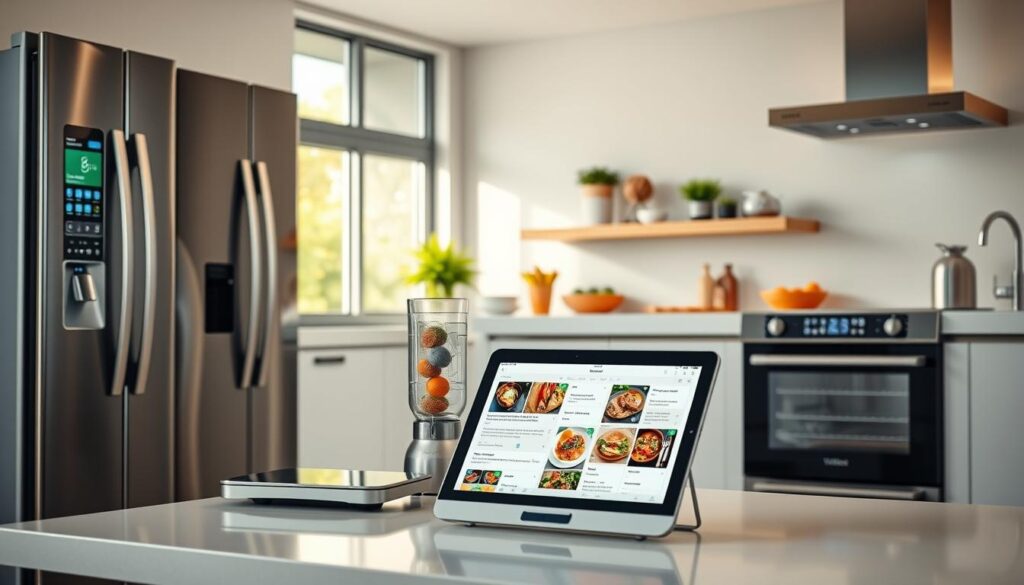
Smart kitchen devices make tracking nutrition easier. Smart refrigerators keep track of what you have and suggest recipes. They also show nutritional info so you can find healthy options quickly.
Bluetooth-enabled scales give exact portion sizes. This info goes to nutrition apps, making meal tracking more accurate.
Nutritional scanners and apps can guess calories and nutrients from a photo. This makes logging meals faster and more accurate, even when you’re busy.
Smart ovens and pressure cookers follow recipes and cook meals perfectly. This helps keep your meals consistent and your nutrition tracking accurate.
Smart blenders and processors have preset functions and app-linked recipes. This makes meal prep easier and keeps your nutrition data consistent.
- Voice assistants like Amazon Alexa and Google Assistant let you log meals hands-free and set timers while you cook.
- Wearables and continuous glucose monitors add physiologic context, such as activity and blood sugar, to nutrition tracking for a fuller view of how food affects you.
- Retail and brand tools use QR codes, apps, and smart delivery to provide product nutrition details and tailor meal kits to your goals.
When these devices work together, they save time and reduce mistakes in meal tracking. This helps you see patterns and make better food choices.
How Smart Kitchen Tech Tracks Your Diet
You start with a device that captures input. A smart scale measures weight, a connected oven logs cooking time, and a barcode scanner reads packaged items. A photo app snaps meals. This raw data then moves to a nutrition tracking app or cloud storage.
There, algorithms process it. The app or cloud service uses AI to estimate calories and micronutrients. It does this from images, recipes, and barcode data.
Image-based tools like SnapCalorie analyze photos for quick calorie tracking. Ingredient-based entries and scanned barcodes give more precise data. This helps track your food intake better.
You can also link wearable devices and continuous glucose monitors. These add physiological context. Heart rate, activity, and real-time glucose responses show how meals affect your body.
This combined view improves diet monitoring. It pairs intake with outcome. Smart scales and connected appliances give high-quality measurements. This reduces guesswork.
Weight-based portion data is more accurate than visual estimates. Voice assistants let you log meals hands-free. They also remind you to record snacks, reducing missed entries.
Accuracy varies by input method. Photo estimates can vary a lot. Barcode and ingredient logging are more reliable. Data from smart scales and CGMs is the most precise, when used consistently.
For the best results, use multiple sources. Combine image scans with barcode captures. Confirm portions on a smart scale. Check wearable feedback after meals. A steady routine of logging improves your food intake recording and calorie tracking.
- Device captures: weight, image, barcode, recipe
- Data syncs to app or cloud for processing
- AI estimates calories and micronutrients
- Wearables and CGMs add physiological context
Benefits of Monitoring Your Nutritional Intake
Tracking your food gives clear, measurable gains you can act on. A nutrition log from apps and smart devices breaks down macros and micronutrients. This way, you spot deficiencies or excesses fast.
Meal monitoring makes weight and condition management easier. About one quarter of U.S. consumers use apps to help manage weight. Tools like continuous glucose monitors help tailor choices to your blood sugar response.
You save time with smart cooking tools and automated planning. Smart appliances suggest recipes based on what you have. They cut prep time and reduce guesswork when you follow a nutrition log.
Personalized recommendations grow more accurate as you use them. AI-driven meal plans and shopping suggestions adapt to your preferences. Brands use aggregated data to develop tailored products that match your goals.
Motivation and adherence improve when tracking is social and game-like. Gamified apps, online communities, and telehealth coaching keep you engaged and accountable. Calorie tracking gives immediate feedback.
Smart meal monitoring helps cut food waste. Connected refrigerators and shopping assistants suggest meals from existing ingredients. This way, you use what’s on hand and toss less.
Meal kits and prepared meal delivery services make healthy eating practical for busy people. These options align with dietary goals. They work well with a nutrition log or calorie tracking routine to simplify choices.
- Better nutrient awareness through detailed breakdowns.
- Improved weight and condition control with targeted tools.
- Time savings from automated meal suggestions and smart appliances.
- Personalized plans driven by AI and real-world data.
- Higher adherence via gamification and coaching.
- Less food waste by using what you already own.
Challenges You Might Encounter
Smart kitchen tech comes with its own set of challenges. One big issue is data accuracy. Photos and logs might not always show what you really eat. This can lead to wrong portion sizes and totals.
Another problem is how devices and apps work together. Not all gadgets connect with Alexa, Google Home, or apps from Fitbit and Garmin. This makes it hard to get a complete picture of your nutrition.
Privacy and data sharing are also big concerns. Many people worry about who sees their health info. Even if you’re open to sharing, you might worry about how your data is used.
Cost and access can also be a hurdle. Some smart appliances and monitors are pricey. Apps with extra features can add to the cost, making it hard for those on a budget.
Changing your eating habits can be tough. The taste, smell, and feel of food play a big role. Technology alone can’t keep you on track for long.
Too much focus on numbers can make you forget how food affects you. It’s important to listen to your body and use tech to support your choices.
- Choose devices with verified accuracy and transparent testing.
- Prioritize interoperable platforms that work with Amazon Alexa or Google Home and major fitness apps.
- Review privacy policies and limit data sharing to essential services.
- Start with lower-cost devices or free app tiers before investing in premium gear.
- Combine tech with coaching, community support, or a registered dietitian to address behavior change.
By tackling these challenges, you can make tracking your nutrition easier. This way, you can find what works best for you.
Comparison of Popular Smart Kitchen Devices
When comparing tools, think about what you want to track. A quick look at smart kitchen devices shows their strengths and weaknesses.
-
Smart scales (Bluetooth-enabled kitchen scales): give exact weights for precise nutrition tracking. But, you have to weigh each item separately, adding steps to your meal prep.
-
Food scanning apps (photo-based tools): offer quick estimates and are super convenient. But, their accuracy can change with each meal, depending on how well they recognize food portions and image quality.
-
Smart refrigerators (Samsung Family Hub, LG ThinQ): help track what’s in your fridge and suggest recipes. They don’t give detailed nutrition info unless you use a special app to log your meals.
-
Wearables and CGMs (Fitbit, Apple Watch, OTC CGMs launching in 2024): track your body’s responses, activity, and sleep. They show how food affects you indirectly. You need to log your food intake to link it directly to nutrition.
-
Smart multicookers and ovens (Instant Pot Wi‑Fi, June, GE smart ovens): cook food consistently and on time. But, you must log your ingredients to get the full nutrition picture.
-
Meal kit and prepared meal services with apps: offer controlled portions and convenience. But, their cost and limited menu options might make sticking to them long-term hard.
When looking at nutrition tracking devices, think about how they fit into your life. Using a scale, a reliable app, and a wearable together gives you the most detailed view of your diet and body’s response.
Use real examples to guide your choices. For instance, pairing a Bluetooth scale with MyFitnessPal or Cronometer and an Apple Watch gives you weight data, logged foods, and activity info.
Consider what you’re willing to give up. If speed is key, a photo app might be for you. But, if accuracy is more important, focus on scales and detailed logging. This approach helps you find the right tools for your goals.
Integrating Technology into Your Routine
Start simple. Choose one main tool, like MyFitnessPal or a smart scale from Withings. Make logging food a daily habit with that tool.
Pair devices for better accuracy. Use a smart scale for portion control and a nutrition app for nutrient breakdown. Add a wearable like an Apple Watch or a continuous glucose monitor for extra feedback.
- Use meal monitoring tips like photographing plates for faster logging when you use a scanner app.
- Pre-portion snacks and set reminders to reduce decision fatigue and keep portions consistent.
- Sync devices overnight so your data is consolidated each morning.
Use meal planning and smart shopping features to stay aligned with goals. Scan QR codes on packaged foods and add app-based grocery suggestions to your cart. Smart shopping lists keep purchases focused and save time at the store.
Combine professional guidance with your data. Share app exports with a registered dietitian during telehealth sessions for tailored feedback. This makes tracking nutrition more effective.
- Establish a nutrition tracking app routine: open the app at meals, photograph or log items, confirm portions.
- Review your weekly logs to spot trends and adjust meals or grocery lists.
- Engage communities or gamified apps for motivation and accountability.
Adopt low-friction habits that last. If you use a scanner, take quick photos. If you chart manually, keep a slim notebook or app shortcut handy. Small, repeated actions form strong daily food journal habits.
Schedule short weekly reviews. Look for patterns in calories, protein, and fiber. Use those insights to refine meal monitoring tips and to tweak your shopping and meal prep for the week ahead.
The Impact of Customizable Nutrition Plans
AI and data make nutrition plans more precise and helpful. Algorithms look at your past meals and data from devices like Apple Watch or Fitbit. They also consider your glucose monitor readings and what you like.
This mix helps suggest recipes and swaps that fit your taste and needs. You get personalized meal plans through apps or services like Noom and HelloFresh. Meal delivery services adjust menus for your allergies and dietary needs, saving you time.
Telehealth dietitians create plans just for you, which you can follow between visits. People want diets that are made just for them. Many are even open to advice based on their DNA.
AI sorts through diet trends like keto and paleo, considering your taste and health limits. It gets better over time, giving you more tailored advice.
- Diet monitoring personalization depends on quality data from smart scales, CGMs, and nutrition logging.
- Nutrition tracking app personalization adapts daily targets and portion ideas based on recent patterns.
- Customized recipes can improve adherence by matching routine and convenience needs.
Personalized plans can help manage diabetes and support heart health. They also help athletes improve their performance. You’re more likely to stick with a plan that fits your lifestyle and tastes.
To get the most out of these plans, start by linking your wearable device to your app. Then, update your preferences as you go. This creates a cycle where your app and diet plans get better, fitting your life better.
Real-life Success Stories
Women in tech have found success by using tracking apps, wearables, smart fridges, and online coaching. These tools help them spot nutrient gaps and balance meals. They also make planning groceries faster.
Gamified apps and active communities boost motivation. Joining challenges or sharing progress makes sticking to habits easier.
Retailers and meal kit brands like Blue Apron and HelloFresh use data to create personalized meal kits. This makes it simple to follow eating plans that align with your goals.
Wearable adoption and QR code scans show real engagement. People who use app-driven meal services are more consistent than those who don’t.
Home cooks find practical benefits in using smart ovens, Instant Pot Wi-Fi models, and smart scales. They save time, get consistent results, and follow recipes that match their nutrition targets.
- Improved nutrient awareness from combined app and device data
- Better weight management through steady tracking
- Tighter blood-glucose control when tech syncs with CGMs
- Less food waste and more frequent home cooking
These stories add to the growing number of nutrition log success cases. Tech-driven meal services help people stay on track and meet their goals more often.
Overall, you can expect clear decisions at the grocery store, steady progress, and a simpler path to lasting habits.
Future Trends in Nutritional Monitoring
Devices for tracking nutrition will soon change a lot. They will go from just logging data to giving feedback all the time. Now, you can get devices that track your blood sugar levels in real time.
AI will make apps that guess what’s in your food better. Apps that take pictures of your food will use smart tech to guess calories and nutrients. This means you won’t have to guess as much about what you eat.
Genetic testing will play a big role in diet plans. More people are using their DNA to get diet advice that’s just for them. This is a new way to get diet plans that really fit your body.
Soon, your kitchen and shopping will be more connected. QR codes and apps will show you nutrition info and suggest foods based on what you like. This makes shopping for food easier and more personal.
- Smart cookware and sensor-enabled pots will detect doneness and composition.
- AI-powered appliances will adapt recipes to your preferences and nutrient goals.
- Sustainability-focused tech will cut food waste and optimize energy use during meal prep.
These new tools will make your choices more accurate and personal. You’ll get tips based on your health data. This can help you manage your blood sugar and energy levels better.
But, you’ll also need to think about your privacy. As devices collect more health data, you’ll need to know how it’s used. You’ll want to control who sees your health info.
In the end, these changes will help you stay healthy in new ways. But, you’ll also need to be careful about how your health data is used. It’s important to know how your information is handled.
Taking Action: Steps to Get Started
Start by setting a goal, like losing weight or improving blood sugar levels. Having a clear goal makes tracking your nutrition easier. Choose one specific goal and a simple timeline to track your progress.
Next, pick a core app for tracking your nutrition. Make sure it works with Apple Health, Google Fit, or Fitbit. Start with a Bluetooth smart scale for accurate weight and portion control. You can also use a food scanner app for quick tracking.
Consider adding a wearable device like an Apple Watch or Fitbit. They track your activity and heart rate. If you need to monitor blood sugar, look into OTC continuous glucose monitors. Create a meal planning checklist to help with shopping and planning.
Set a regular time to review your nutrition log, like every week. Update your goals every month and change apps or devices if needed. Always read privacy policies and limit who can see your data. With careful choices and regular use, tracking your nutrition becomes a habit that improves your health.