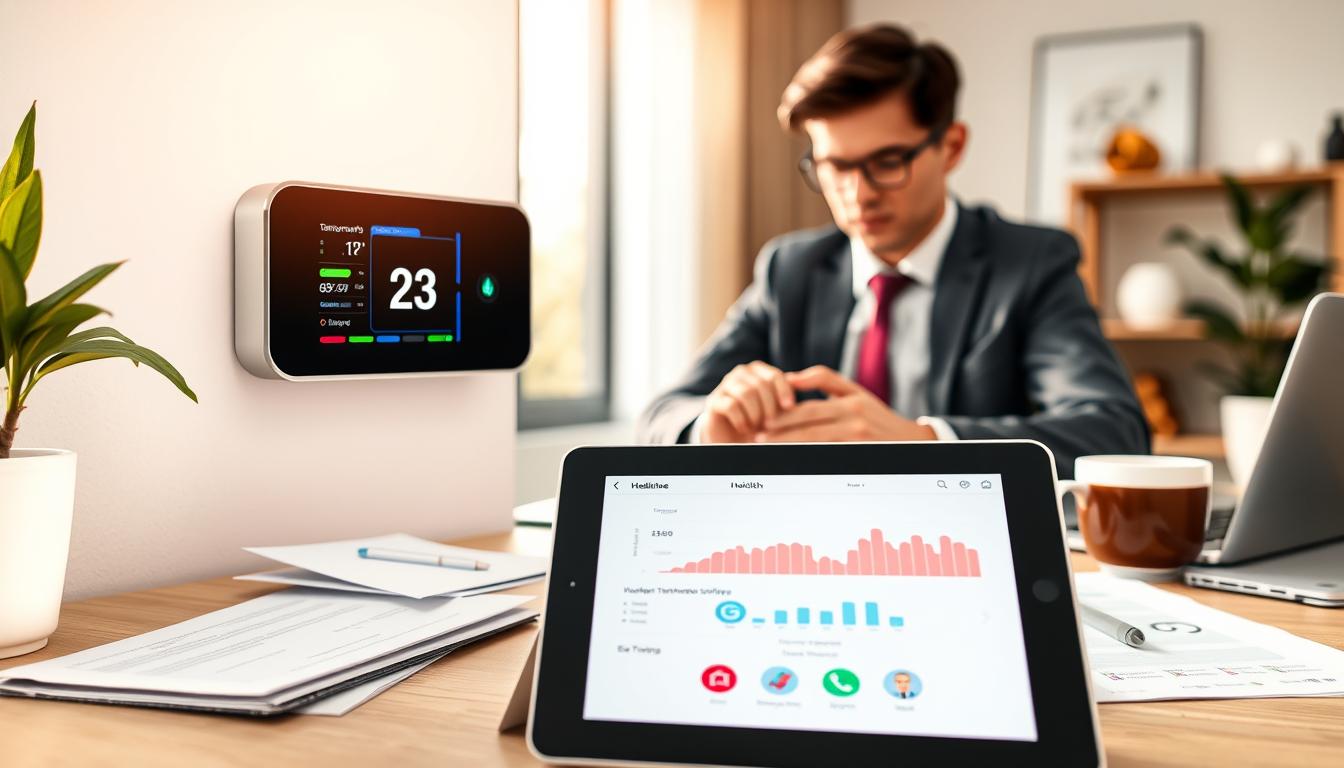
Your feet are essential every day. Small signs of trouble can sneak up on you. Smart foot care tech offers constant updates on circulation and skin temperature. This way, you can catch issues early.
Research by Professor Gayathri K shows diabetes often leads to foot problems. Smart socks with temperature sensors track foot temperature in real time. They send data to a mobile app or cloud, alerting you and healthcare professionals to any issues.
Nottingham Trent University and Siren Care have made these smart socks a reality. Their socks use special yarns and a Bluetooth module to send data to the Siren app. Studies show they can prevent many diabetic foot ulcers.
Design is key: prototypes at the Romanian Textiles and Leather Conference show how important it is. The right sensors, fabric, and knit can make a big difference. The best smart socks are comfortable, easy to wash, and reliable.
In the next sections, we’ll dive deeper into how foot care tech works. You’ll learn what features to look for and how to incorporate smart socks into your daily routine. This can help reduce risks and boost comfort.
Introduction to Smart Foot Care Tech
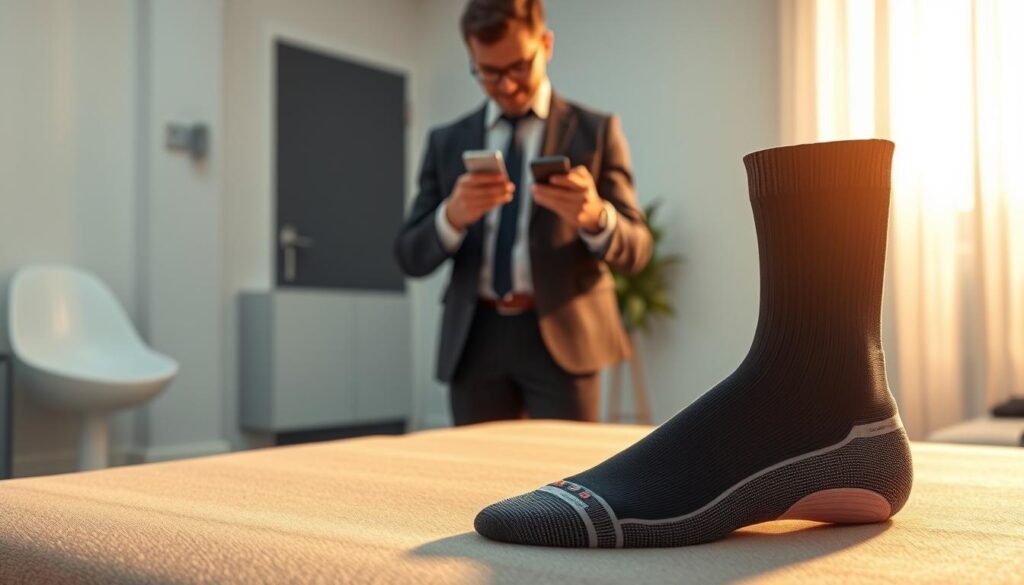
You need quick alerts to keep your feet safe. Smart foot care tech offers ongoing, noninvasive checks. It can catch early signs of diabetic foot issues before they get worse.
Smart textiles can sense temperature changes. This means you can spot inflammation and the risk of ulcers early. You get alerts to act fast, and your doctor can step in sooner to prevent bigger problems.
The Siren Smart Sock System is a top choice for connected foot care. It tracks foot temperature and sends updates to an app. This live data helps you and your healthcare team keep an eye on changes.
Smart socks are more than just socks. They sense, actuate, and communicate. They track temperature and humidity around the clock. This means you don’t need to visit the clinic as often.
Mobile apps let you access care from anywhere. This is great for people in rural or underserved areas. Thanks to smart tech, foot care solutions are now more affordable and accessible.
- Continuous monitoring for early warning signs
- Remote data sharing with clinicians
- Improved access and cost-effectiveness
The Role of Smart Socks in Foot Care
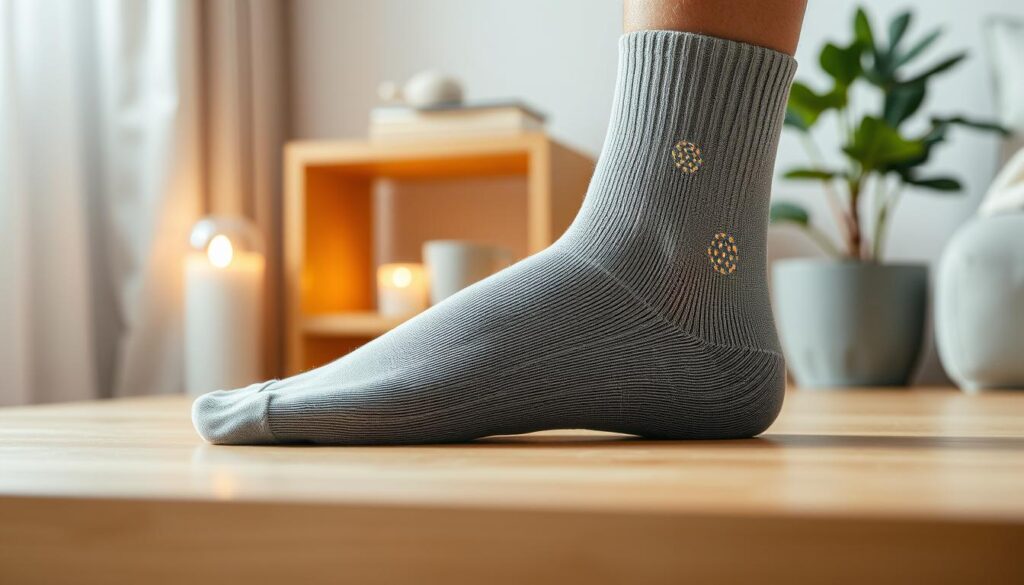
Early signs are key to avoiding serious foot issues. Smart socks keep an eye on temperature to spot problems like ulcers and infections. If they find a temperature spike, they send alerts to your phone or a cloud service.
Siren Care showed smart socks can send live temperature data to doctors for remote checks. They use sensors to track temperature differences between feet, a sign of ulcers. Studies with these socks have seen a big drop in ulcer cases.
Smart socks do more than just watch temperature. They also track humidity to understand tissue health better. This data helps you see trends, get alerts, and act fast.
Design is important for these socks to be worn every day. Research shows they need to be comfy, durable, and easy to use. This makes them better than many traditional tools for long-term care.
Smart insoles work great with these socks for detailed pressure and moisture readings. Together, they offer a complete view of foot health. This helps make better care decisions and lowers the risk of problems.
- Continuous monitoring that catches subtle changes
- Wireless alerts to prompt early action
- Integration with clinician dashboards for remote care
- Comfort-focused designs that encourage adherence
Key Features of Smart Socks
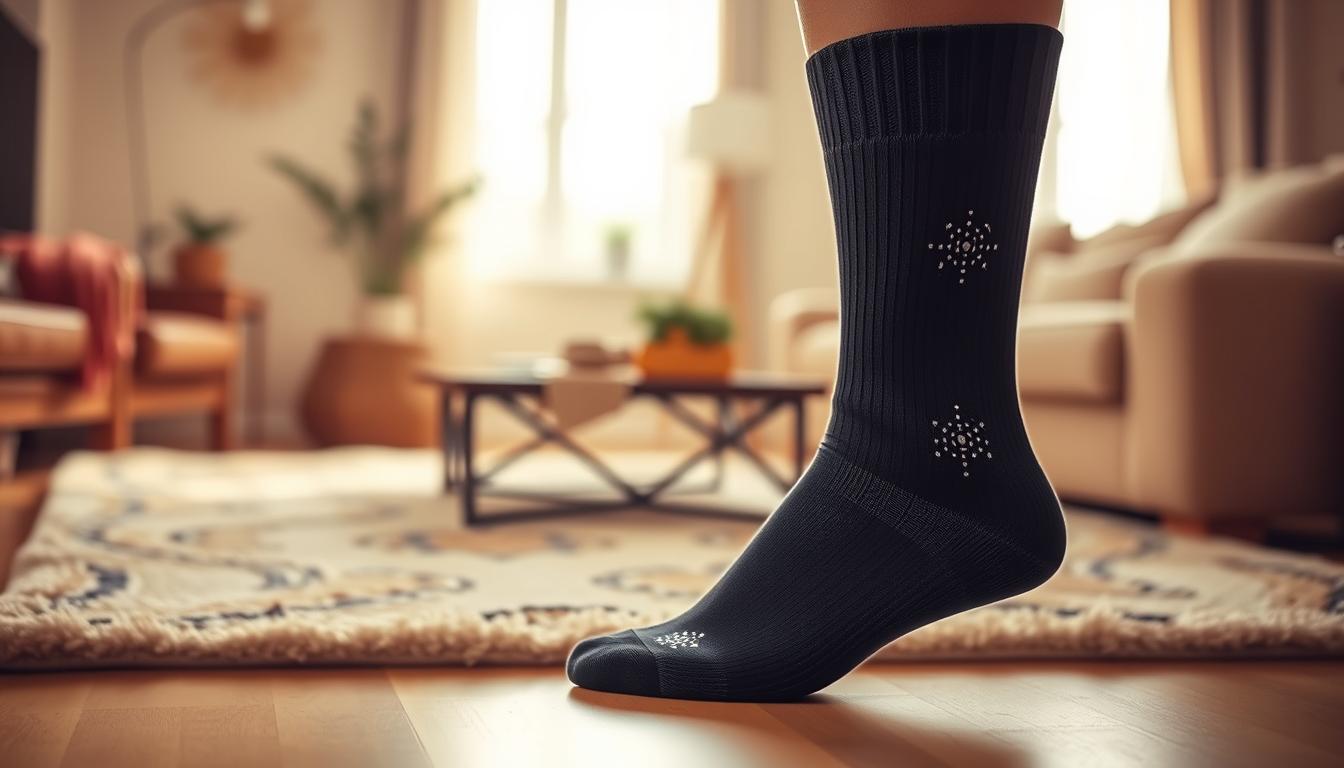
Smart socks have layers that keep sensors close to your skin without discomfort. Tiny thermistors and conductive filaments are hidden in the yarns. This setup allows for constant temperature and humidity checks, alerting you to any issues early on.
These socks are designed to be easy to wash and wear. They have water-resistant pods and strong seams to protect the electronics. You can also add a Bluetooth transmitter with a Velcro band for wireless data transfer to apps or cloud services.
- Embedded temperature sensors for real-time tracking.
- Smart insole technology that pairs with socks to map pressure and heat.
- Wireless transmission to mobile apps and clinician dashboards.
- Alarm generation when abnormal temperature changes occur.
Engineers and doctors work together to make these socks useful. They focus on monitoring humidity and temperature first. They also pay attention to power, data transmission, and how easy they are to use, like in Siren’s products.
These smart socks connect to a larger system of foot care devices. They work with smart insoles to send ongoing data, not just single readings. This helps doctors review your foot health remotely and act quickly.
- Sensor placement and segmented knit structures for targeted monitoring.
- Durable materials such as cotton-poly blends for breathability and longevity.
- Compact Bluetooth modules and low-power designs for extended wear.
These smart socks are made for everyday use. You can wear them at night or during activities. Doctors can see the same data through secure apps. The goal is to monitor your feet without getting in the way and catch any problems early.
Who Can Benefit from Smart Socks?
If you live with diabetes and face peripheral neuropathy or poor circulation, smart socks can help. They spot problems early by noticing temperature changes. This can prevent ulcers and amputations.
As a clinician, you get a tool for remote monitoring. This supports timely treatment plans. Devices that link to electronic health records track trends between visits.
If you care for an older adult or someone with mobility limits, smart socks provide alerts. Caregivers get data to guide daily checks and prompt interventions. This reduces guesswork and boosts confidence.
Public health programs and healthcare systems benefit from smart socks. They lower direct treatment costs and reduce long-term burdens from diabetic complications. Efforts to make them affordable aim to reach more people, including those in rural and underserved areas.
People who want proactive self-care find smart socks easy to use. Sensors provide feedback to help adjust behavior, like footwear choices and activity levels. This supports better habits and fewer clinic visits over time.
- Primary users: people with diabetes at risk of ulcers
- Clinical users: podiatrists and primary care teams using advanced podiatry tools
- Caregivers: family members and home health aides using connected foot care devices
- Health systems: programs seeking innovative foot health solutions for prevention
Understanding Circulatory Issues
If you have diabetes or vascular disease, you might not feel injuries because of reduced blood flow and nerve damage. Peripheral neuropathy makes it hard to feel pain. This can slow healing and increase the risk of infection, gangrene, or amputation.
One early sign is a difference in foot temperature. Studies from Siren Care show that foot temperature differences often appear before ulcers form. Using continuous monitoring can help catch these early changes, even if you can’t feel them.
Moisture is also important. Romanian studies suggest tracking humidity with temperature. Too much moisture weakens the skin and raises the risk of infection. Together, these data help doctors see trends in tissue health and blood flow over time.
- Watch for persistent temperature gaps between feet as an early indicator of inflammation.
- Track humidity to reduce skin breakdown from damp conditions inside socks and shoes.
- Use data trends instead of single checks to spot gradual deterioration in circulation.
Smart foot care tech links these measurements to alerts and reports. When used with foot care technology and advanced podiatry tools, it supports timely interventions. This gives doctors objective information to plan treatment and prevent severe problems.
Choose innovative foot health solutions that integrate temperature and humidity sensing for close monitoring. This approach improves your chance of early detection and better long-term outcomes.
Temperature Regulation and Its Importance
Your feet can warn you of problems early through temperature changes. Real-time monitoring helps catch inflammation before it gets worse. Smart foot care tech provides ongoing data, not just a daily check.
Siren Care’s clinical trials show tracking temperature can greatly reduce diabetic foot ulcer risk. Their washable smart socks alert you if one foot is warmer than the other. This smart monitoring lets you and your doctor act quickly.
It’s also important to watch for moisture levels. New prototypes use DHT22 sensors to measure humidity and temperature. High humidity increases infection risk and speeds up tissue damage, making it key to monitor both.
- Look for differences in temperature between your feet; small gaps can signal inflammation.
- Check where sensors are placed; support bands above the ankle and yarn-integrated sensors affect accuracy.
- Think about power and data delivery for reliable continuous tracking.
Smart insole technology offers more insight by tracking pressure and heat under your foot. When combined with smart socks, you get a complete view of stress points and hotspots. This combo helps prevent ulcers and reduces long-term complications.
Advanced foot care devices are even better when they connect to mobile apps. These apps show trends, helping you know when to rest, change shoes, or see a doctor. This way, you can better manage your foot health and give doctors useful data for treatment.
When choosing, focus on sensor accuracy and comfort. Devices that feel natural encourage regular use. With reliable smart foot care tech and smart insole technology, you can detect problems better and make smarter choices for your foot health.
Integrating Smart Socks into Your Routine
Begin by picking a product that fits easily into your daily routine. Look for connected foot care devices that look and feel like regular socks. They should also be easy to wash. For example, Siren Care has small thermistors and resin pods that are unnoticeable while walking or sleeping.
Make sure charging and attaching the device is simple. A support band with Velcro above the ankle can hold electronics and a Bluetooth transmitter. This design lets you remove the band for washing and snap it back on when you charge the unit overnight.
Pair the socks with a mobile app for live feedback. Smart foot care tech sends temperature and circulation data to your phone and the cloud wirelessly. The app can show graphs, send alerts, and let you share reports with clinicians.
Set up routines that fit your schedule. Charge devices at the same time each day, check the app after a walk, and keep spare socks ready during laundry days. Clear habits help keep foot care technology active and reliable.
Work with your care team to tailor alerts and thresholds. Clinicians can review trends and advise on behavior changes based on data from smart insole technology or sock sensors. This collaboration improves long-term adherence.
- Check washability instructions before buying connected foot care devices.
- Confirm battery life and charging method so it fits your routine.
- Practice syncing and data sharing with your clinician at first use.
- Keep the firmware and app updated for accurate foot care technology performance.
Trial a prototype if possible. Arduino-based systems and prototype apps like Serial Bluetooth Monitor show how your data will look. Testing helps you learn how alerts feel and how to respond before relying on the system fully.
Educate yourself on simple fixes. Learn basic steps for reconnecting Bluetooth, mounting the support band, and following washing procedures. Small skills prevent interruptions and keep smart insole technology and smart foot care tech working for you.
Real-Life Applications and Testimonials
Smart foot care tech is moving from labs to clinics and homes. Early studies showed promise for diabetic foot care by catching temperature changes before wounds form. Podiatrists and wound-care nurses helped shape these trials to meet real-world needs.
Research from Nottingham Trent University and Siren Care shows real-life examples. Their temperature-monitoring socks warned clinicians of hotspot formation early on. This helped prevent many diabetic foot ulcers, showing smart socks’ value in care plans.
Real-world pilot programs show how smart foot care tech connects patients and doctors. It lets you share data with your care team continuously. Doctors can spot trends, plan follow-ups, and act sooner than usual.
At conferences in Bucharest, researchers talked about validating prototypes in real-life settings. They plan to test sensor accuracy, durability, and conduct long-term studies. This work aims to make these solutions reliable and affordable.
Practical use cases you might find useful:
- Daily home monitoring to notice early temperature changes before skin breakdown.
- Remote clinician alerts that prompt timely appointments and offloading advice.
- Integration with clinics using advanced podiatry tools for wound assessment and treatment planning.
Patient feedback often mentions peace of mind and fewer emergency visits. Clinicians report more targeted care and fewer surprises during exams. Ongoing trials and broader data collection will strengthen smart socks clinical evidence and support wider adoption of innovative foot health solutions.
Future Innovations in Foot Care Technology
Smart foot care tech is moving from prototypes to everyday use. Engineers, clinicians, and patients are teaming up. They aim to make smart sock solutions common in care.
Future devices will have smaller electronics and better batteries. Siren Care showed how sensors in textiles and Bluetooth links to apps work well. These changes will make monitoring less intrusive and more reliable.
Researchers in Romania are working on new sensors. They want to improve detection by combining temperature and humidity sensors. Standardizing low-power sensors and using Value Analysis and Engineering can also lower costs. This makes cutting-edge devices more accessible.
- Cloud analytics and predictive algorithms will help detect risks earlier.
- Tighter clinical workflows will let clinicians act on remote data faster.
- Stronger data security and EHR interoperability will protect patient information.
Connected devices need broader clinical trials to prove their worth. When trials show benefits, payers and providers will adopt them faster. This will lead to clearer paths for reimbursement and wider availability.
As products improve, manufacturers will focus on seamless integration with care teams. This will create feedback loops that enhance device design and remote monitoring. Your foot health will be supported by systems that learn and adapt over time.
Conclusion: The Future of Foot Health Monitoring
Smart foot care tech is now moving from labs to clinics and homes. Siren Care and Nottingham Trent University are leading the way. They’ve created washable, wearable systems that detect temperature changes linked to ulcer risk.
This early warning can lead to timely doctor visits. It helps reduce diabetic foot complications. It’s a big step forward in foot health.
When choosing smart foot care tech, look for products backed by clinical evidence. Make sure they protect your data. Also, learn how to care for your device and work with your healthcare team.
As technology advances, expect better and more affordable options. Smart insoles and sensor-packed socks will soon be part of diabetes care. They promise to make foot health monitoring easier and more effective.