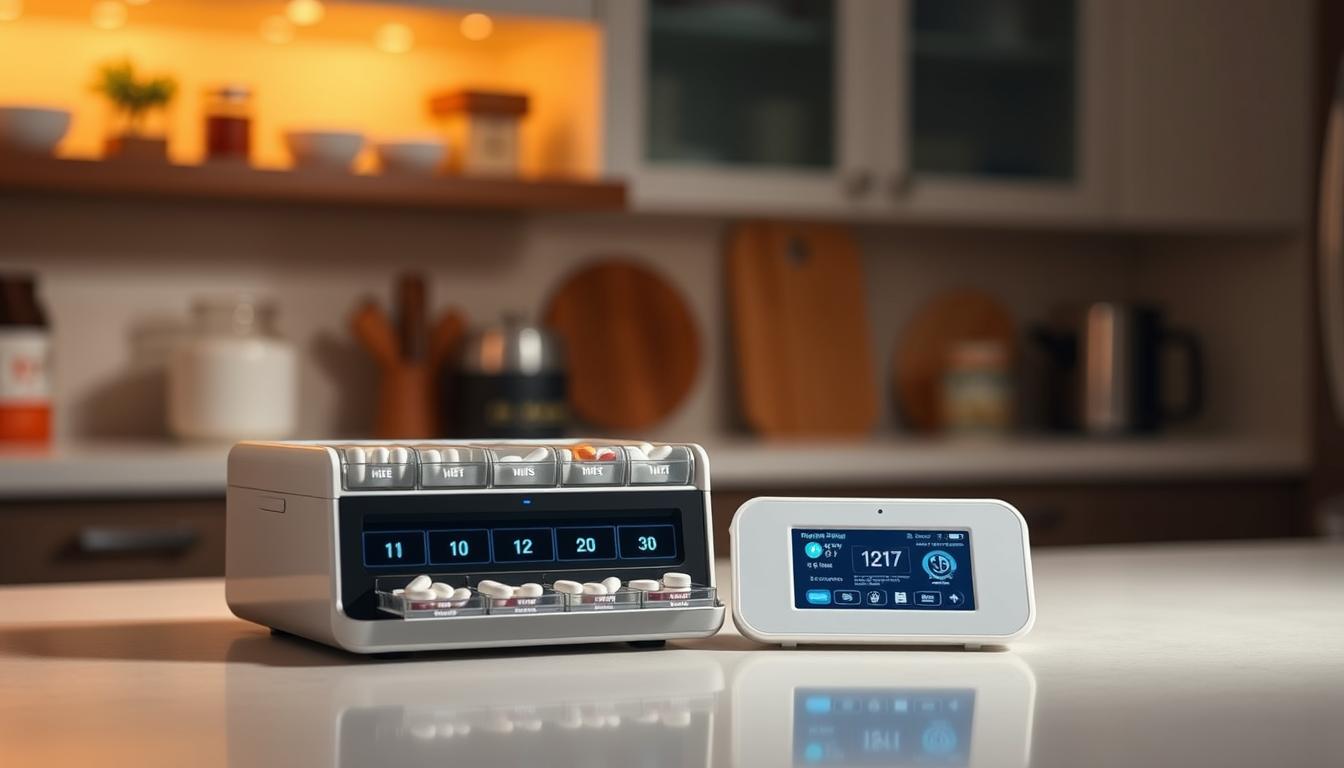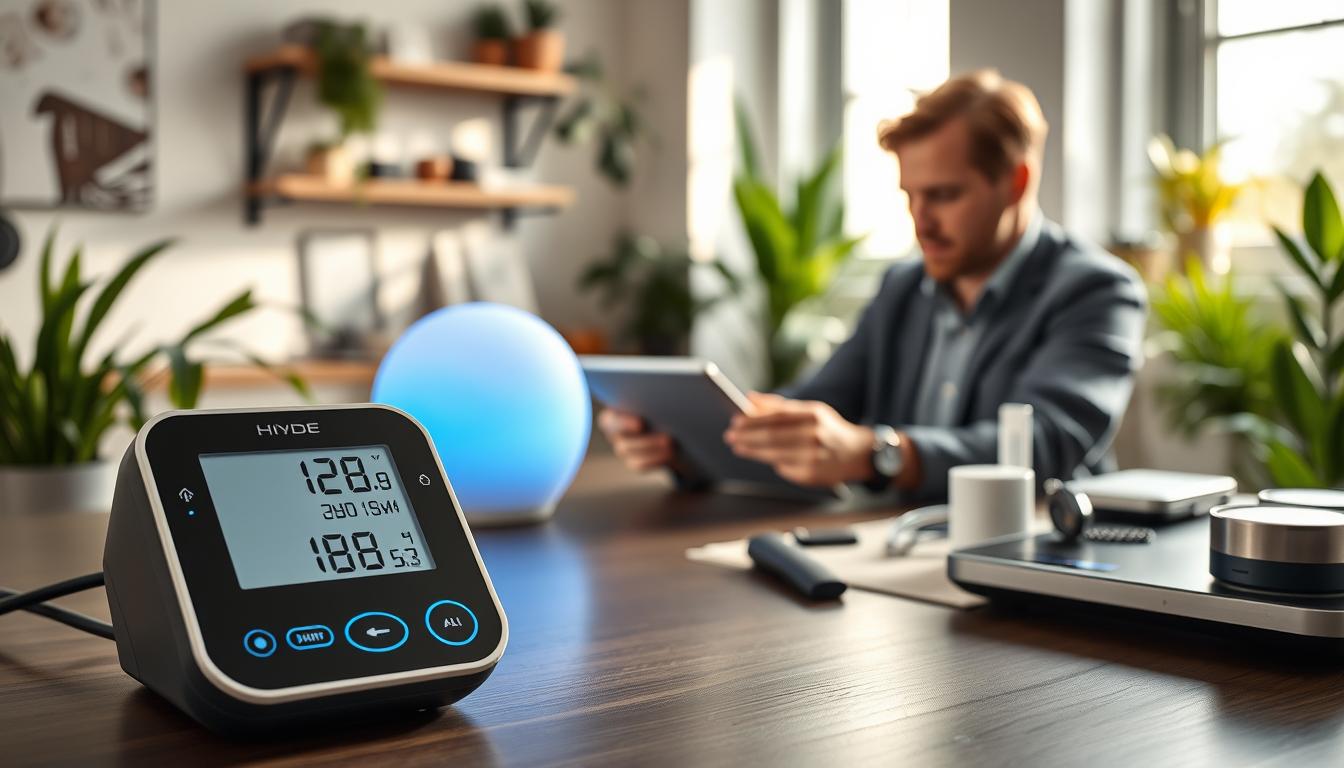
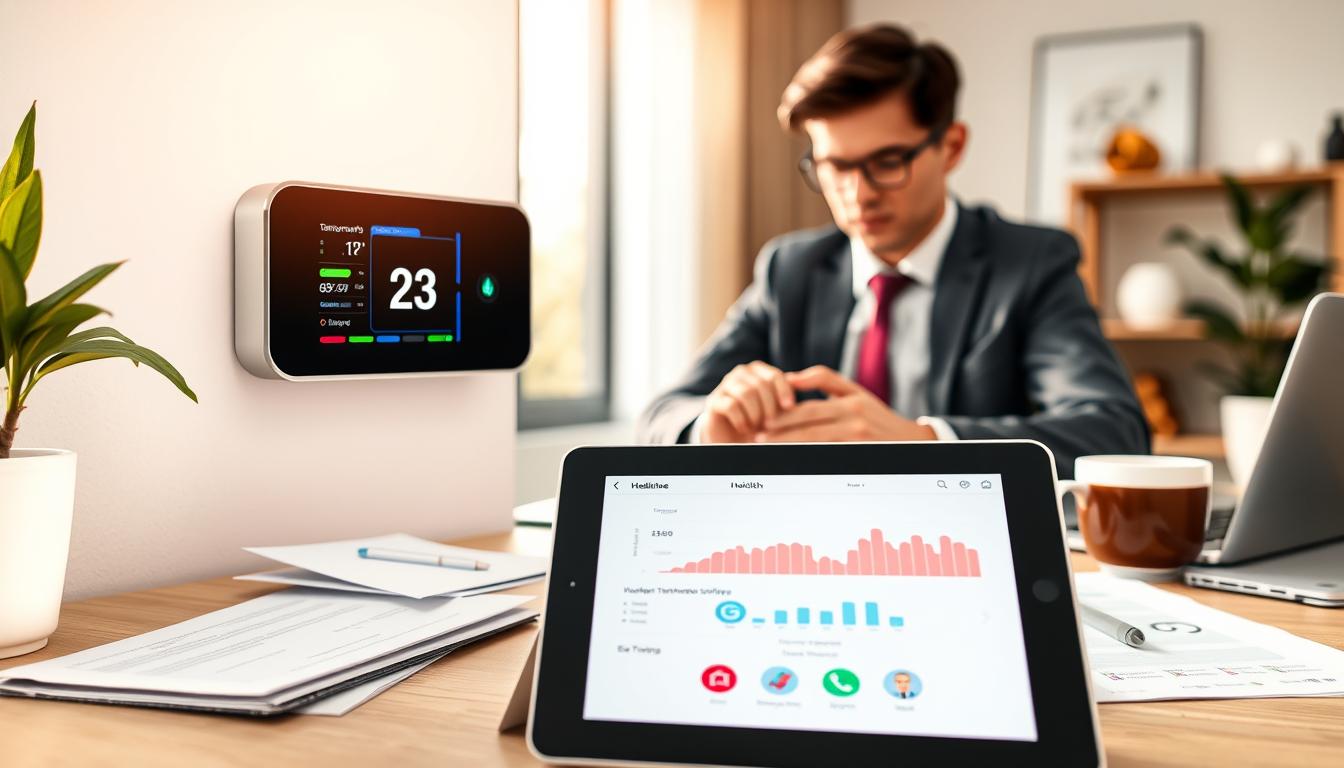
Smart thermostats and ambient sensors can track your health without you wearing anything or changing your daily routine. Companies like ecobee use these sensors to monitor activity. They can spot patterns like sleep times and how long you’re at home.
These patterns help find days when something might be off, like when you’re sick.
IoT devices, like smart thermostats, give us lots of data quickly. This data is useful for tracking health over time. It helps us see how our behavior and environment change.
In senior care, these tools have shown real benefits. They can spot unusual inactivity and help prevent falls. They also keep indoor temperatures safe to avoid too much cold or heat.
Using a temperature log app or keeping household logs can help keep older adults safe.
Smart-thermostat data can be shared in a way that keeps your privacy safe. This way, we can get useful health insights without invading your personal space.
This article will dive into what temperature logs for health mean. We’ll look at how illness changes these signals and the good and bad of using smart thermostats. We’ll also talk about privacy, analyzing trends, and the future of this technology.
Understanding Temperature Logs for Health
Temperature logs for health track temperature over time. They come from smart thermostats, sensors, and wearables like Fitbit or Apple Watch. These logs show room or body temperature.
How often you take readings matters. For example, ecobee’s motion sensors report every 5 minutes, then every 30 minutes to reduce noise. This helps spot trends without getting caught up in short spikes.
Devices share data through APIs, making it easy to collect long-term data. Brands like ecobee, Nest, Garmin, and Apple help you export and integrate this data. This way, you can analyze it further in health platforms.
IoT temperature data is very detailed and accurate. It’s available almost in real-time, giving you quick insights. Long-term data helps find small changes that matter for health.
But, there are some downsides. Data can be missing, and sensors might need calibration. Where you place sensors affects what they measure. Also, the people using devices might not be like everyone else, which can skew results.
Using temperature logs well with the right software makes them very useful. Knowing how to use them and understanding device ecosystems helps a lot. This way, temperature logs become a valuable tool in health monitoring.
How Illness Affects Body Temperature
When illness starts, your body temperature changes. Fever and hypothermia are signs of infection or other problems. Fever means your immune system is working hard, often before you notice other symptoms. Low body temperature can signal sepsis or issues with keeping warm in older adults.
Ambient sensors detect these changes. They show in temperature logs for health and smart thermostat data. Sudden changes in room temperature and sleep patterns might mean more than just comfort.
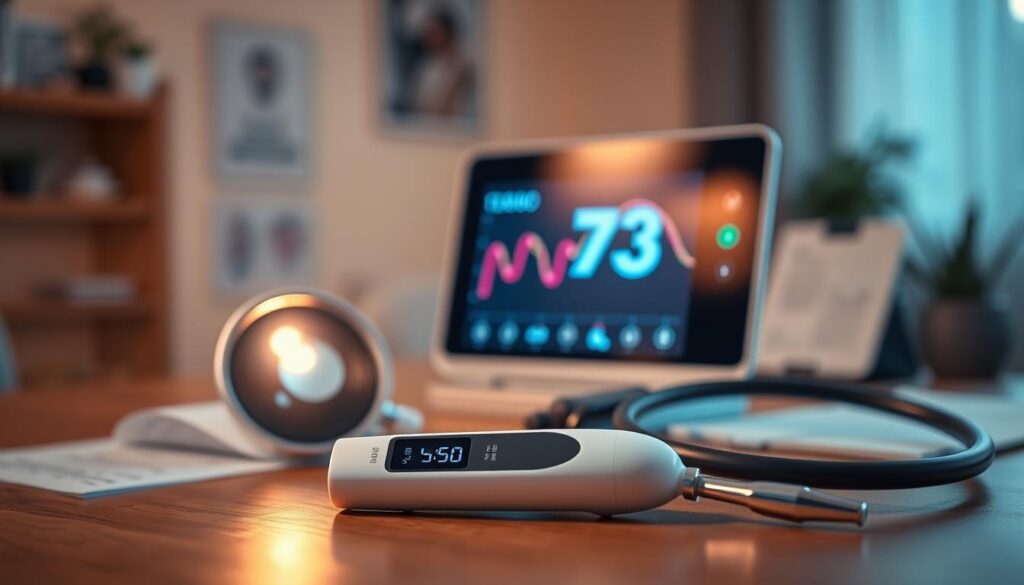
Wearables and bedside sensors give direct skin readings. They track changes in your core temperature. A steady rise in skin temperature can signal fever before you feel sick. This helps create a timeline of when symptoms start.
Research shows activity changes can signal health issues. For example, ecobee found unusual patterns in sleep and movement with illness. A temperature spike with less motion and poor sleep is a strong sign to see a doctor.
- Use patient temperature data and motion patterns together to spot early warning signs.
- Keep temperature logs for health to compare baseline rhythms against anomalies.
- Integrate medical temperature charting with wearable trends for better context.
Remember, things like room temperature, bedding, and medications can affect readings. These factors can change your body temperature. So, when looking at patient temperature data, consider these things.
Understanding digital temperature tracking is key. It helps you know what’s important and what’s not. When sensors, wearables, and thermostat data all show the same thing, you get a clearer picture of illness. This lets you act faster.
Benefits of Using Smart Thermostats
Smart thermostats collect data automatically. They track temperature and motion without your effort. You can use a temperature log app or software to view the data in charts.
They monitor temperature over time. This helps spot small changes that single readings might miss. You can notice trends and alert a doctor or caregiver if needed.
- Detect daily routine shifts using smart-thermostat motion and temperature patterns.
- Combine data in a temperature log app for visual alerts and summaries.
- Use temperature tracking software to set thresholds and receive notifications.
Caregivers can check indoor conditions and activity patterns remotely. Studies with ecobee show they can track wake-up times, sleep schedules, and more. This helps spot illness without sharing personal details.
Smart thermostats help prevent extreme temperatures in seniors. They can link to smoke detectors and HVAC systems in emergencies. This reduces emergency visits and supports aging in place.
Public health teams benefit from smart thermostat data. Aggregated data can show illness trends faster than traditional methods. This makes everyday devices useful for early warnings.
Smart thermostats are affordable and easy to use. Many homes already have compatible devices. Adding a temperature log app or software is low-cost for monitoring or research.
Early Warning Signs of Illness You Can Track
Watch for early signs by looking at your home and wearables. Check for steady temperature rises in bedrooms or near you. Smartwatches or patches can show skin temperature changes.
Notice changes in sleep times, waking up early, or sleeping less. Also, look for less activity during the day and trouble sleeping at night. Single changes are normal, but patterns over days are more telling.
Use temperature data with motion and sleep to understand better. The ecobee method starts with knowing your usual routines. It uses special algorithms to spot unusual changes.
Days that show big changes are marked as unusual. This helps tell normal from important changes.
When looking at temperature charts, use common sense. Small rises might just be from a room change or a hot shower. But, if temperature stays high and you’re moving less and sleeping poorly for days, it’s time to see a doctor.
Use digital tracking with other data to get a full picture. Mix temperature logs with data from wearables like heart rate and oxygen levels. Add what caregivers say to make decisions easier.
- Key signals to watch: ambient bedroom spikes, elevated skin readings, sleep shifts, low daytime activity, nighttime restlessness.
- Interpretation rule: persistent, multi-day anomalies beat single blips.
- Integration tip: pair patient temperature data with motion and vital signs for clearer context.
If you see consistent signs, call a healthcare provider or schedule a telehealth visit. For older adults, set alerts for caregivers and check on medication and water intake. Quick action can prevent symptoms from getting worse.
Privacy and Security Concerns
When you collect temperature logs at home, there are privacy risks to consider. Devices from private companies might claim your data as their own. Even if you remove personal info, it can sometimes be traced back to you.
Things like motion sensors and thermostats can also be a risk. If someone gets into your account or API, they could access your data.
Ecobee’s Donate Your Data program is a good example of how to handle privacy. They let users share data anonymously for research. This way, they keep personal info safe while helping with public health studies.
There are many technical risks to watch out for. IoT data needs to be stored safely and analyzed carefully. If cloud credentials or APIs are exposed, it’s a big problem.
To stay safe, follow some simple steps. Buy devices from trusted brands, use strong passwords, and understand data-sharing policies. Also, make sure to anonymize data before sharing it. Keep your devices and apps up to date to avoid security issues.
- Enable two-factor authentication for device and cloud accounts.
- Limit data retention and purge old temperature logs for health when no longer needed.
- Use local data options or encrypted backups when available.
Researchers need to protect health data carefully. They can use techniques like differential privacy. Always follow rules for handling data, including getting consent.
It’s important to find a balance between safety and personal freedom. Some people, like older adults, might want monitoring for safety reasons. Offer clear choices and controls so users can decide how much data to share.
Analyzing Temperature Trends Over Time
You start by collecting data from device APIs and a temperature log app. You gather timestamps, ambient and core estimates, motion, heart rate, and sleep markers. Make sure to use consistent time zones and store raw records for later use.
Preprocess data by aggregating it into fixed windows and smoothing out sensor noise. Mark missing segments for later imputation. Use median or forward-fill for short gaps and flag long gaps for review. These steps help prepare your data for modeling and anomaly detection.
Build a personalized baseline using unsupervised models when illness events are rare. Research shows LSTM–variational autoencoder approaches work well. They capture temporal dependencies and daily rhythms. Detect anomalies by comparing reconstruction loss to a robust threshold, like median plus interquartile range.
Use Python libraries like Keras and TensorFlow for LSTM–VAE models. PyTorch offers flexible architectures. Combine these with signal-processing libraries for data smoothing and aggregation. Many teams use dedicated software for ingestion and basic visualizations.
- Data collection: device APIs, IoT streams, temperature tracking software
- Preprocessing: time-window aggregation, noise reduction, missing-data handling
- Modeling: baseline creation, unsupervised LSTM–VAE, anomaly scoring
- Validation: compare flags with clinical or caregiver reports
Evaluate models using metrics like area under the curve (AUC). This helps quantify detection trade-offs. Use real-world validation data to mirror ecobee-style compatibility checks.
Fuse multiple modalities to improve sensitivity and positive predictive value. Combine ambient temperature logs with motion, heart rate, oxygen saturation, and sleep metrics. This reduces false alarms and highlights patterns like fever with reduced activity or disrupted sleep.
Prioritize interpretability for caregivers and clinicians. Display trends as deviations from a personalized baseline. Visualize sleep/wake shifts alongside temperature. Flag persistent anomalies for review and provide contextual snippets from the temperature log app or medical temperature charting records to support follow-up.
Validate anomalies against second sources, such as caregiver notes or clinical readings, to avoid acting on sensor drift. Use a repeatable analytic workflow to rerun preprocessing and modeling as devices or data volumes change.
Adopt tools and practices that let you iterate. Prototype with Keras or PyTorch, move to production with robust ingestion by temperature tracking software, and keep medical temperature charting records synchronized for audits. This creates a clear path from raw temperature logs for health to actionable signals.
Supporting Your Health with Smart Technology
Begin by selecting trusted devices from brands like Nest, Ecobee, Kinsa, Withings, or Fitbit. Choose a smart thermostat, a bedside sensor, and a wearable that fits your lifestyle. Register for vendor accounts and enable cloud services or APIs for safe data collection.
Calibrate your sensors and place them in spots that reflect your daily activities. Use a bedside sensor for sleep tracking and a living-area sensor for general use. Wearables should be worn as instructed by the manufacturer.
Establish a baseline before reacting to alerts. Collect several weeks of temperature data to understand normal patterns. Use a temperature log app that creates personalized baselines and sets anomaly thresholds with machine learning.
- Collect at least two to four weeks of readings.
- Label events like illness, travel, or medication changes.
- Review trends weekly to refine thresholds.
Integrate caregivers for better monitoring. Enable caregiver dashboards and mobile alerts for seniors using tools from Philips or CarePredict. Use geofencing and motion alerts to spot unusual activity, and link temperature alerts to emergency contacts when necessary.
Develop clear steps for responding to alerts. First, check the environment: thermostat settings, open windows, or heating and cooling issues. Then, assess the person: take a clinical thermometer reading, note symptoms, and review medication. Use telehealth services if symptoms suggest an infection or if you can’t assess in person.
If severe signs appear—very high fever, breathing trouble, fainting—call emergency services immediately. Remember, IoT readings are early warnings, not medical diagnoses. Use patient temperature data as a prompt to act, not as a lab result.
Ensure devices are easy to use and accessible. Provide simple written instructions and hands-on training for seniors. Choose voice-activated controls or simplified interfaces like Amazon Alexa routines or Google Assistant shortcuts when cognitive barriers exist.
Keep systems secure and reliable by updating firmware, rotating passwords, and performing periodic caregiver check-ins. Regular maintenance preserves the value of healthcare temperature monitoring over time and keeps your data accurate and actionable.
The Future of Health Monitoring Technology
The Internet of Things will soon be in our daily lives. Smart-home devices and wearables will connect better. This means your health data will sync with doctors’ systems easily.
This change will make health monitoring smoother and less intrusive. You won’t have to worry about it getting in the way of your day.
Technology will get even better at tracking health. Soon, we’ll have more accurate sensors. These will include skin and ambient sensors, and lab-on-a-chip tools that find pathogens and track temperature.
These advancements will help doctors get alerts sooner and more accurately. This means fewer false alarms and better care for you.
More people, including older adults, will use these technologies. This is because they’re now more comfortable with smartphones and the internet. Remote care and telehealth will become more common.
This will help reduce hospital visits and lower costs. It will also let seniors live on their own longer, with fewer trips back to the hospital.
Rules and ethics will keep up with the technology. Expect stronger rules about data and privacy. Companies, health systems, and public health agencies will work together responsibly.
- Population-level trend monitoring for early outbreak signals.
- Individual predictive alerts that fit clinician workflows.
- Ambient sensing in senior-care settings to support safer independent living.
Think about how digital temperature tracking and health logs will change care. The future of health monitoring is here, bringing new ways to keep us safe and doctors informed.
Conclusion: Staying Proactive about Your Health
Temperature logs from smart thermostats and IoT sensors can help spot early health changes. They track ambient readings, sleep patterns, and skin temperatures. These signs can show unusual changes before symptoms appear.
Tools like these offer big benefits. They help catch health issues early, support caregivers, and provide valuable data for public health. But, it’s important to check device accuracy and privacy. Also, validate signals with other sources to avoid false alarms.
Start by enabling motion and temperature monitoring at home. Build baselines over weeks. Consider using a reliable temperature log app or sharing data in telehealth visits. Set up clear alert protocols for caregivers and doctors.
Smart thermostat data and other health logs help you monitor signs of illness. This can make homes safer, helping older adults and leading to quicker, data-driven health responses.