Keeping a routine is key to staying healthy. A smart pill organizer with locks helps keep your routine on track. It stores, secures, and dispenses your medicine at the right times. It also comes with alarms and remote monitoring to help you remember and avoid taking too much.
Seniors, people with many medicines, and caregivers find these devices very helpful. They make managing medicines easier and less stressful. They also let family or caregivers check in and feel more at ease through apps.
These devices have many features. They send reminders, dispense medicine on time, and have locked spots to prevent taking too much. They also connect to apps for remote monitoring and come in different sizes for different needs. Some, like Hero, even sort and dispense multiple medicines and work with a mobile app for easier use.
But remember, these tools are just aids. They can’t replace medical advice. Always talk to your doctor or a healthcare expert before changing your medicine or treatment plan.
What are Smart Pill Dispensers?
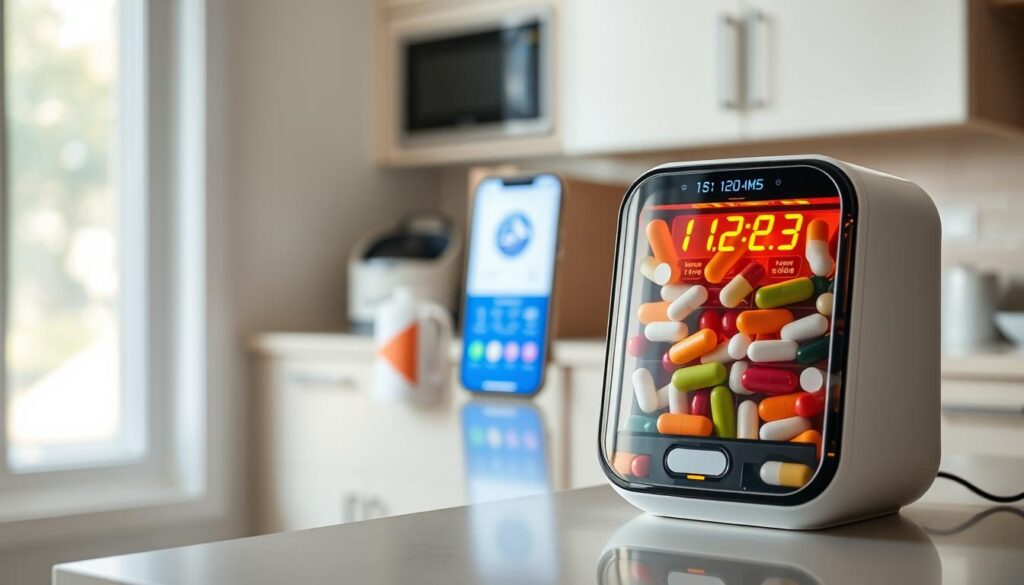
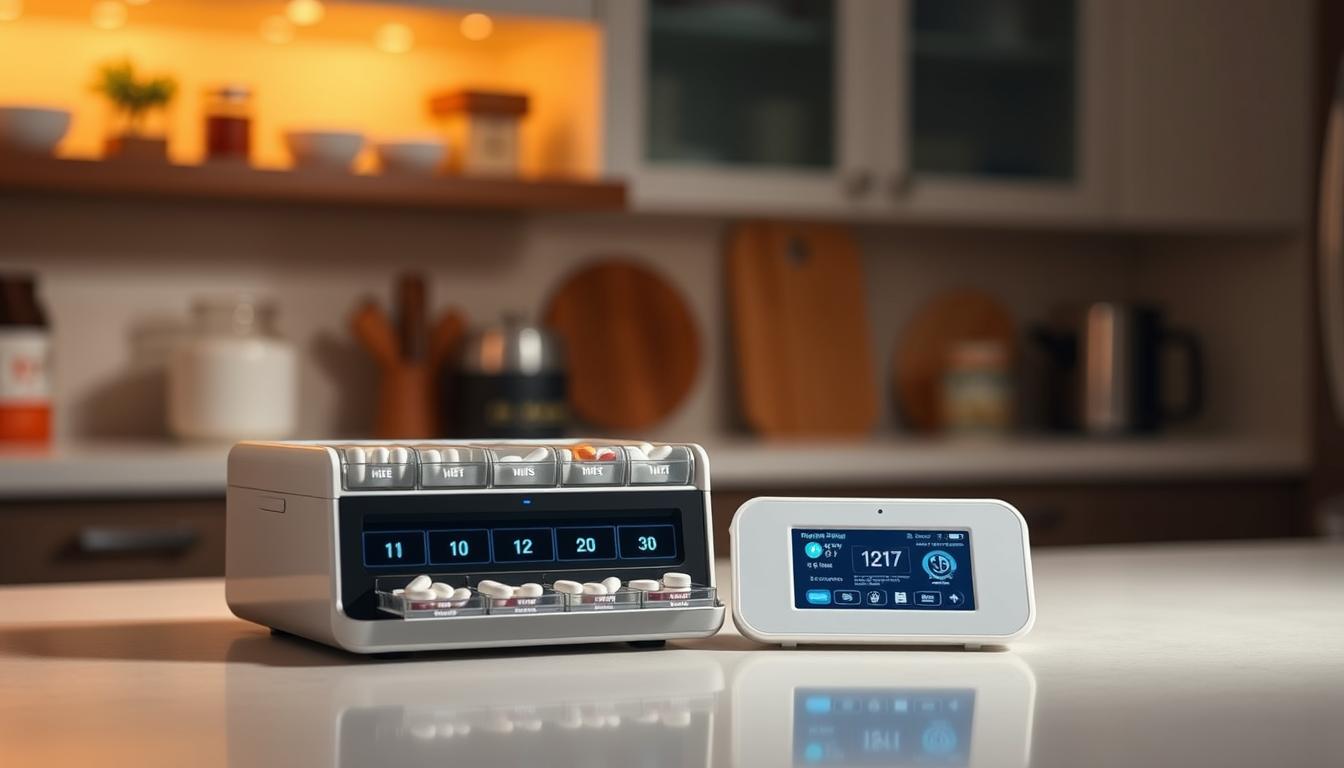
Smart pill dispensers are common in homes and care settings. They range from simple pill organizers to advanced systems. These systems automate dosing, provide alarms, and lock compartments.
Basic models beep or flash to remind you of doses. More advanced ones have timed alerts and labeled compartments. The top models even release doses automatically and alert caregivers if a dose is missed.
Features include audible and visual alarms, timed dispensing, and locking compartments. They come in various capacities, from daily to 90-day systems. Devices also have sliding mechanisms and removable cassettes for easy filling.
Some models have labeled compartments for sorting medications. Others handle large capsules and chewables. There are also compact designs for travel or bedside use.
- Simple manual organizers for low-complexity regimens.
- Basic electronic pill dispenser units with alarms and timers.
- Advanced automatic pill dispenser systems that dispense and report dosing.
Products like Hero offer advanced features. Hero can hold up to 90 days of medication and connects to an app. This integration is great for managing complex medication schedules and coordinating care.
Choose a smart pill dispenser based on your needs. Opt for a model with reminders and organization, a smart pill box for categorization, or an automatic dispenser for hands-off dosing. The right choice helps avoid missed doses and simplifies medication routines.
How Smart Pill Dispensers Work
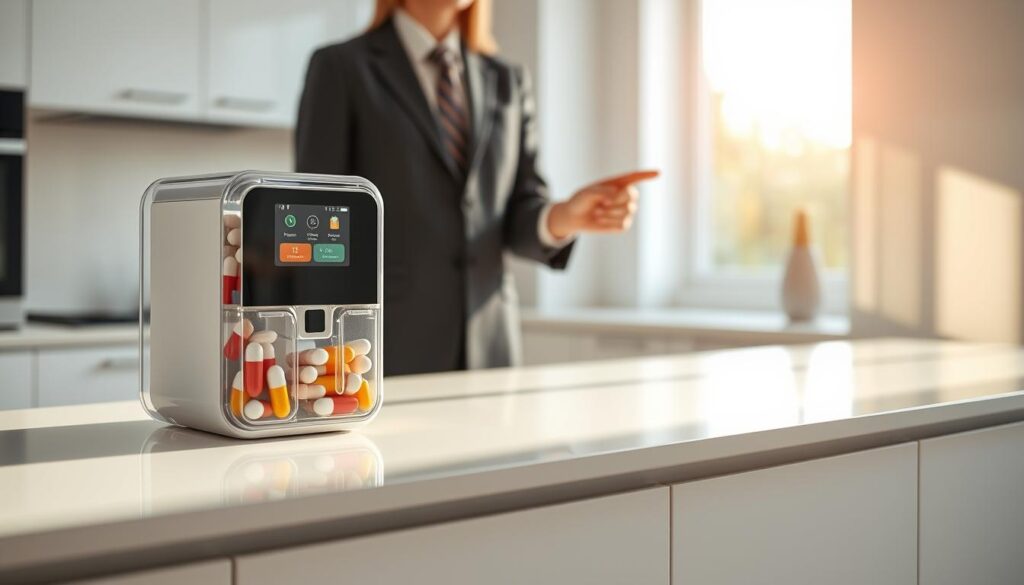
Your smart medication dispenser combines simple mechanics with modern technology. It has a programmable timer that tells it when to dispense medication. Motorized trays or compartments then move pills into a slot for you to take at the right time.
It also has built-in locks to prevent early access and double dosing. This ensures your medication is taken correctly.
Sensors are key in confirming doses. Many models use weight, motion, or optical sensors to detect when pills are taken. If a dose is missed, the device will sound an alarm. This alarm can be a sound, light, or a notification on your smartphone.
Setting up your smart pill dispenser is easy. You or a caregiver just needs to enter your medication schedule into the device or the app. Some models require you to sort pills into cartridges beforehand. Others automatically sort them for you after you upload your medication list and scan each prescription.
Connectivity adds convenience and oversight. Wi-Fi or Bluetooth links the dispenser to a mobile app. The app lets you adjust schedules, view adherence reports, and receive alerts for missed doses. This is very helpful if family members live apart.
Error prevention is a big focus. Locks prevent early access and accidental double doses. The device will also alert you when compartments are low. Apps can even log doses taken outside the unit, like refrigerated medications, so your records stay complete.
- Load medications into compartments or cartridges.
- Program dosing times on the device or app.
- At scheduled times, the automatic pill dispenser releases the dose with sound or light.
- If a dose is missed, sensors flag the event and the app notifies caregivers.
This system keeps your medication routine consistent. It reduces the burden on you and your caregivers. The mix of mechanical design, sensor checks, and app connectivity makes smart medication dispensers a reliable aid for daily medication.
Importance of Locking Mechanisms
A locking mechanism in a medication management system keeps your household safe. It limits access to doses. This prevents accidental double-doses and mix-ups when pills are secured.
A pill organizer with alarms that also locks reduces the chance of overdose in busy homes. It’s a great choice for families with young children or those with substance-use concerns.
People with memory loss get extra protection from locked units. Caregivers and families in shared living situations avoid open access to prescriptions. This is very helpful in homes with young children or residents with substance-use concerns.
Modern locks use timed access so a smart pill box opens only when a scheduled dose is due. Caregiver override options let you grant immediate access when needed. Audit trails record who opened the dispenser and when, giving you a clear log through companion apps.
Automatic dispensers pair locking features with reminders and remote monitoring. If a missed or blocked dose occurs, the medication management system sends alerts to caregivers. This way, you get faster responses to missed doses while staying informed without constant checking.
Regulatory and practical considerations matter when you choose a locked dispenser. Locks support adherence and lower caregiver stress, yet they do not replace clinical oversight. Keep medication lists current and review prescriptions with your clinician while using a smart pill box for day-to-day safety.
Choosing the Right Smart Pill Dispenser
First, figure out what you need each day. Count your pills and plan your schedule. Simple routines might need a basic pill reminder. But, if you take many pills at different times, you’ll need a more advanced device.
Consider how easy it is to carry and use the device. If you travel a lot, a small, battery-powered dispenser is best. Look for large compartments and clear labels if you have trouble with your hands or vision.
Think about whether you need someone to monitor your medication. Choose a device with app connectivity and alerts for caregivers. This way, your family or caregivers can stay updated on your medication.
Compare manual organizers with automatic ones. Manual ones are cheaper and good for simple routines. Automatic dispensers offer safety features like locks and alarms. These help prevent taking too much medication and are useful for those with memory issues.
Here’s a checklist to help you choose:
- Capacity: daily, weekly, or 90-day options
- Locking mechanism strength and tamper resistance
- Alarm volume, tone options, and vibration
- App connectivity with caregiver alerts
- Ease of loading: sliding trays or refill cartridges
- Compartment size for large pills
- Power source: replaceable batteries, rechargeable battery, or plug-in
- Portability and build materials
Store your device in a dry place. Keep it away from moisture and direct sunlight. Store refrigerated medications separately and track them with an app or a schedule.
Consider the cost and what you get for it. Read reviews and check the product’s specs. Look for durable materials and reliable software. Brands like Hero offer complete solutions that manage multiple medications and allow for caregiver monitoring.
Try out the device before buying. Test its alarm, how easy it is to load, and the app setup. Also, check if customer support is helpful before you decide to use it long-term.
Benefits of Using Automated Pill Organizers
Automated pill organizers make taking medication easier. They deliver doses at the right time and send reminders. This helps you take the right amount of medicine every time.
Locks on electronic pill dispensers prevent accidental overdoses. For those with vision or memory issues, these devices have alarms and locks. They ensure pills are taken safely and on time.
Using these devices helps caregivers too. They can monitor medication remotely and get alerts for missed doses. This reduces stress and gives family members peace of mind.
Consistent dosing improves health outcomes. A system that enforces schedules lowers the risk of drug interactions. It also prevents health decline from irregular use.
- Daily routine becomes simpler: you load doses in advance and link reminders to habits like meals or bedtime.
- Audible and visual cues make it easier to remember doses when you are busy or distracted.
- Some models hold multi-month supplies, reducing refill trips.
Apps add more convenience. Many systems connect with apps like Medisafe or Apple’s Medications app. This lets you track all your medicines, not just those in the dispenser.
Choosing a reliable electronic pill dispenser or a pill organizer with alarms saves time and reduces errors. These devices support your independence while keeping safety first.
Addressing Common Concerns
When thinking about smart pill dispensers, you might worry about their reliability. Issues like power outages, mechanical jams, and connectivity drops can stop them from working. Look for models with battery backup or plug-in options. Also, choose well-known brands with good warranties and customer support to minimize downtime.
Privacy and data security are key when using a connected smart pill box or pill reminder device. These devices track your medication schedule and how well you stick to it. Make sure the vendor has a clear privacy policy and uses strong encryption. Always use a secure Wi‑Fi network and a strong password to keep your data safe.
The cost of these devices can vary a lot. You can find cheap manual organizers or spend more on automatic dispensers with cloud services. Think about the upfront cost, any subscription fees, and how well it helps you remember to take your pills. Taking your pills on time can save you money in the long run by avoiding hospital visits.
Some people might find these devices too complicated, which can stop them from using them. Look for devices with easy-to-use controls and clear displays. Some companies offer in-person setup or phone support. If you’re not into tech, a simple pill reminder device can work without needing a smartphone app.
Remember, smart pill dispensers and boxes are tools to help you remember to take your pills, but they can’t replace medical advice. Always keep your medication list up to date and see your doctor regularly. If you miss a dose or have any side effects, tell your doctor right away so they can adjust your treatment plan.
- Reliability: opt for battery backup and trusted brands.
- Privacy: choose vendors with secure practices and use strong Wi‑Fi passwords.
- Cost: weigh features, subscriptions, and long-term savings.
- Usability: favor simple interfaces or take advantage of setup services.
- Clinical role: use devices as support, not a substitute for medical guidance.
Maintenance and Care for Smart Pill Dispensers
Store your electronic pill dispenser in a cool, dry spot. This keeps pills and electronics safe. Clean the outside with a soft cloth. Always follow the maker’s cleaning tips for the inside to avoid germs.
When you refill your smart dispenser, check the pills against your prescription. Use a list of medications and refill on the same day each week. This helps avoid mistakes.
- Keep extra doses in their original containers for emergencies.
- Label each compartment clearly if you’re managing many medications.
Smart pill dispensers need software updates. Make sure to update the app and firmware often. This keeps your device secure and running smoothly. If you can, turn on automatic updates.
Watch the battery level and have a plug-in option ready. Keep spare batteries on hand. This way, you won’t miss a dose if the device runs out of power.
If your dispenser jams or shows errors, start with the troubleshooting guide. If problems persist, reach out to customer support. Ask for service if parts seem broken.
- Clean the inside weekly or as suggested.
- Double-check the medications every time you refill.
- Install updates and check your connection every month.
- Test the alarms and power backup every three months.
Take your smart dispenser to regular medication reviews with your doctor. Also, get it checked when you change prescriptions. This ensures the dosing and alarms are correct.
Real-Life Applications of Smart Pill Dispensers
Smart pill dispensers are great for keeping track of your pills at home. They help avoid mix-ups, keeping your medications safe from kids. Place it where you start your day to make sure you remember to take your pills.
Caregivers can check in without being right there. They get alerts and reports on who took their pills. This way, you can support your loved ones while knowing they’re taking their meds.
In places like assisted living, these devices cut down on mistakes. They also help keep everyone on the same schedule. Plus, they work with pharmacies to track who needs what and when.
- Household tip: keep an updated list of prescriptions near the smart pill box and review it after medical visits.
- Routine tip: sync the pill reminder device with meals or hygiene times to build reliable habits.
- Caregiver tip: check adherence reports weekly and share summarized notes with clinicians.
Tools like Hero show how they can change lives. They help seniors stay on track and give families peace of mind. It’s all about making sure everyone gets their meds on time.
To use it best, put the dispenser in a spot you see every day. Test the alarms when your routine changes. Think of it as part of your whole system for managing meds.
Future Trends in Smart Pill Dispensers
Smart pill dispensers will soon link up with apps and services you already use. They will connect with electronic health records, pharmacy systems, and telehealth platforms. This will make it easier to manage your medication and keep everyone informed.
AI and predictive analytics will make these devices even smarter. They will notice when you miss a dose and predict when you might not take your medication. This way, they can alert you or your caregiver to take action.
Look out for new models that come with pharmacy coordination and dashboards for caregivers. Brands like Hero and Philips are starting to offer subscription services. These services handle refills and monitoring, making it simpler for you and your family to use.
Expect stronger privacy rules and clearer guidelines for using these devices. There will be safer data handling and easier-to-use interfaces for older adults. These changes aim to make medication management safer and more integrated, supporting your independence and giving caregivers and clinicians reliable data.