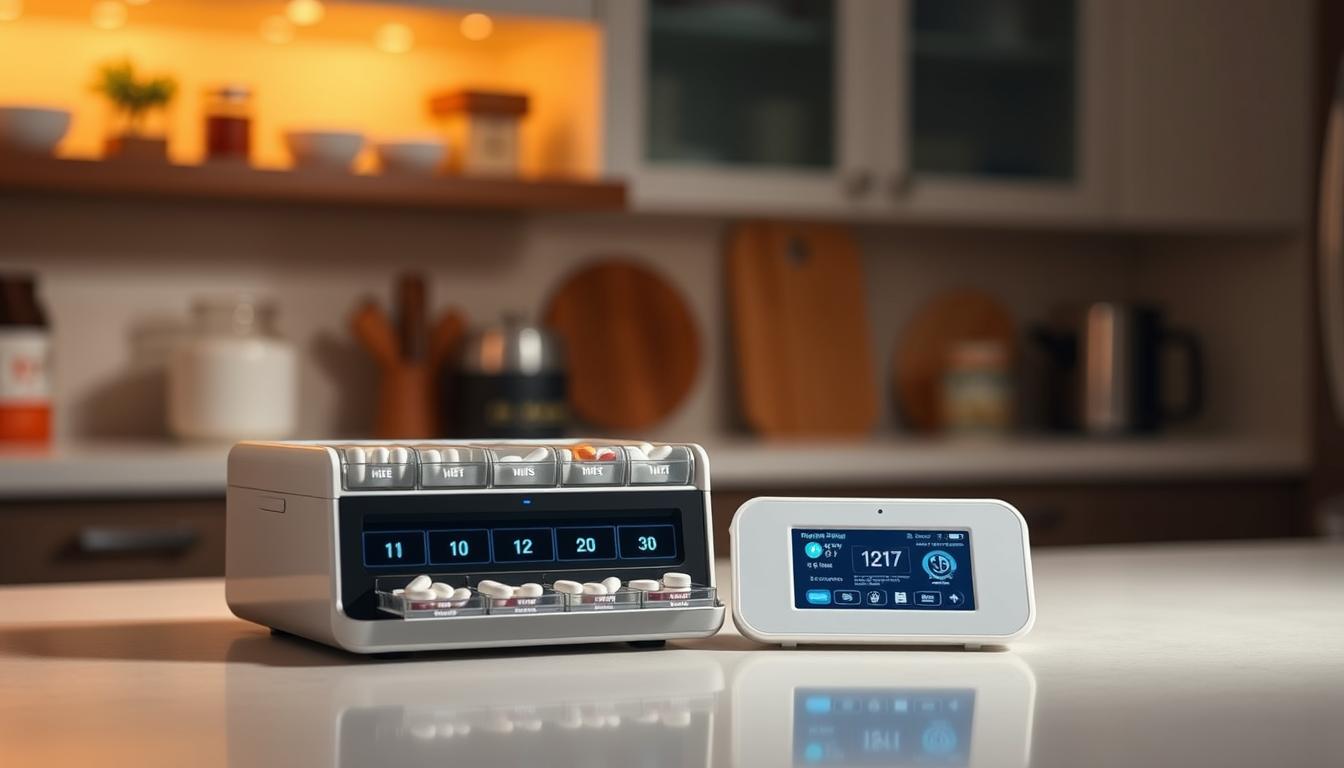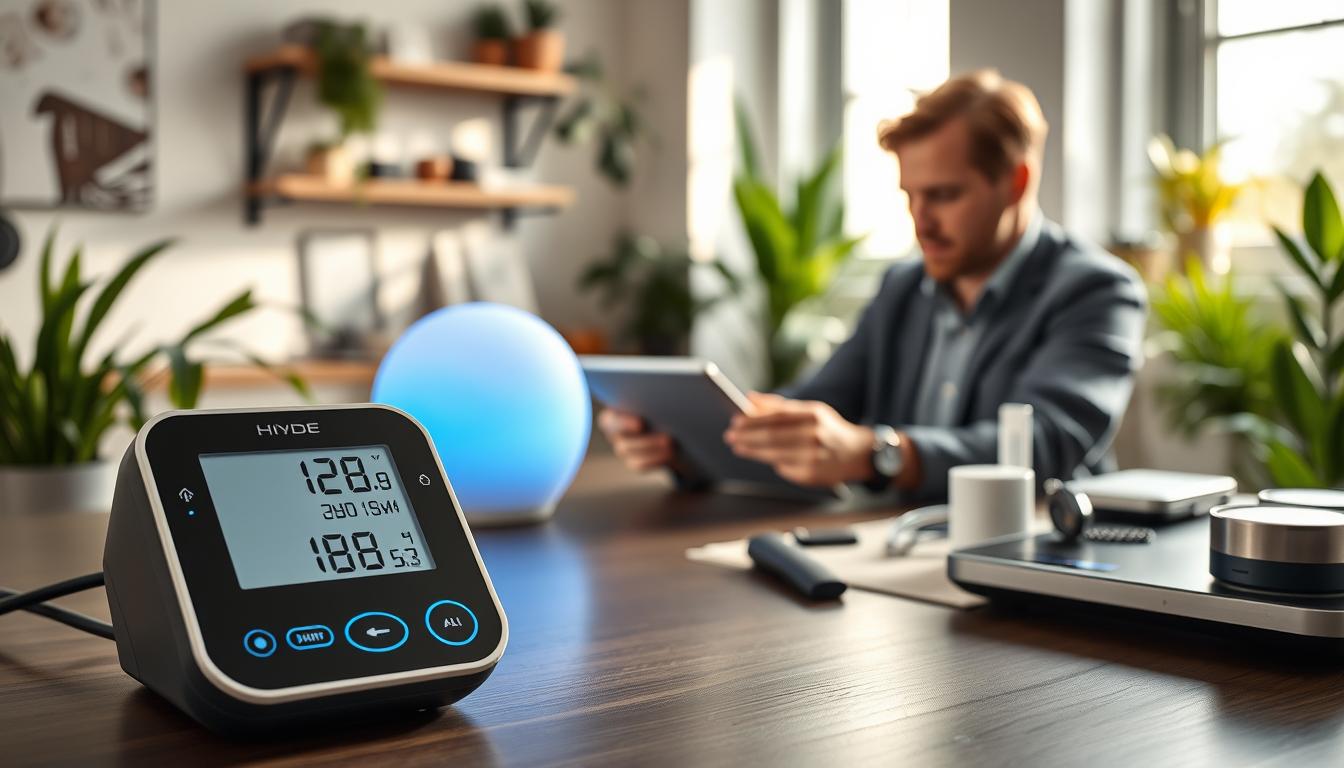
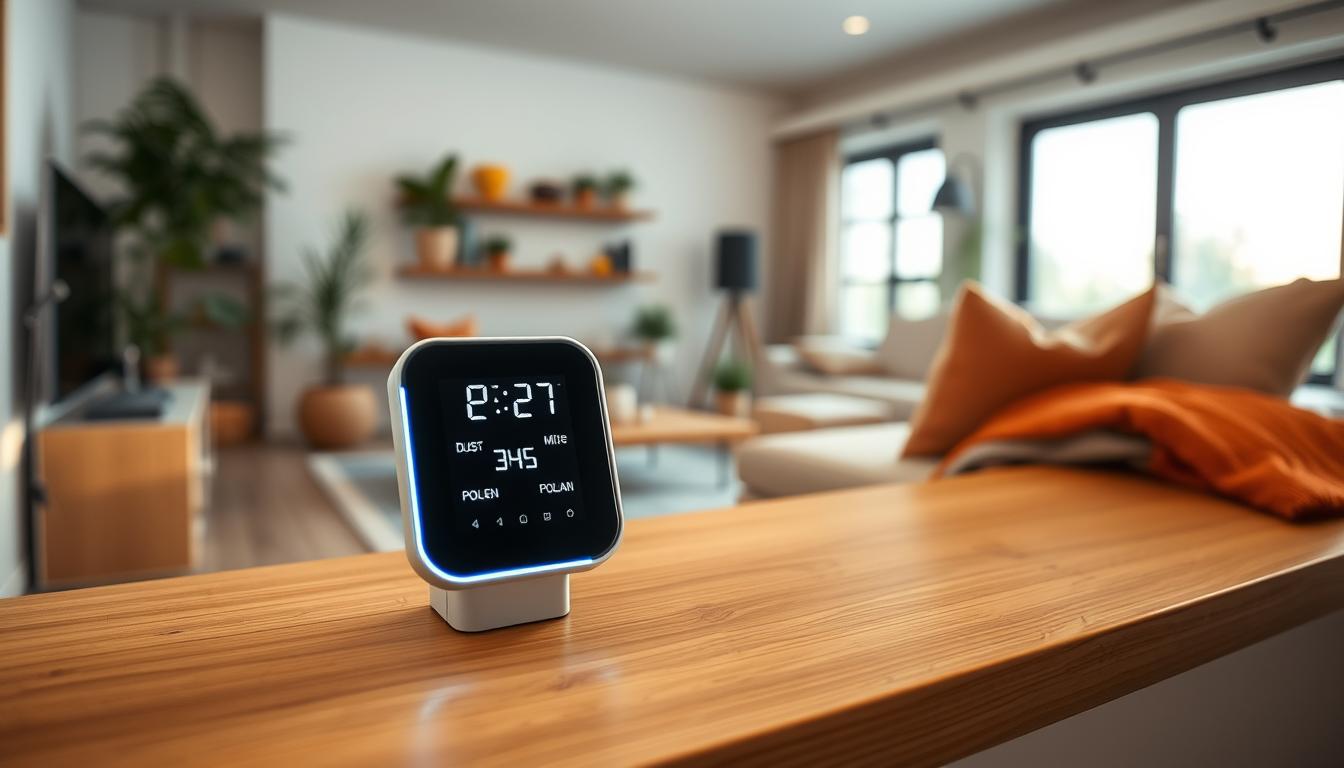
Learn how to make your home air cleaner with advanced sensors. They help spot dust mites and pollen. This article shows you how to detect allergens in real-time and analyze them every day.
Modern sensors can find dust mites and pollen quickly. They are much better than old tools from the 1930s. These sensors promise to find airborne particles and allergens right away.
Sensio Air is a new sensor technology that’s easy to use and affordable. It finds airborne particles and allergens instantly. It shows how you can track and control allergens at home.
After COVID-19, people became more aware of air quality and airborne pathogens. You’ll see why old methods don’t work and how new sensors are better. They give you data to manage allergens.
By the end of this article, you’ll know how to set up sensors and connect them to your smart home. You’ll also learn how to keep your devices working, read reports, and use strategies to control allergens. This will help improve your health and wellbeing.
Introduction to Allergens Monitoring in Your Home

Allergens monitoring looks at the tiny particles that cause allergies. It’s different from just checking the air quality. It focuses on things like dust mites, pollen, mold, and pet dander.
Modern methods use local sensors and cloud analysis. Devices like Sensio Air or air-Q collect air samples. They then send this data to the cloud for analysis.
The cloud identifies the allergens and gives you advice. Systems like cair and Sensio Air show you how to improve your air. They offer real-time tracking and tips to keep your air clean.
You can use a mobile app to check your air quality. It shows live charts and lets you log symptoms. You’ll get alerts when the air quality gets bad.
- How the architecture works: local sensor → cloud analysis → identification and recommendations.
- What you see: dashboards, alerts, and symptom-linked timelines for allergen tracking.
- What this is not: while related, food allergen testing is a different field from airborne allergen detection methods described here.
When picking an allergen monitoring system, look at the sensor’s sensitivity. Also, check how well it tracks air quality in real-time. The right device can make your home more comfortable and help you avoid allergens.
Why Allergens Monitoring is Important for Your Health
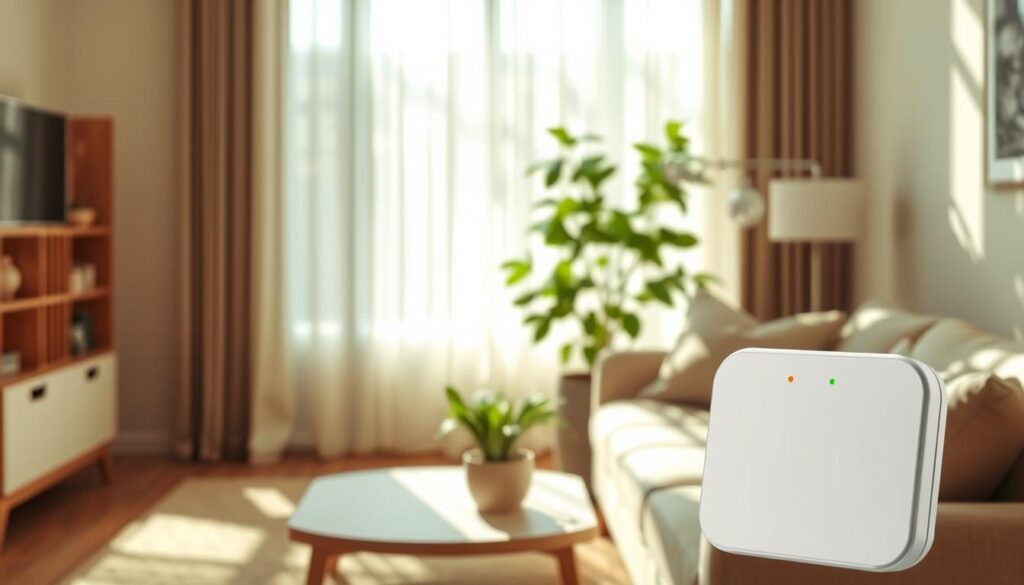
Your indoor air quality affects your daily comfort and long-term health. Poor allergen control can lead to allergies, asthma attacks, and chronic respiratory disease. Monitoring helps you spot trends early, preventing symptoms from getting worse.
Using sensors for allergen management offers clear benefits. Workplaces, schools, and hospitals see fewer absences and happier occupants when they track and reduce airborne risks. Sensio Air helps improve air quality in offices, schools, hospitals, and hotels.
Early detection is key for effective allergen risk assessment. Sensors can find mold spores, dust mites, pollen, and pet dander early. This quick action prevents sleep issues and lost productivity caused by indoor allergens.
Monitoring gives you a head start with detailed data and high accuracy. Sensio Air claims its system can identify mold species and detect dust mites and pet dander with over 97% accuracy. This helps you create targeted plans for remediation and control.
Regular monitoring is essential for protecting your health and respiratory well-being. It helps track pollutant spikes and patterns, reducing triggers for sensitive people. This improves overall health in your home or facility.
Here are some steps you can take today. Schedule regular checks, integrate sensor alerts into your routine, and use data to guide cleaning and HVAC adjustments. These actions improve allergen management and lower health risks over time.
Common Indoor Allergens: Dust Mites and Pollen
Dust mites live in bedding, upholstery, and carpets. They cause sneezing, congestion, and itchy eyes when their waste is in the air. Sensio Air says it can spot dust mites with over 97% accuracy. It also lets you track how dust mites affect your family.
Pollen from trees, grasses, and weeds gets inside your home. It changes with the seasons. Sensio Air tracks pollen in real time. This way, you know when to keep windows closed or use air filters.
Other allergens like pet dander and mold spores are also in your home. Pet dander is found in furniture and on clothes. Sensio Air finds pet dander with over 97% accuracy. Mold spores are another problem; advanced monitoring alerts you to specific types.
Non-biological particles like dust and soot also affect your air. Sensio Air analyzes these particles too. This gives you a complete view of your indoor air. Knowing about both biological and non-biological particles helps you clean and control humidity better.
- Where dust mites hide: mattresses, pillows, rugs.
- When pollen is worst: seasonal peaks for tree, grass, weed pollen.
- Related risks: pet dander and mold spores add to indoor burden.
- What to watch for: allergen identification combined with mold monitoring and allergen analysis for actionable steps.
How Sensors Work to Detect Allergens
Modern allergen sensors use optical particle counting and biosignature pattern recognition. They also use cloud classification to find airborne irritants in real time. These sensors measure the size, shape, and how particles scatter light. This information helps classify common indoor allergens like dust mites, pollen, and pet dander.
Sensio Air uses unique particle detection and molecular level detection. Molecular detection finds chemical fingerprints that optical methods can’t. This combination gives more accurate results for detecting allergens.
The process starts with the sensor capturing particle details and timestamps. It then sends encrypted data to the cloud. Algorithms compare this data to a growing database to find likely allergens. Updates to the system improve its performance as the database grows.
Sensio Air claims high accuracy for detecting allergens. It says it can spot dust mites and pet dander over 97% of the time. It can also identify pollen types and some mold spores. But, results depend on where the sensor is placed, how it’s set up, and the environment.
The sensors connect to apps and APIs for live alerts and trend charts. Mobile apps show real-time data and historical patterns. This helps you track allergens. Developers can also use APIs to analyze allergens further or integrate with HVAC systems and air purifiers.
- Sensor capture: particle counts and molecular signatures
- Cloud comparison: match against a biosignature database
- Updates: firmware and model improvements over the air
- Access: app dashboards and APIs for allergen tracking
Using these tools gives you clearer insight into your indoor air. The combination of particle detection and molecular level detection makes allergen detection more reliable. This is useful for daily use and long-term planning.
Benefits of Using Sensors for Allergen Monitoring
Adding sensors to your home means you can spot allergen spikes right away. This lets you take quick action to lower your exposure. You’ll get alerts that guide you on how to clean, ventilate, or use air purifiers.
These sensors also connect your symptoms to the data they collect. This helps you see patterns and predict when you might have issues. It’s a powerful way to keep your home healthy and your family well.
Using these sensors can also make your sleep and daily life better. Brands like Sensio Air and air-Q say their devices can help you sleep better by reducing allergens in the air. This means fewer symptoms at night and a healthier home.
- Immediate detection of spikes for rapid allergen control
- Personalized notifications and tailored recommendations
- Symptom correlation and predictive analysis to reduce future risk
- Improved sleep and overall wellbeing optimization
Bringing this technology to work can also help. It makes the air better, cuts down on sick days, and reduces complaints. It gives facilities teams the data they need to keep the air clean and the building running smoothly.
Workplaces also get benefits like constant monitoring and updates. Teams can analyze data in real-time from anywhere. This keeps everyone’s health in check while keeping your data safe.
- Improved workplace comfort and lower absenteeism
- Actionable data for HVAC adjustments and preventative maintenance
- Continuous monitoring, OTA updates, and secure cloud analysis
It’s easy to connect these sensors to your smart home. They can work with apps and APIs to send you updates on pollen, pollution, and weather. This makes tracking allergens simple and effective.
In short, using sensors for monitoring is a big win. You get data, advice, and better health for your home or office. It’s all about keeping things clean and healthy.
Installing Allergen Sensors in Your Home
Begin by picking spots where you spend most of your time. Place sensors in bedrooms and living areas to monitor your exposure. For overall home trends, set one near the HVAC return or a central hallway. Stay away from windows, kitchens, and vents to avoid false readings.
Setting up a home air sensor is easy: just plug it in, connect to Wi-Fi, and download the app. For Sensio Air, open the app on your Android or iOS and follow the prompts. They claim it can be set up in just 30 seconds.
Here’s a simple checklist for installing allergen sensors:
- Unbox and place the sensor in a breathing zone.
- Plug in and power the device.
- Open the app for onboarding and register the device.
- Connect to your home Wi-Fi and complete calibration.
- Verify readings in the app and note baseline levels.
Many sensors work with smart home systems like Home Assistant and Amazon Alexa. This lets you automate actions based on air quality, like turning on an air purifier.
Where you place sensors matters for accuracy. For personal monitoring, keep sensors near where you sleep and sit. For overall trends, a central unit near the HVAC return is best.
Brands like Sensio Air and air-Q have apps that help with setup and maintenance. Regular updates and checks ensure accurate readings and better control over allergens.
Maintaining Your Allergen Monitoring System
Start by doing simple tasks each week. Clean the sensor intake and dust the housing. Also, check that power and WiFi are working well. These steps help track allergens and cut down on false alarms.
Follow the maker’s advice for sensor calibration to ensure accurate readings. Cloud-based analysis helps, but you’ll need to recalibrate and update firmware now and then for best results.
- Update your system over the air when asked for the newest detection models and better allergen analysis.
- Use the app’s diagnostics to check device status and run self-tests if you notice odd readings.
- Look at the tech specs for what’s allowed and replace parts that don’t fit within those ranges.
If problems arise, check the FAQs and support pages for brands like Sensio Air and Cair. Reach out to vendor support for ongoing issues, and share app logs or screenshots to help fix the problem faster.
Keeping your data safe is also key. Turn on encryption, check privacy settings, and make sure your provider follows data handling rules. Sensio Air promises GDPR-compliant processing and secure data transfers to protect your information.
Regular care for your allergen sensors, timely calibration, and updates will keep your system working well. Add to that regular checks of tech specs and privacy settings for effective allergen tracking at home.
Integrating Allergen Sensors with Smart Home Technology
You can connect allergen sensors to your smart home for real-time control. Use Home Assistant air quality dashboards to mix indoor sensor data with outdoor pollen forecasts. This helps you know when to use fans, purifiers, or vents.
Set up simple automation rules based on allergen counts and alerts. For example, turn on an air purifier when particles get too high. Or start ventilation when outdoor pollution is low. These actions reduce exposure without needing your constant attention.
Homematic air quality users have control over multiple rooms. Homematic sensors can connect to one panel for managing all rooms. You can set up timed routines to fit your daily life.
Many devices work with Amazon Alexa for voice alerts and control. Ask Alexa about current allergen levels or set up routines for pollen peaks. Voice control makes it easier to follow smart advice while you’re busy.
APIs let you share data with other dashboards and websites. Sensio Air APIs bring in outdoor pollution for over 350 cities. This way, you can see indoor and outdoor air quality together. It helps you plan better to control allergens.
- Trigger purifiers on high particulate counts.
- Open windows or run fans when outdoor pollution is low.
- Send notifications to household members during peak pollen periods.
- Embed sensor data into dashboards for trend analysis.
Sensors can suggest specific steps to take in their apps. You can turn these suggestions into automations. This way, your home reacts to allergens without you having to do extra work.
Start small, test thresholds, and refine your automations as you learn. Integration makes tracking allergens useful and improves your smart home’s air quality.
Understanding Sensor Data and Reports
Your sensor dashboard shows clear visuals. It has real-time data charts for particulate counts and pollen types. It also logs dust mite and pet dander levels.
Some devices show species-level mold spore IDs. A timeline of readings makes it easier to analyze allergens.
Track your symptoms alongside the graphs. If your cough or sneezing spikes with a particulate surge, you can find the cause. Compare indoor readings with outdoor city pollen and pollution numbers to find the source.
- Read daily graphs to catch short events.
- Check weekly trends to spot recurring patterns.
- Use threshold alerts to know when levels cross safe limits.
Mobile apps for Sensio Air and air-Q offer historical trend reports and customizable alerts. You can export data reports for deeper analysis or for compliance needs in schools and clinics. Sensio Air provides API access and dashboards for integration with public displays or facility systems.
Look for allergen analysis summaries that translate raw counts into risk levels. Reports often include allergen risk assessment details. They guide cleaning, ventilation, or HVAC changes.
Some platforms tag likely sources and suggest targeted actions based on the data.
Predictive insights use machine learning to forecast peaks before they arrive. These anticipatory recommendations help you act earlier. Adjust filters or change your schedule to reduce exposure.
Keep a simple routine: sync your symptom tracking, review weekly data reports, and set alerts for high-risk periods. This habit turns sensor readings into practical steps. It reduces exposure and improves daily comfort.
Case Studies: Successful Allergen Management with Sensors
Real deployments show how sensor networks change allergen management in buildings. These are places we use every day.
Sensio Air enterprise examples highlight a mold monitoring case study in hospitals and schools. Early detection of mold spores and species-level identification let facility managers act before health risks rose or repairs became costly.
A pollen tracking case study from several office campuses shows how real-time identification of tree, grass, and weed pollen helped facilities adjust ventilation and send alerts during peak periods. Staff reported less discomfort and fewer midday breaks when systems ran on live pollen data.
A hospitality example involved pet dander detection with over 97% accuracy. Hotels and conference centers used those readings to create cleaner pet-friendly rooms and to limit exposure for sensitive guests.
- Shorter remediation times after alerts reduced repair costs and downtime.
- Lower rates of symptomatic reports among occupants improved satisfaction scores.
- Fewer sick days and better productivity followed targeted allergen control actions.
These case studies allergen monitoring efforts prove that targeted sensor data supports quicker decisions and clearer records for compliance and maintenance teams.
Your next step is to compare sensor types, look at metrics from similar sites, and map how allergen management fits your operations and budget.
Conclusion: The Future of Home Allergen Monitoring
Planning for healthier indoor air is becoming more important. The future of allergen monitoring is moving towards constant, real-time detection. Devices like Sensio Air and air-Q use sensors, cloud analytics, and AI to provide live allergen analysis and alerts.
Expect better detection of allergens at the molecular level and more data for AI to predict allergens. Smart home systems will integrate with devices like Home Assistant and Amazon Alexa. This will make managing air quality easier. Portable monitors will also be available for use in different places.
Start by using sensors for early detection and combine their data with smart automations. Don’t forget to keep up with regular cleaning and ventilation. Choose products that offer secure cloud processing, updates, and reliable support for long-term allergen control.